


Request Quote
(Ships tomorrow)
SP385ECA-L/TR Equivalent & Substitute Parts
Part Overview
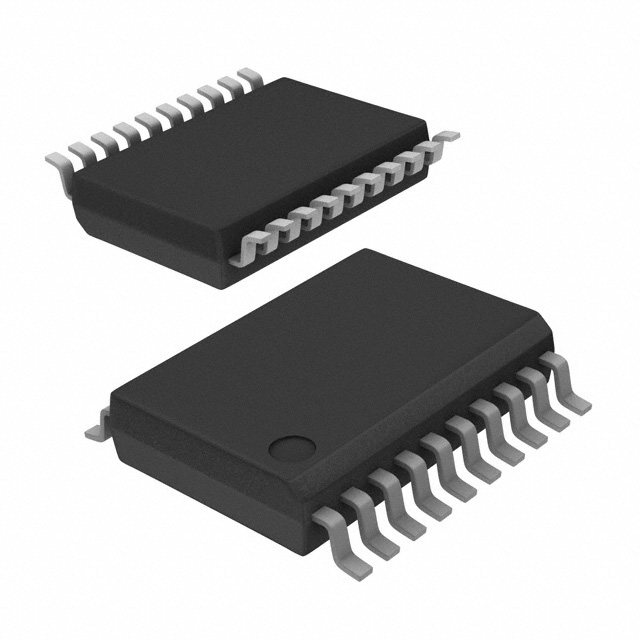
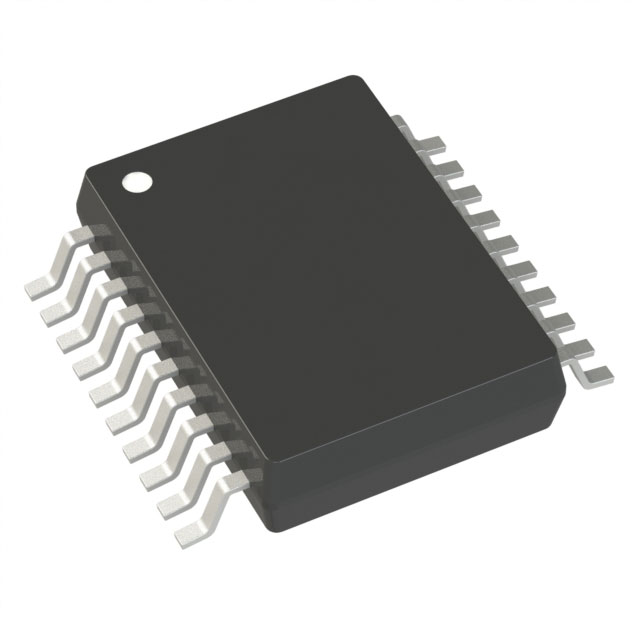
The SP385ECA-L/TR is a 2/2 full-duplex RS232 transceiver manufactured by MaxLinear, Inc., supplied in 20-SSOP surface mount packaging. This interface IC is designed for RS232 serial communication applications requiring dual driver and receiver channels. The part is currently active in production with 3304 units in stock. Substitute parts are identified when equivalent electrical and mechanical specifications are met, enabling component interchangeability for procurement flexibility, inventory management, or supply chain continuity.
Substiute Parts
Key Parameters
| Parameter | SP385ECA-L/TR |
|---|---|
| Manufacturer | MaxLinear, Inc. |
| Type | Transceiver |
| Protocol | RS232 |
| Number of Drivers/Receivers | 2/2 |
| Duplex | Full |
| Receiver Hysteresis | 500 mV |
| Data Rate | 120 Kbps |
| Voltage - Supply | 3V ~ 5V |
| Operating Temperature | 0°C ~ 70°C |
| Mounting Type | Surface Mount |
| Package / Case | 20-SSOP (0.209", 5.30mm Width) |
| RoHS Status | RoHS Compliant |
| Moisture Sensitivity Level (MSL) | 2 (1 Year) |
| Product Status | Active |
Substitute Part Grouping Explanation
Substitution eligibility for the SP385ECA-L/TR is determined by the following critical parameters:
- Package / Case: Must be 20-SSOP (0.209", 5.30mm Width) for mechanical compatibility
- Number of Drivers/Receivers: Must be 2/2 configuration
- Duplex Mode: Must be Full duplex
- Mounting Type: Must be Surface Mount
- Data Rate: Must support minimum 120 Kbps
- Voltage - Supply Range: Must encompass or be compatible with 3V ~ 5V operation
- Operating Temperature Range: Must cover or exceed 0°C ~ 70°C minimum
- Product Status: Must be Active
The identified substitute parts LTC1385CG#PBF and LTC1385IG#PBF, both manufactured by Analog Devices Inc., meet these core substitution criteria. Both parts are RS562 protocol transceivers with 2/2 driver/receiver configuration, full duplex operation, 20-SSOP packaging, and active product status. Protocol differences (RS232 vs. RS562) and supply voltage range variations are noted in the parameter comparison table below.
Parameter Comparison
| Parameter | SP385ECA-L/TR | LTC1385CG#PBF | LTC1385IG#PBF |
|---|---|---|---|
| Manufacturer | MaxLinear, Inc. | Analog Devices Inc. | Analog Devices Inc. |
| Protocol | RS232 | RS562 | RS562 |
| Number of Drivers/Receivers | 2/2 | 2/2 | 2/2 |
| Duplex | Full | Full | Full |
| Receiver Hysteresis | 500 mV | 400 mV | 400 mV |
| Data Rate | 120 Kbps | 120 KBd | 120 KBd |
| Voltage - Supply | 3V ~ 5V | 3V ~ 3.6V | 3V ~ 3.6V |
| Operating Temperature | 0°C ~ 70°C | 0°C ~ 70°C | -40°C ~ 85°C |
| Mounting Type | Surface Mount | Surface Mount | Surface Mount |
| Package / Case | 20-SSOP (0.209", 5.30mm Width) | 20-SSOP (0.209", 5.30mm Width) | 20-SSOP (0.209", 5.30mm Width) |
| RoHS Status | RoHS Compliant | ROHS3 Compliant | ROHS3 Compliant |
| Moisture Sensitivity Level (MSL) | 2 (1 Year) | 1 (Unlimited) | 1 (Unlimited) |
| Product Status | Active | Active | Active |
Engineering Selection Recommendations
Both LTC1385CG#PBF and LTC1385IG#PBF are active, production-qualified alternatives to the SP385ECA-L/TR. Selection between these options depends on application-specific requirements:
LTC1385CG#PBF maintains the same operating temperature range (0°C ~ 70°C) as the original part. This option is suitable for applications with standard industrial temperature requirements and equivalent thermal specifications.
LTC1385IG#PBF extends the operating temperature range to -40°C ~ 85°C, providing broader thermal coverage for applications requiring extended temperature operation. This part is appropriate for designs requiring enhanced temperature performance beyond the original specification.
Both substitute parts carry ROHS3 compliance and MSL 1 (Unlimited) ratings, indicating improved environmental and moisture handling characteristics compared to the original RoHS Compliant / MSL 2 (1 Year) specification. The supply voltage range for both substitutes (3V ~ 3.6V) is narrower than the original part (3V ~ 5V), requiring verification that application supply voltages remain within the 3V ~ 3.6V window.
Frequently Asked Questions (FAQ)
Q: Can LTC1385CG#PBF and LTC1385IG#PBF be used interchangeably with SP385ECA-L/TR?
A: Both parts share identical mechanical packaging (20-SSOP), driver/receiver configuration (2/2), duplex mode (Full), and data rate capability (120 Kbps/KBd). Interchangeability is determined by application supply voltage and operating temperature requirements. Verify that your design operates within the 3V ~ 3.6V supply range and required temperature limits before substitution.
Q: What is the difference between LTC1385CG#PBF and LTC1385IG#PBF?
A: The primary difference is operating temperature range. LTC1385CG#PBF operates from 0°C ~ 70°C, matching the original part's thermal specification. LTC1385IG#PBF operates from -40°C ~ 85°C, providing extended temperature coverage. Both parts are otherwise electrically and mechanically identical.
Q: Why do the substitute parts specify RS562 protocol instead of RS232?
A: The substitute parts are RS562 transceivers, while the original is RS232. Both protocols are serial communication standards with different electrical specifications. Protocol compatibility must be verified at the system level before substitution.
Q: Are there packaging differences between the original and substitute parts?
A: All three parts use identical 20-SSOP (0.209", 5.30mm Width) surface mount packaging. The original part is supplied in Tape & Reel (TR) format, while the substitute parts are supplied in Tube format. Both packaging formats are compatible with standard pick-and-place assembly equipment.
Q: What is the significance of the MSL rating difference?
A: The original part carries MSL 2 (1 Year), while the substitute parts carry MSL 1 (Unlimited). MSL 1 indicates superior moisture resistance and longer shelf life without requiring baking before reflow soldering. This represents an improvement over the original specification.
Q: How do receiver hysteresis differences affect substitution?
A: The original part specifies 500 mV receiver hysteresis, while the substitute parts specify 400 mV. Lower hysteresis provides tighter input threshold control. Application-level signal integrity analysis is required to determine if this difference impacts system performance in your specific design.
Alternative Parts

SJ6012L2TP
Littelfuse Inc.
6 Alternative Parts

JMK107BBJ476MA-RE
Taiyo Yuden
10 Alternative Parts

GMK107BBJ475MA-T
Taiyo Yuden
5 Alternative Parts
SJ6020N2ARP
Littelfuse Inc.
3 Alternative Parts
SJ6025R2ATP
Littelfuse Inc.
4 Alternative Parts

2474-05L
API Delevan Inc.
1 Alternative Parts

4590R-684K
API Delevan Inc.
1 Alternative Parts

CM6560R-334
API Delevan Inc.
1 Alternative Parts

CM6460-104
API Delevan Inc.
1 Alternative Parts

5526-12
API Delevan Inc.
1 Alternative Parts