



Request Quote
(Ships tomorrow)
SP337EBET-L/TR Equivalent & Substitute Parts
Part Overview
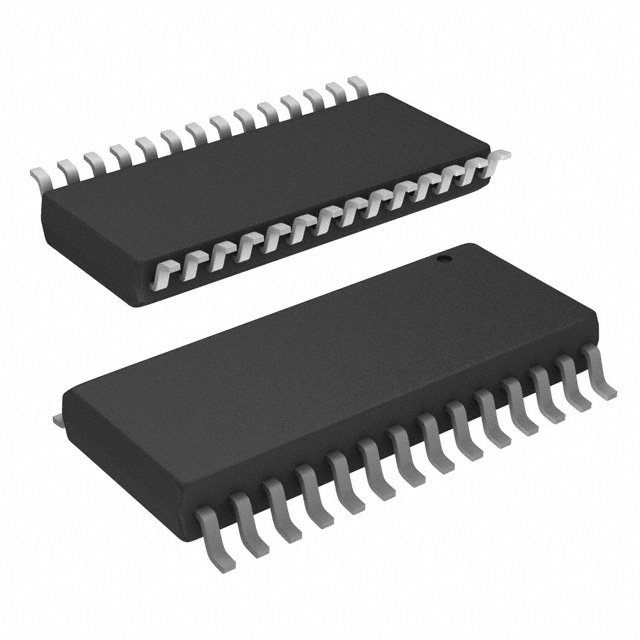
The SP337EBET-L/TR is a 2/2 transceiver IC supporting full-duplex RS232, RS422, and RS485 protocols in a 28-SOIC surface mount package. This component is classified as obsolete, making identification of functionally equivalent alternatives essential for ongoing system support and new design implementations. The transition to active substitute parts ensures continued availability and manufacturing support.
Substiute Parts
Key Parameters
| Parameter | Value |
|---|---|
| Manufacturer Part Number | SP337EBET-L/TR |
| Manufacturer | MaxLinear, Inc. |
| Product Status | Obsolete |
| Type | Transceiver |
| Protocol Support | RS232, RS422, RS485 |
| Drivers/Receivers | 2/2 |
| Duplex Mode | Full |
| Package / Case | 28-SOIC (0.295", 7.50mm Width) |
| Voltage Supply Range | 3.3V ~ 5V |
| Operating Temperature | -40°C ~ 85°C |
| Data Rate | 20 Mbps |
| Receiver Hysteresis | 500 mV |
| Mounting Type | Surface Mount |
| Moisture Sensitivity Level (MSL) | 3 (168 Hours) |
Substitute Part Grouping Explanation
Substitution of the SP337EBET-L/TR is determined by the following critical parameters:
Protocol Compatibility: Both the main part and substitute must support RS232, RS422, and RS485 protocols to maintain functional equivalence in multi-protocol applications.
Duplex Mode: Full-duplex operation is required to preserve bidirectional communication capability.
Voltage Supply Range: The substitute must operate within the 3.3V to 5V supply envelope to ensure compatibility with existing power distribution architectures.
Operating Temperature Range: The -40°C to 85°C specification must be maintained for environmental consistency.
Driver/Receiver Configuration: While the SP337EBET-L/TR provides 2/2 configuration, substitutes with enhanced driver/receiver counts (3/5) remain functionally compatible for applications requiring the 2/2 subset of channels.
Package Consideration: The transition from 28-SOIC to alternative surface mount packages (40-QFN) requires PCB layout modification but maintains surface mount assembly compatibility.
Parameter Comparison
| Parameter | SP337EBET-L/TR (Main) | SP338EER1-L/TR (Substitute) |
|---|---|---|
| Manufacturer | MaxLinear, Inc. | MaxLinear, Inc. |
| Product Status | Obsolete | Active |
| Type | Transceiver | Transceiver |
| Protocol Support | RS232, RS422, RS485 | RS232, RS422, RS485 |
| Drivers/Receivers | 2/2 | 3/5 |
| Duplex Mode | Full | Full |
| Voltage Supply Range | 3.3V ~ 5V | 3.3V, 5V |
| Operating Temperature | -40°C ~ 85°C | -40°C ~ 85°C |
| Data Rate | 20 Mbps | 1 Mbps |
| Receiver Hysteresis | 500 mV | 300 mV |
| Mounting Type | Surface Mount | Surface Mount |
| Package / Case | 28-SOIC (0.295", 7.50mm Width) | 40-VFQFN Exposed Pad (6x6) |
| Moisture Sensitivity Level (MSL) | 3 (168 Hours) | 3 (168 Hours) |
| RoHS Status | Not specified | RoHS Compliant |
Engineering Selection Recommendations
The SP338EER1-L/TR is the manufacturer-recommended substitute for the obsolete SP337EBET-L/TR. Both components are manufactured by MaxLinear, Inc., and maintain identical protocol support (RS232, RS422, RS485), duplex mode (full), voltage supply range (3.3V to 5V), and operating temperature specifications (-40°C to 85°C).
The SP338EER1-L/TR offers active product status, ensuring ongoing manufacturing support and availability. The substitute features RoHS compliance, meeting current environmental and regulatory requirements. The enhanced driver/receiver configuration (3/5 versus 2/2) provides additional channel capacity without compromising backward compatibility for 2/2 applications.
Package transition from 28-SOIC to 40-VFQFN requires PCB redesign but maintains surface mount assembly compatibility. The lower data rate specification (1 Mbps versus 20 Mbps) is suitable for standard RS232, RS422, and RS485 industrial communication applications operating within typical baud rate ranges.
Frequently Asked Questions (FAQ)
Q: Can the SP338EER1-L/TR directly replace the SP337EBET-L/TR without design changes?
A: Protocol, voltage supply, temperature, and duplex specifications are identical, ensuring functional compatibility. However, package geometry differs (28-SOIC to 40-VFQFN), requiring PCB layout modification and footprint redesign.
Q: What is the impact of the 3/5 driver/receiver configuration on 2/2 applications?
A: The SP338EER1-L/TR provides three drivers and five receivers, exceeding the 2/2 requirement of the original part. Applications utilizing only two drivers and two receivers operate within the substitute's capability envelope with unused channels remaining inactive.
Q: How does the data rate difference (20 Mbps to 1 Mbps) affect system performance?
A: Standard RS232, RS422, and RS485 industrial applications typically operate at baud rates below 1 Mbps. The SP338EER1-L/TR's 1 Mbps specification accommodates conventional communication protocols. Applications requiring higher data rates must evaluate alternative solutions.
Q: What are the implications of the receiver hysteresis change (500 mV to 300 mV)?
A: Lower receiver hysteresis (300 mV) provides improved noise immunity and faster signal detection compared to the original 500 mV specification. This enhancement is beneficial for noisy industrial environments and does not introduce compatibility issues.
Q: Is RoHS compliance a requirement for substitution?
A: The SP338EER1-L/TR is RoHS compliant, meeting current environmental regulations. The original SP337EBET-L/TR RoHS status is not specified. For applications subject to RoHS requirements, the substitute ensures regulatory compliance.
Q: What moisture sensitivity considerations apply to both parts?
A: Both components carry MSL 3 (168 Hours) classification, indicating identical moisture handling and storage requirements. Standard moisture control procedures during assembly and storage apply to both parts.
Alternative Parts

SJ6012L2TP
Littelfuse Inc.
6 Alternative Parts

JMK107BBJ476MA-RE
Taiyo Yuden
10 Alternative Parts

GMK107BBJ475MA-T
Taiyo Yuden
5 Alternative Parts
SJ6020N2ARP
Littelfuse Inc.
3 Alternative Parts
SJ6025R2ATP
Littelfuse Inc.
4 Alternative Parts

2474-05L
API Delevan Inc.
1 Alternative Parts

4590R-684K
API Delevan Inc.
1 Alternative Parts

CM6560R-334
API Delevan Inc.
1 Alternative Parts

CM6460-104
API Delevan Inc.
1 Alternative Parts

5526-12
API Delevan Inc.
1 Alternative Parts