


Request Quote
(Ships tomorrow)
SN75ALS162DWR Equivalent & Substitute Parts
Part Overview
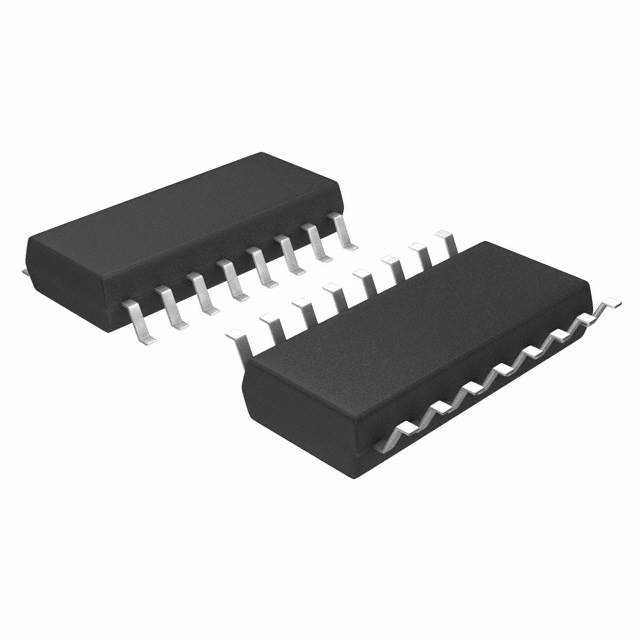
The SN75ALS162DWR is an IEEE 488 half-duplex transceiver IC manufactured by Texas Instruments, configured with 8 drivers and 8 receivers in a 24-SOIC surface mount package. This component is classified as Last Time Buy, indicating end-of-life status. Finding equivalent or substitute parts is necessary to ensure design continuity and long-term component availability for new production runs and system maintenance.
Substiute Parts
Key Parameters
| Parameter | Value |
|---|---|
| Manufacturer Part Number | SN75ALS162DWR |
| Manufacturer | Texas Instruments |
| Category | Interface |
| Type | Transceiver |
| Protocol | IEEE 488 |
| Number of Drivers/Receivers | 8/8 |
| Duplex Mode | Half |
| Receiver Hysteresis | 650 mV |
| Voltage Supply Range | 4.75V ~ 5.25V |
| Operating Temperature | 0°C ~ 70°C |
| Package / Case | 24-SOIC (0.295", 7.50mm Width) |
| Mounting Type | Surface Mount |
| Product Status | Last Time Buy |
| RoHS Status | ROHS3 Compliant |
| MSL Rating | 1 (Unlimited) |
Substitute Part Grouping Explanation
Substitution of the SN75ALS162DWR is constrained by the following critical parameters:
- Protocol Compatibility: The main part operates under IEEE 488 standard. Substitute parts must support equivalent or compatible communication protocols.
- Driver/Receiver Configuration: The 8/8 configuration (8 drivers, 8 receivers) defines the channel count and functional capacity.
- Duplex Mode: Half-duplex operation is a functional requirement that affects signal flow architecture.
- Electrical Specifications: Supply voltage range, receiver hysteresis, and operating temperature define the operational envelope.
- Package Compatibility: Surface mount 24-SOIC package is a physical constraint for PCB integration.
The identified substitute part, SN65C1167ENSR, operates under a different protocol (RS422/RS485) with a different channel configuration (2/2) and package format (16-SOIC). This represents a functional substitution only in applications where protocol migration is feasible and system architecture permits channel reconfiguration.
Parameter Comparison
| Parameter | SN75ALS162DWR (Main) | SN65C1167ENSR (Substitute) |
|---|---|---|
| Manufacturer | Texas Instruments | Texas Instruments |
| Category | Interface | Interface |
| Type | Transceiver | Transceiver |
| Protocol | IEEE 488 | RS422, RS485 |
| Number of Drivers/Receivers | 8/8 | 2/2 |
| Duplex Mode | Half | Full |
| Receiver Hysteresis | 650 mV | 60 mV |
| Voltage Supply Range | 4.75V ~ 5.25V | 4.5V ~ 5.5V |
| Operating Temperature | 0°C ~ 70°C | -40°C ~ 85°C |
| Mounting Type | Surface Mount | Surface Mount |
| Package / Case | 24-SOIC (0.295", 7.50mm Width) | 16-SOIC (0.209", 5.30mm Width) |
| Product Status | Last Time Buy | Active |
| RoHS Status | ROHS3 Compliant | ROHS3 Compliant |
| MSL Rating | 1 (Unlimited) | 1 (Unlimited) |
Engineering Selection Recommendations
The SN75ALS162DWR is Last Time Buy status, making component procurement planning essential. The SN65C1167ENSR is Active status with higher inventory availability (9508 pcs vs. 1276 pcs).
Both parts are ROHS3 compliant, REACH unaffected, and carry identical MSL ratings, ensuring regulatory and environmental compatibility.
The SN65C1167ENSR offers an extended operating temperature range (-40°C ~ 85°C versus 0°C ~ 70°C) and wider supply voltage tolerance (4.5V ~ 5.5V versus 4.75V ~ 5.25V), providing greater operational flexibility in demanding environments.
Selection between these parts depends on protocol requirements: IEEE 488 applications require the SN75ALS162DWR or equivalent IEEE 488 devices; RS422/RS485 applications can utilize the SN65C1167ENSR. Channel count and duplex mode differences necessitate circuit redesign if substitution is pursued.
Frequently Asked Questions (FAQ)
Q: Can the SN65C1167ENSR directly replace the SN75ALS162DWR on the same PCB?
A: No. The SN65C1167ENSR uses a 16-SOIC package versus the 24-SOIC package of the main part, requiring PCB layout modification. Additionally, the 2/2 channel configuration differs from the 8/8 configuration, necessitating circuit redesign.
Q: What are the primary differences between these transceivers?
A: Protocol differs (IEEE 488 vs. RS422/RS485), channel count differs (8/8 vs. 2/2), duplex mode differs (half vs. full), receiver hysteresis differs (650 mV vs. 60 mV), and package format differs (24-SOIC vs. 16-SOIC).
Q: Is the SN65C1167ENSR suitable for IEEE 488 applications?
A: No. The SN65C1167ENSR implements RS422/RS485 protocols and is not compatible with IEEE 488 bus architecture.
Q: What is the impact of the different receiver hysteresis values?
A: The SN75ALS162DWR has 650 mV hysteresis, while the SN65C1167ENSR has 60 mV hysteresis. This affects noise immunity and signal threshold behavior. Lower hysteresis provides faster response but reduced noise margin.
Q: Are both parts compliant with current environmental and regulatory standards?
A: Yes. Both parts are ROHS3 compliant, REACH unaffected, and carry MSL 1 ratings, meeting current environmental and regulatory requirements.
Q: Which part has better long-term availability?
A: The SN65C1167ENSR is Active status with significantly higher inventory (9508 pcs), ensuring better long-term availability compared to the SN75ALS162DWR, which is Last Time Buy.
Alternative Parts

SJ6012L2TP
Littelfuse Inc.
6 Alternative Parts

JMK107BBJ476MA-RE
Taiyo Yuden
10 Alternative Parts

GMK107BBJ475MA-T
Taiyo Yuden
5 Alternative Parts
SJ6020N2ARP
Littelfuse Inc.
3 Alternative Parts
SJ6025R2ATP
Littelfuse Inc.
4 Alternative Parts

2474-05L
API Delevan Inc.
1 Alternative Parts

4590R-684K
API Delevan Inc.
1 Alternative Parts

CM6560R-334
API Delevan Inc.
1 Alternative Parts

CM6460-104
API Delevan Inc.
1 Alternative Parts

5526-12
API Delevan Inc.
1 Alternative Parts