


Request Quote
(Ships tomorrow)
SN75182N Equivalent & Substitute Parts
Part Overview
The SN75182N is a 0/2 Receiver interface IC manufactured by Texas Instruments in 14-PDIP through-hole packaging. This component operates within a 4.5V to 5.5V supply voltage range and is rated for 0°C to 70°C operating temperatures. The product is classified as obsolete, making identification of functionally compatible alternatives essential for ongoing system support and new design implementations.
Substiute Parts
Key Parameters
| Parameter | Value |
|---|---|
| Manufacturer | Texas Instruments |
| Category | Interface |
| Type | Receiver |
| Number of Drivers/Receivers | 0/2 |
| Voltage - Supply | 4.5V ~ 5.5V |
| Operating Temperature | 0°C ~ 70°C |
| Mounting Type | Through Hole |
| Package / Case | 14-DIP (0.300", 7.62mm) |
| RoHS Status | ROHS3 Compliant |
| Product Status | Obsolete |
Substitute Part Grouping Explanation
Substitution of the SN75182N is determined by the following critical parameters:
- Supply voltage compatibility: 4.5V ~ 5.5V range
- Interface category classification
- RoHS3 compliance certification
- Functional receiver capability
The SN65C1167ENSR qualifies as a manufacturer-recommended substitute based on matching supply voltage specifications and RoHS3 compliance status. However, this substitute introduces functional and packaging differences that must be evaluated for specific applications.
Parameter Comparison
| Parameter | SN75182N | SN65C1167ENSR |
|---|---|---|
| Manufacturer | Texas Instruments | Texas Instruments |
| Category | Interface | Interface |
| Type | Receiver | Transceiver |
| Number of Drivers/Receivers | 0/2 | 2/2 |
| Voltage - Supply | 4.5V ~ 5.5V | 4.5V ~ 5.5V |
| Operating Temperature | 0°C ~ 70°C | -40°C ~ 85°C |
| Mounting Type | Through Hole | Surface Mount |
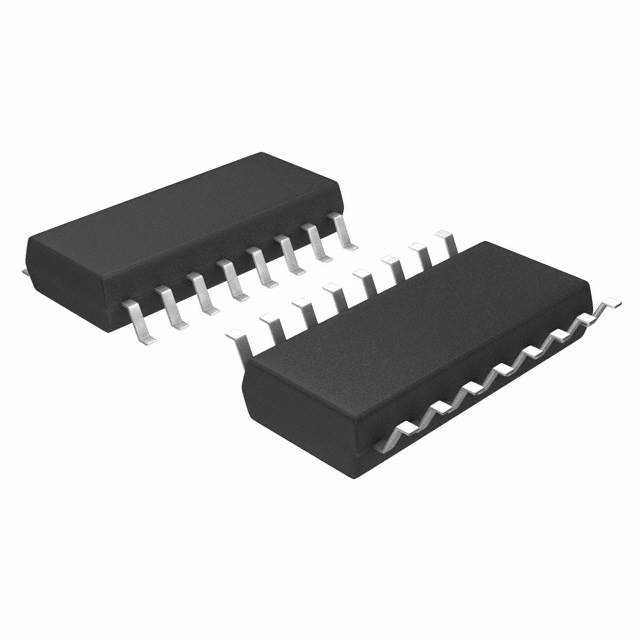
| Package / Case | 14-DIP (0.300", 7.62mm) | 16-SOIC (0.209", 5.30mm Width) |
| RoHS Status | ROHS3 Compliant | ROHS3 Compliant |
| Product Status | Obsolete | Active |
Engineering Selection Recommendations
The SN65C1167ENSR is the manufacturer-designated substitute for the obsolete SN75182N. Both components maintain identical supply voltage specifications (4.5V ~ 5.5V) and ROHS3 compliance certification, establishing electrical compatibility at the power supply level.
Selection of the SN65C1167ENSR requires evaluation of the following factors:
- Mounting technology transition from through-hole (14-DIP) to surface-mount (16-SOIC) requires PCB redesign
- Functional upgrade from receiver-only (0/2) to full transceiver (2/2) with RS422/RS485 protocol support
- Extended operating temperature range (-40°C ~ 85°C) provides broader environmental capability
- Active product status ensures ongoing availability and manufacturer support
Frequently Asked Questions (FAQ)
Q: Can the SN65C1167ENSR directly replace the SN75182N in existing designs?
A: Direct pin-for-pin replacement is not possible due to package differences (14-DIP versus 16-SOIC) and pin count variation. PCB redesign is required for implementation.
Q: What are the key electrical compatibility factors?
A: Both components operate within the identical 4.5V to 5.5V supply voltage range and maintain ROHS3 compliance. This establishes core electrical compatibility for power supply integration.
Q: Why does the SN65C1167ENSR have more drivers and receivers than the SN75182N?
A: The SN65C1167ENSR is a full transceiver (2/2 configuration) compared to the receiver-only SN75182N (0/2 configuration). This represents a functional enhancement rather than a limitation, providing bidirectional communication capability.
Q: Are there temperature rating differences between these components?
A: Yes. The SN75182N operates from 0°C to 70°C, while the SN65C1167ENSR operates from -40°C to 85°C. The substitute provides extended temperature range capability suitable for broader environmental applications.
Q: What mounting considerations apply to substitution?
A: The SN75182N uses through-hole mounting (14-DIP package), while the SN65C1167ENSR uses surface-mount technology (16-SOIC package). Manufacturing process and assembly equipment compatibility must be evaluated during design transition.
Alternative Parts

SJ6012L2TP
Littelfuse Inc.
6 Alternative Parts

JMK107BBJ476MA-RE
Taiyo Yuden
10 Alternative Parts

GMK107BBJ475MA-T
Taiyo Yuden
5 Alternative Parts
SJ6020N2ARP
Littelfuse Inc.
3 Alternative Parts
SJ6025R2ATP
Littelfuse Inc.
4 Alternative Parts

2474-05L
API Delevan Inc.
1 Alternative Parts

4590R-684K
API Delevan Inc.
1 Alternative Parts

CM6560R-334
API Delevan Inc.
1 Alternative Parts

CM6460-104
API Delevan Inc.
1 Alternative Parts

5526-12
API Delevan Inc.
1 Alternative Parts