


Request Quote
(Ships tomorrow)
SN75162BDWR Equivalent & Substitute Parts
Part Overview
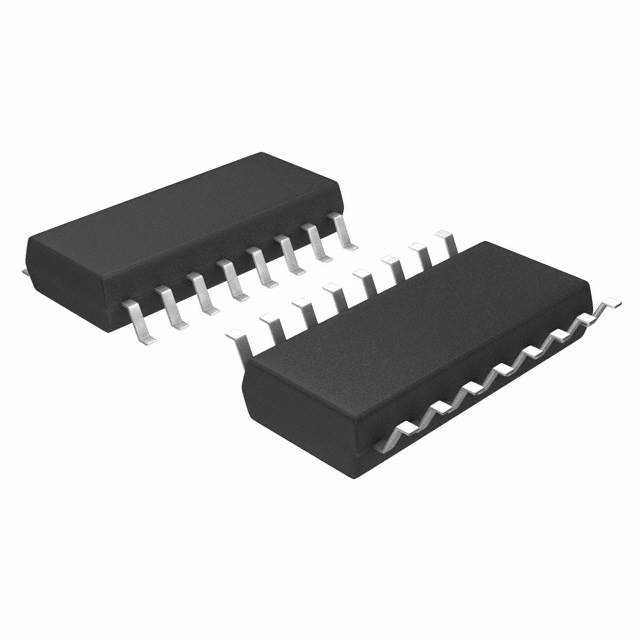
The SN75162BDWR is an IEEE 488 half-duplex transceiver IC manufactured by Texas Instruments, configured with 8 drivers and 8 receivers in a 24-SOIC surface mount package. This component is classified as obsolete, indicating it has reached end-of-life status and is no longer in active production. Finding equivalent or substitute parts is necessary to support legacy system maintenance, design updates, or when inventory becomes unavailable.
Substiute Parts
Key Parameters
| Parameter | Value |
|---|---|
| Manufacturer Part Number | SN75162BDWR |
| Manufacturer | Texas Instruments |
| Category | Interface |
| Type | Transceiver |
| Protocol | IEEE 488 |
| Number of Drivers/Receivers | 8/8 |
| Duplex Mode | Half |
| Receiver Hysteresis | 650 mV |
| Voltage Supply Range | 4.75V ~ 5.25V |
| Operating Temperature | 0°C ~ 70°C |
| Package / Case | 24-SOIC (0.295", 7.50mm Width) |
| Mounting Type | Surface Mount |
| Product Status | Obsolete |
| RoHS Status | ROHS3 Compliant |
| Moisture Sensitivity Level | 1 (Unlimited) |
Substitute Part Grouping Explanation
Substitution for the SN75162BDWR is evaluated based on the following critical parameters:
Parametric Equivalents maintain identical or compatible electrical and mechanical specifications:
- Protocol: IEEE 488
- Driver/Receiver Configuration: 8/8
- Duplex Mode: Half
- Receiver Hysteresis: 650 mV
- Supply Voltage Range: 4.75V ~ 5.25V
- Operating Temperature Range: 0°C ~ 70°C
- Package Type: 24-SOIC
- RoHS Compliance: ROHS3
Functional Alternatives provide similar transceiver functionality but with different protocol support, channel configuration, or package specifications. These parts may require circuit design modifications or are suitable only for applications where protocol flexibility exists.
Parameter Comparison
| Parameter | SN75162BDWR (Main) | SN75ALS162DWR (Parametric Equivalent) | SN65C1167ENSR (Functional Alternative) |
|---|---|---|---|
| Manufacturer | Texas Instruments | Texas Instruments | Texas Instruments |
| Type | Transceiver | Transceiver | Transceiver |
| Protocol | IEEE 488 | IEEE 488 | RS422, RS485 |
| Drivers/Receivers | 8/8 | 8/8 | 2/2 |
| Duplex Mode | Half | Half | Full |
| Receiver Hysteresis | 650 mV | 650 mV | 60 mV |
| Supply Voltage | 4.75V ~ 5.25V | 4.75V ~ 5.25V | 4.5V ~ 5.5V |
| Operating Temperature | 0°C ~ 70°C | 0°C ~ 70°C | -40°C ~ 85°C |
| Package / Case | 24-SOIC | 24-SOIC | 16-SOIC |
| Product Status | Obsolete | Last Time Buy | Active |
| RoHS Status | ROHS3 Compliant | ROHS3 Compliant | ROHS3 Compliant |
Engineering Selection Recommendations
SN75ALS162DWR is the parametric equivalent for direct replacement. It maintains identical electrical specifications, channel configuration, duplex mode, and package format. The primary distinction is product status: while the SN75162BDWR is obsolete, the SN75ALS162DWR is in Last Time Buy status, indicating limited availability but continued support from Texas Instruments. This part is suitable for applications requiring IEEE 488 protocol compliance with 8/8 half-duplex transceiver functionality.
SN65C1167ENSR is a functional alternative with active product status and extended operating temperature range (-40°C to 85°C). However, this part operates under RS422/RS485 protocols rather than IEEE 488, features a 2/2 full-duplex configuration instead of 8/8 half-duplex, and uses a smaller 16-SOIC package. Selection of this part requires verification that the application can accommodate protocol differences, reduced channel count, and package footprint changes. The extended temperature range and active status provide advantages for new designs or applications with flexible protocol requirements.
All substitute parts maintain ROHS3 compliance and unlimited moisture sensitivity level (MSL 1), ensuring compatibility with current manufacturing and environmental standards.
Frequently Asked Questions (FAQ)
Q: Can SN75ALS162DWR be used as a direct replacement for SN75162BDWR?
A: Yes. The SN75ALS162DWR is a parametric equivalent with identical electrical specifications, channel configuration (8/8), duplex mode (half), receiver hysteresis (650 mV), supply voltage range (4.75V ~ 5.25V), operating temperature range (0°C ~ 70°C), and package format (24-SOIC). No circuit modifications are required for direct substitution.
Q: What are the limitations of using SN65C1167ENSR as a substitute?
A: The SN65C1167ENSR differs in three critical areas: (1) Protocol—it supports RS422/RS485 instead of IEEE 488, requiring verification that the application can operate under these protocols; (2) Channel Configuration—it provides 2/2 drivers/receivers instead of 8/8, reducing available channels; (3) Package—it uses 16-SOIC instead of 24-SOIC, requiring PCB layout modifications. This part is suitable only for applications where protocol flexibility exists and channel reduction is acceptable.
Q: Why is the SN75162BDWR classified as obsolete?
A: Obsolete status indicates the part has reached end-of-life and is no longer manufactured by Texas Instruments. Existing inventory may be available through authorized distributors, but long-term availability is not guaranteed. The SN75ALS162DWR (Last Time Buy status) provides a path for continued support of IEEE 488 designs.
Q: Are all substitute parts RoHS compliant?
A: Yes. Both the SN75ALS162DWR and SN65C1167ENSR are ROHS3 compliant, matching the compliance status of the SN75162BDWR. All parts maintain MSL 1 (unlimited moisture sensitivity level).
Q: What is the difference between half-duplex and full-duplex operation in these transceivers?
A: Half-duplex transceivers (SN75162BDWR, SN75ALS162DWR) allow bidirectional communication but not simultaneously—data flows in one direction at a time. Full-duplex transceivers (SN65C1167ENSR) support simultaneous bidirectional communication. IEEE 488 protocol requires half-duplex operation; RS422/RS485 protocols support both modes.
Q: Can I use SN65C1167ENSR in an IEEE 488 application?
A: No. The SN65C1167ENSR is designed for RS422/RS485 protocols and does not support IEEE 488 signaling specifications. Using it in an IEEE 488 application would result in communication failure.
Alternative Parts

SJ6012L2TP
Littelfuse Inc.
6 Alternative Parts

JMK107BBJ476MA-RE
Taiyo Yuden
10 Alternative Parts

GMK107BBJ475MA-T
Taiyo Yuden
5 Alternative Parts
SJ6020N2ARP
Littelfuse Inc.
3 Alternative Parts
SJ6025R2ATP
Littelfuse Inc.
4 Alternative Parts

2474-05L
API Delevan Inc.
1 Alternative Parts

4590R-684K
API Delevan Inc.
1 Alternative Parts

CM6560R-334
API Delevan Inc.
1 Alternative Parts

CM6460-104
API Delevan Inc.
1 Alternative Parts

5526-12
API Delevan Inc.
1 Alternative Parts