


Request Quote
(Ships tomorrow)
SN75124NSR Equivalent & Substitute Parts
Part Overview
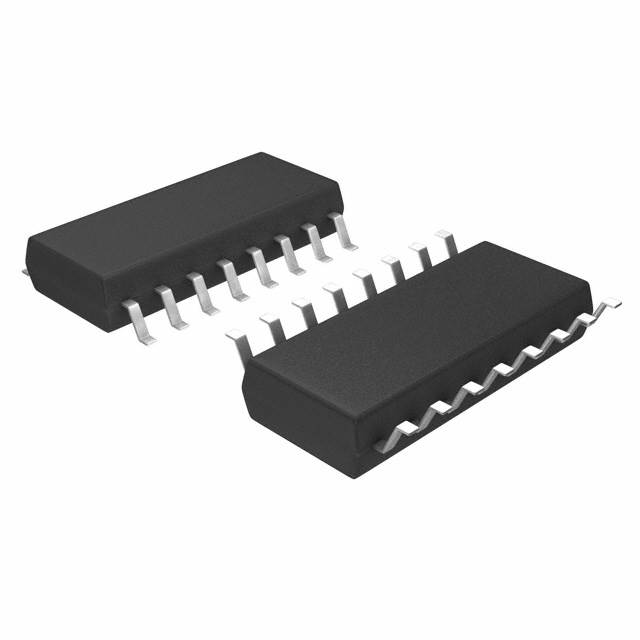
The SN75124NSR is a 0/3 Receiver interface IC manufactured by Texas Instruments in a 16-SO surface mount package. This component is classified as Obsolete, indicating it is no longer in active production. The SN75124NSR operates within a supply voltage range of 4.75V to 5.25V and is designed for 0°C to 70°C operating temperatures. Due to its obsolete status and limited availability relative to active alternatives, identifying functionally compatible substitute components is essential for ongoing system support and new design implementations.
Substiute Parts
Key Parameters
| Parameter | SN75124NSR |
|---|---|
| Manufacturer | Texas Instruments |
| Category | Interface |
| Type | Receiver |
| Number of Drivers/Receivers | 0/3 |
| Receiver Hysteresis | 500 mV |
| Voltage - Supply | 4.75V ~ 5.25V |
| Operating Temperature | 0°C ~ 70°C |
| Mounting Type | Surface Mount |
| Package / Case | 16-SOIC (0.209", 5.30mm Width) |
| Product Status | Obsolete |
| RoHS Status | ROHS3 Compliant |
| MSL Rating | 1 (Unlimited) |
Substitute Part Grouping Explanation
Substitution of the SN75124NSR is determined by the following critical parameters:
- Receiver Configuration: The main part features 0/3 receiver architecture. Substitute parts must support receiver functionality with compatible pin counts and signal handling characteristics.
- Package Compatibility: Both the main part and substitute must use surface mount 16-SOIC packaging to ensure PCB layout compatibility.
- Supply Voltage Range: The substitute must operate within or encompass the 4.75V to 5.25V supply voltage specification.
- Operating Temperature Range: The substitute must support the 0°C to 70°C operating temperature window.
- Receiver Hysteresis: The substitute receiver hysteresis specification must be compatible with the signal integrity requirements of the application.
- Compliance Standards: RoHS3 compliance and MSL rating must be maintained for manufacturing and environmental requirements.
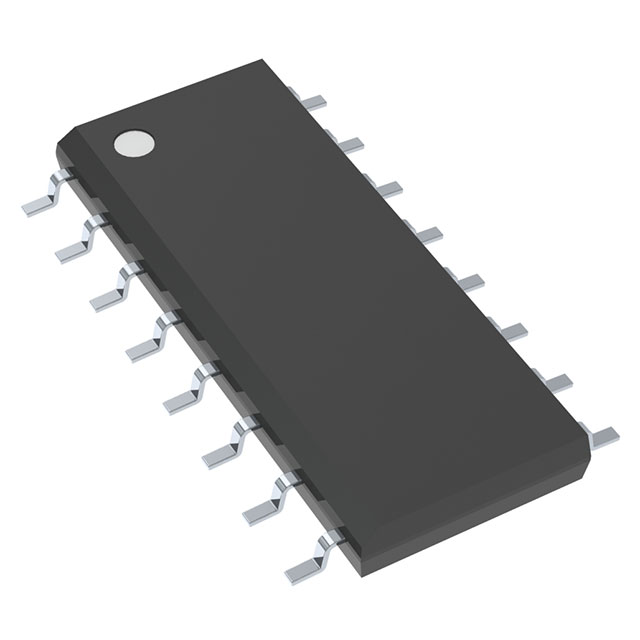
The AM26C32IDR qualifies as a substitute based on its 0/4 receiver configuration (superset of receiver capability), 16-SOIC surface mount package, overlapping supply voltage range (4.5V ~ 5.5V), extended operating temperature range (-40°C ~ 85°C), and equivalent compliance certifications.
Parameter Comparison
| Parameter | SN75124NSR | AM26C32IDR | Notes |
|---|---|---|---|
| Manufacturer | Texas Instruments | Texas Instruments | Same manufacturer |
| Category | Interface | Interface | Same category |
| Type | Receiver | Receiver | Same type |
| Number of Drivers/Receivers | 0/3 | 0/4 | Substitute has additional receiver channel |
| Protocol | - | RS422, RS423 | Substitute specifies protocol support |
| Receiver Hysteresis | 500 mV | 60 mV | Substitute has lower hysteresis |
| Voltage - Supply | 4.75V ~ 5.25V | 4.5V ~ 5.5V | Substitute range is wider and overlapping |
| Operating Temperature | 0°C ~ 70°C | -40°C ~ 85°C | Substitute range is extended |
| Mounting Type | Surface Mount | Surface Mount | Same mounting type |
| Package / Case | 16-SOIC (0.209", 5.30mm Width) | 16-SOIC (0.154", 3.90mm Width) | Both 16-SOIC; different body widths |
| Product Status | Obsolete | Active | Substitute is in active production |
| RoHS Status | ROHS3 Compliant | ROHS3 Compliant | Same compliance |
| MSL Rating | 1 (Unlimited) | 1 (Unlimited) | Same MSL rating |
Engineering Selection Recommendations
The AM26C32IDR is an active production substitute for the obsolete SN75124NSR. Both components maintain ROHS3 compliance and MSL Level 1 ratings, satisfying environmental and manufacturing requirements. The AM26C32IDR provides extended operating temperature range (-40°C to 85°C versus 0°C to 70°C) and wider supply voltage tolerance (4.5V to 5.5V versus 4.75V to 5.25V), offering improved operational margins. The substitute's 0/4 receiver configuration provides additional receiver channels beyond the main part's 0/3 architecture. Package dimensions differ slightly (0.154" versus 0.209" body width), requiring PCB layout verification for pin-to-pin compatibility and thermal management considerations. The lower receiver hysteresis specification (60 mV versus 500 mV) in the substitute may require signal integrity assessment in applications with marginal input signal levels.
Frequently Asked Questions (FAQ)
Q: Can the AM26C32IDR directly replace the SN75124NSR on existing PCBs?
A: Both components use 16-SOIC surface mount packaging with identical pin counts. However, the package body widths differ (0.154" versus 0.209"), which may affect PCB footprint compatibility. Pin-to-pin electrical compatibility must be verified against the specific application schematic and signal requirements.
Q: What is the significance of the different receiver hysteresis values?
A: The SN75124NSR specifies 500 mV receiver hysteresis, while the AM26C32IDR specifies 60 mV. Hysteresis affects noise immunity and signal transition behavior. Applications relying on the higher hysteresis margin of the original part should evaluate whether the lower hysteresis of the substitute meets signal integrity requirements.
Q: Why is the AM26C32IDR listed as a substitute if it has different receiver counts (0/4 versus 0/3)?
A: The AM26C32IDR's 0/4 receiver configuration is a superset of the SN75124NSR's 0/3 architecture, providing additional receiver channels. This configuration change does not prevent substitution; however, the application must accommodate or ignore the extra receiver channel.
Q: Are there compliance or regulatory differences between these parts?
A: Both components are ROHS3 compliant, REACH unaffected, and carry MSL Level 1 ratings. No compliance or regulatory barriers exist for substitution from an environmental or regulatory standpoint.
Q: What should be considered when transitioning from the obsolete SN75124NSR to the AM26C32IDR?
A: Verify PCB footprint compatibility given the package width difference. Assess signal integrity requirements relative to the hysteresis specification change. Confirm that the extended operating temperature range and wider supply voltage tolerance of the substitute do not introduce unintended operational changes in the target application.
Alternative Parts

SJ6012L2TP
Littelfuse Inc.
6 Alternative Parts

JMK107BBJ476MA-RE
Taiyo Yuden
10 Alternative Parts

GMK107BBJ475MA-T
Taiyo Yuden
5 Alternative Parts
SJ6020N2ARP
Littelfuse Inc.
3 Alternative Parts
SJ6025R2ATP
Littelfuse Inc.
4 Alternative Parts

2474-05L
API Delevan Inc.
1 Alternative Parts

4590R-684K
API Delevan Inc.
1 Alternative Parts

CM6560R-334
API Delevan Inc.
1 Alternative Parts

CM6460-104
API Delevan Inc.
1 Alternative Parts

5526-12
API Delevan Inc.
1 Alternative Parts