


Request Quote
(Ships tomorrow)
SN75124N Equivalent & Substitute Parts
Part Overview
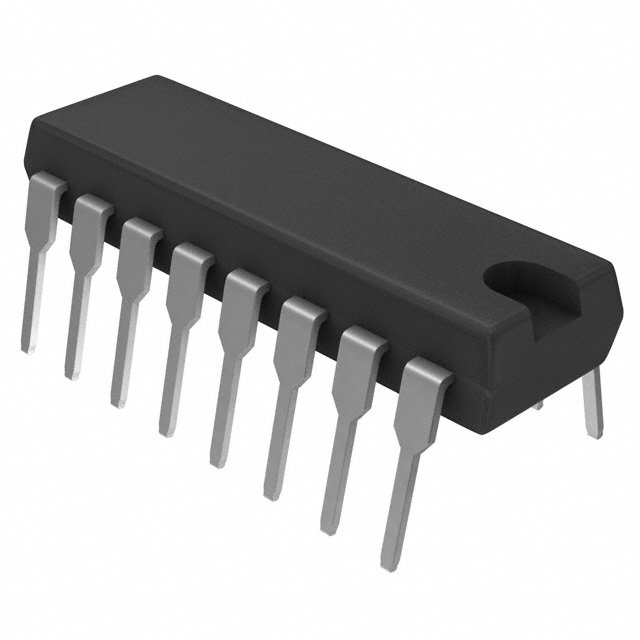
The SN75124N is a 0/3 Receiver interface IC manufactured by Texas Instruments in a 16-DIP through-hole package. This component is classified as obsolete, indicating it has been discontinued and is no longer in active production. The SN75124N operates within a supply voltage range of 4.75V to 5.25V and is rated for operating temperatures from 0°C to 70°C. Due to its obsolete status, identifying functionally compatible substitute parts is essential for system redesign, board revision, or inventory replenishment when original stock becomes unavailable.
Substiute Parts
Key Parameters
| Parameter | SN75124N |
|---|---|
| Manufacturer | Texas Instruments |
| Category | Interface |
| Type | Receiver |
| Number of Drivers/Receivers | 0/3 |
| Receiver Hysteresis | 500 mV |
| Voltage - Supply | 4.75V ~ 5.25V |
| Operating Temperature | 0°C ~ 70°C |
| Mounting Type | Through Hole |
| Package / Case | 16-DIP (0.300", 7.62mm) |
| Product Status | Obsolete |
| RoHS Status | ROHS3 Compliant |
Substitute Part Grouping Explanation
Substitution of the SN75124N is determined by the following critical parameters:
Functional Compatibility Criteria:
- Receiver configuration (0/3 receiver architecture)
- Interface category classification
- Supply voltage compatibility within acceptable operating ranges
- Receiver hysteresis characteristics
- Operating temperature range requirements
Physical Compatibility Criteria:
- Package type and form factor
- Mounting technology (through-hole vs. surface mount)
- Pin count and DIP configuration
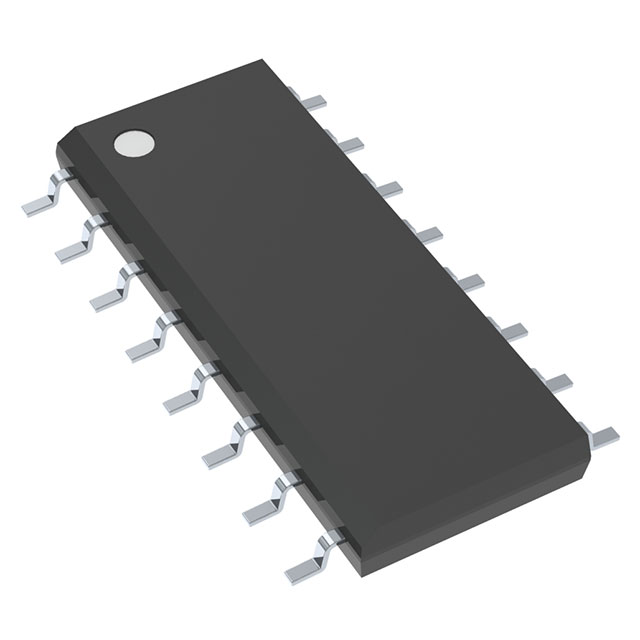
The AM26C32IDR is identified as a manufacturer-recommended substitute. While this part maintains receiver functionality and shares the same manufacturer (Texas Instruments), it introduces differences in receiver count (0/4 vs. 0/3), protocol support (RS422/RS423), receiver hysteresis (60 mV vs. 500 mV), and mounting technology (surface mount vs. through-hole). These differences require evaluation based on specific application requirements.
Parameter Comparison
| Parameter | SN75124N | AM26C32IDR |
|---|---|---|
| Manufacturer | Texas Instruments | Texas Instruments |
| Category | Interface | Interface |
| Type | Receiver | Receiver |
| Number of Drivers/Receivers | 0/3 | 0/4 |
| Receiver Hysteresis | 500 mV | 60 mV |
| Voltage - Supply | 4.75V ~ 5.25V | 4.5V ~ 5.5V |
| Operating Temperature | 0°C ~ 70°C | -40°C ~ 85°C |
| Mounting Type | Through Hole | Surface Mount |
| Package / Case | 16-DIP (0.300", 7.62mm) | 16-SOIC (0.154", 3.90mm Width) |
| Product Status | Obsolete | Active |
| RoHS Status | ROHS3 Compliant | ROHS3 Compliant |
Engineering Selection Recommendations
Product Status Consideration: The SN75124N is obsolete, while the AM26C32IDR is active and in production. This status difference ensures long-term availability and supply chain stability for the substitute part.
Compliance and Certification: Both parts maintain ROHS3 compliance and REACH unaffected status, satisfying environmental and regulatory requirements. Both are classified under ECCN EAR99 and HTSUS 8542.39.0001.
Supply Voltage Compatibility: The AM26C32IDR operates within a broader supply voltage range (4.5V ~ 5.5V) compared to the SN75124N (4.75V ~ 5.25V). The substitute accommodates the original part's voltage requirements while providing additional margin.
Operating Temperature Range: The AM26C32IDR supports an extended operating temperature range (-40°C ~ 85°C) versus the SN75124N (0°C ~ 70°C), offering greater thermal flexibility for diverse application environments.
Packaging and Mounting Technology: The transition from through-hole (16-DIP) to surface mount (16-SOIC) requires PCB redesign. This change is significant for applications where board layout and assembly processes are constrained to through-hole technology.
Frequently Asked Questions (FAQ)
Q: Can the AM26C32IDR directly replace the SN75124N without circuit modifications?
A: Direct pin-for-pin replacement is not possible due to different package types (16-DIP vs. 16-SOIC) and mounting technologies (through-hole vs. surface mount). PCB redesign is required. Additionally, the receiver count differs (0/3 vs. 0/4), and receiver hysteresis characteristics vary (500 mV vs. 60 mV), which may affect signal integrity in specific applications.
Q: What is the significance of the receiver hysteresis difference?
A: Receiver hysteresis determines the voltage differential required for the receiver to switch states. The SN75124N has 500 mV hysteresis, while the AM26C32IDR has 60 mV. Lower hysteresis provides faster response to signal transitions but may be more susceptible to noise. Higher hysteresis offers greater noise immunity but slower response. Application requirements determine which characteristic is appropriate.
Q: Does the AM26C32IDR support the same protocols as the SN75124N?
A: The AM26C32IDR explicitly supports RS422 and RS423 protocols. The SN75124N protocol information is not specified in the provided data. Protocol compatibility must be verified against your specific application requirements.
Q: Is the extended operating temperature range of the AM26C32IDR beneficial?
A: The AM26C32IDR operates from -40°C to 85°C, compared to the SN75124N's 0°C to 70°C range. This extended range is advantageous for applications requiring operation in extreme temperature environments. If your application operates within 0°C to 70°C, both parts are suitable from a thermal perspective.
Q: What are the inventory implications of this substitution?
A: The SN75124N has 2,300 pieces in stock (obsolete status), while the AM26C32IDR has 22,800 pieces available (active status). The substitute part offers significantly greater inventory availability and long-term supply assurance.
Q: Are there packaging considerations for the surface mount AM26C32IDR?
A: Yes. The AM26C32IDR is supplied in 16-SOIC surface mount package with Cut Tape (CT) and Digi-Reel® packaging options. This requires surface mount assembly capabilities and PCB design modifications compared to the through-hole 16-DIP package of the SN75124N.
Alternative Parts

SJ6012L2TP
Littelfuse Inc.
6 Alternative Parts

JMK107BBJ476MA-RE
Taiyo Yuden
10 Alternative Parts

GMK107BBJ475MA-T
Taiyo Yuden
5 Alternative Parts
SJ6020N2ARP
Littelfuse Inc.
3 Alternative Parts
SJ6025R2ATP
Littelfuse Inc.
4 Alternative Parts

2474-05L
API Delevan Inc.
1 Alternative Parts

4590R-684K
API Delevan Inc.
1 Alternative Parts

CM6560R-334
API Delevan Inc.
1 Alternative Parts

CM6460-104
API Delevan Inc.
1 Alternative Parts

5526-12
API Delevan Inc.
1 Alternative Parts