


Request Quote
(Ships tomorrow)
SN74LS76AD Equivalent & Substitute Parts
Part Overview
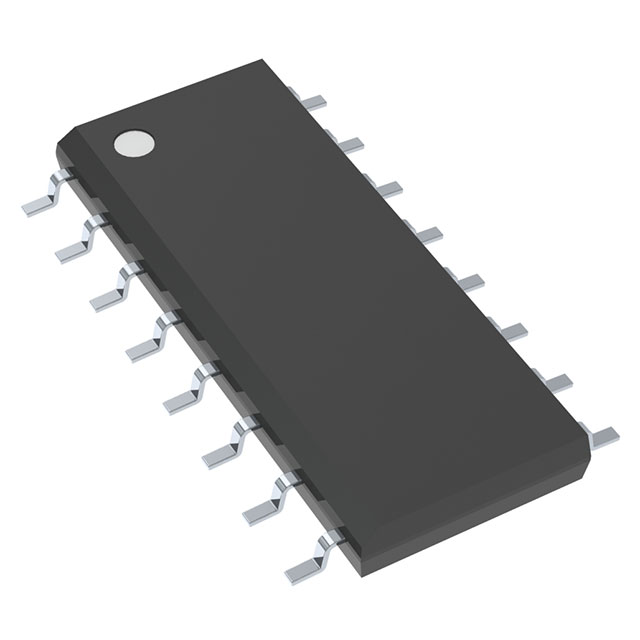
The SN74LS76AD is a dual JK-type flip-flop logic integrated circuit manufactured by Texas Instruments in the 74LS series. This component features two independent 1-bit JK flip-flops with complementary outputs and Set/Reset functionality, housed in a 16-SOIC surface mount package. The device is classified as obsolete, making identification of functionally equivalent alternatives essential for ongoing system support and new design implementations where legacy compatibility is required.
Substiute Parts
Key Parameters
| Parameter | Value |
|---|---|
| Manufacturer Part Number | SN74LS76AD |
| Manufacturer | Texas Instruments |
| Series | 74LS |
| Type | JK Type Flip-Flop |
| Number of Elements | 2 |
| Number of Bits per Element | 1 |
| Output Type | Complementary |
| Trigger Type | Negative Edge |
| Clock Frequency | 45 MHz |
| Max Propagation Delay | 20ns @ 5V, 15pF |
| Voltage Supply Range | 4.75V ~ 5.25V |
| Current - Output High, Low | 400µA, 8mA |
| Current - Quiescent | 4 mA |
| Operating Temperature | 0°C ~ 70°C |
| Package Type | 16-SOIC (0.154", 3.90mm Width) |
| Mounting Type | Surface Mount |
| Product Status | Obsolete |
| RoHS Status | ROHS3 Compliant |
| Moisture Sensitivity Level | 1 (Unlimited) |
Substitute Part Grouping Explanation
Substitution of the SN74LS76AD is determined by strict alignment of the following critical parameters:
Mandatory Matching Parameters:
- Flip-flop type: JK Type with complementary outputs
- Number of elements: 2 independent flip-flops
- Bits per element: 1 bit
- Package type: 16-SOIC (0.154", 3.90mm Width)
- Voltage supply range: 4.75V ~ 5.25V
- Operating temperature range: 0°C ~ 70°C
- Mounting type: Surface Mount
- Function: Set(Preset) and Reset capability
Parameters Allowing Variation:
- Trigger type (Negative Edge vs. Positive Edge)
- Clock frequency (45 MHz vs. lower frequencies)
- Max propagation delay (20ns vs. higher values)
- Quiescent current (4 mA vs. higher values)
- Product status (Obsolete vs. Last Time Buy)
The SN74LS109AD qualifies as a substitute based on matching all mandatory parameters while differing in trigger polarity and performance characteristics.
Parameter Comparison
| Parameter | SN74LS76AD (Main Part) | SN74LS109AD (Substitute) |
|---|---|---|
| Manufacturer Part Number | SN74LS76AD | SN74LS109AD |
| Manufacturer | Texas Instruments | Texas Instruments |
| Series | 74LS | 74LS |
| Type | JK Type Flip-Flop | JK Type Flip-Flop |
| Number of Elements | 2 | 2 |
| Number of Bits per Element | 1 | 1 |
| Output Type | Complementary | Complementary |
| Trigger Type | Negative Edge | Positive Edge |
| Clock Frequency | 45 MHz | 33 MHz |
| Max Propagation Delay | 20ns @ 5V, 15pF | 40ns @ 5V, 15pF |
| Voltage Supply Range | 4.75V ~ 5.25V | 4.75V ~ 5.25V |
| Current - Output High, Low | 400µA, 8mA | 400µA, 8mA |
| Current - Quiescent | 4 mA | 8 mA |
| Operating Temperature | 0°C ~ 70°C | 0°C ~ 70°C |
| Package Type | 16-SOIC (0.154", 3.90mm Width) | 16-SOIC (0.154", 3.90mm Width) |
| Mounting Type | Surface Mount | Surface Mount |
| Product Status | Obsolete | Last Time Buy |
| RoHS Status | ROHS3 Compliant | ROHS3 Compliant |
| Moisture Sensitivity Level | 1 (Unlimited) | 1 (Unlimited) |
Engineering Selection Recommendations
The SN74LS109AD serves as a functional substitute for the SN74LS76AD in applications where the circuit design accommodates positive edge triggering instead of negative edge triggering. Both devices maintain identical electrical supply specifications, package geometry, and output drive characteristics, ensuring mechanical and electrical compatibility at the board level.
The SN74LS76AD is classified as obsolete, while the SN74LS109AD carries Last Time Buy status, indicating extended but finite availability. Both components maintain ROHS3 compliance and unlimited moisture sensitivity classification, supporting equivalent environmental and regulatory requirements.
Selection between these parts depends on circuit timing requirements. The SN74LS76AD provides superior clock frequency capability (45 MHz vs. 33 MHz) and faster propagation delay (20ns vs. 40ns), while the SN74LS109AD exhibits higher quiescent current consumption (8 mA vs. 4 mA). Clock edge polarity represents the primary functional distinction and must align with existing circuit design specifications.
Frequently Asked Questions (FAQ)
Q: Can the SN74LS109AD directly replace the SN74LS76AD without circuit modification?
A: Direct replacement is possible only if the circuit design accommodates positive edge triggering. The SN74LS76AD triggers on negative clock edges, while the SN74LS109AD triggers on positive clock edges. Circuits designed for negative edge triggering require clock signal inversion or redesign to function with the SN74LS109AD.
Q: Are the package dimensions identical between these parts?
A: Yes. Both the SN74LS76AD and SN74LS109AD use the 16-SOIC package with 0.154" width and 3.90mm body width. PCB footprints and mechanical mounting are identical.
Q: What is the significance of the product status difference?
A: The SN74LS76AD is classified as obsolete, indicating discontinued production with no guaranteed future availability. The SN74LS109AD carries Last Time Buy status, meaning production continues for a limited period before discontinuation. For new designs, the SN74LS109AD offers extended procurement windows.
Q: Do these parts have identical electrical supply requirements?
A: Yes. Both devices operate within the 4.75V to 5.25V supply voltage range and maintain the same output drive specifications (400µA high, 8mA low). Power supply design and decoupling requirements are equivalent.
Q: How do the performance differences affect system design?
A: The SN74LS76AD provides faster propagation delay (20ns vs. 40ns) and higher maximum clock frequency (45 MHz vs. 33 MHz). Systems operating near maximum frequency limits may require the SN74LS76AD. The SN74LS109AD draws double the quiescent current (8 mA vs. 4 mA), affecting total power consumption in designs with multiple devices.
Q: Are both parts RoHS compliant?
A: Yes. Both the SN74LS76AD and SN74LS109AD maintain ROHS3 compliance and carry unlimited moisture sensitivity classification (MSL 1), supporting equivalent environmental and regulatory requirements.
Alternative Parts

SJ6012L2TP
Littelfuse Inc.
6 Alternative Parts

JMK107BBJ476MA-RE
Taiyo Yuden
10 Alternative Parts

GMK107BBJ475MA-T
Taiyo Yuden
5 Alternative Parts
SJ6020N2ARP
Littelfuse Inc.
3 Alternative Parts
SJ6025R2ATP
Littelfuse Inc.
4 Alternative Parts

2474-05L
API Delevan Inc.
1 Alternative Parts

4590R-684K
API Delevan Inc.
1 Alternative Parts

CM6560R-334
API Delevan Inc.
1 Alternative Parts

CM6460-104
API Delevan Inc.
1 Alternative Parts

5526-12
API Delevan Inc.
1 Alternative Parts