


Request Quote
(Ships tomorrow)
SN74LS74AN-NG Equivalent & Substitute Parts
Part Overview
The SN74LS74AN-NG is a dual D-type flip-flop logic integrated circuit manufactured by Texas Instruments in the 74LS series. This component features two independent 1-bit D-type flip-flops with Set (Preset) and Reset functions, complementary outputs, and positive edge triggering. The device is packaged in a 14-pin DIP (0.300", 7.62mm) through-hole configuration.
The SN74LS74AN-NG is classified as obsolete. Identifying equivalent and substitute parts is necessary to support legacy system maintenance, design updates, and procurement continuity when original stock becomes unavailable.
Substiute Parts
Key Parameters
| Parameter | Value |
|---|---|
| Manufacturer Part Number | SN74LS74AN-NG |
| Manufacturer | Texas Instruments |
| Series | 74LS |
| Type | D-Type Flip-Flop |
| Number of Elements | 2 |
| Number of Bits per Element | 1 |
| Output Type | Complementary |
| Trigger Type | Positive Edge |
| Function | Set (Preset) and Reset |
| Clock Frequency | 33 MHz |
| Max Propagation Delay | 40 ns @ 5V, 15pF |
| Voltage - Supply | 4.75V ~ 5.25V |
| Current - Quiescent (Iq) | 8 mA |
| Current - Output High, Low | 400µA, 8mA |
| Operating Temperature | 0°C ~ 70°C |
| Mounting Type | Through Hole |
| Package / Case | 14-DIP (0.300", 7.62mm) |
| Product Status | Obsolete |
| RoHS Status | ROHS3 Compliant |
Substitute Part Grouping Explanation
Substitution of the SN74LS74AN-NG is determined by the following core functional and electrical parameters:
Functional Equivalence Requirements:
- Dual D-type flip-flop architecture (2 elements, 1 bit per element)
- Complementary output configuration
- Positive edge trigger mechanism
- Set (Preset) and Reset functionality
Electrical Compatibility Parameters:
- Supply voltage range compatibility
- Propagation delay performance
- Output current drive capability
- Quiescent current consumption
- Operating temperature range
Mechanical and Manufacturing Considerations:
- Package type and pin configuration
- Mounting technology (through-hole vs. surface mount)
- Product status and availability
- RoHS and regulatory compliance
The SN74AC74PWR qualifies as a manufacturer-recommended substitute based on identical functional architecture, compatible electrical characteristics within specified operating ranges, and active product status with current manufacturing support.
Parameter Comparison
| Parameter | SN74LS74AN-NG | SN74AC74PWR | Compatibility Notes |
|---|---|---|---|
| Manufacturer | Texas Instruments | Texas Instruments | Same manufacturer |
| Series | 74LS | 74AC | Different logic families |
| Type | D-Type Flip-Flop | D-Type Flip-Flop | Functionally identical |
| Number of Elements | 2 | 2 | Identical |
| Number of Bits per Element | 1 | 1 | Identical |
| Output Type | Complementary | Complementary | Identical |
| Trigger Type | Positive Edge | Positive Edge | Identical |
| Function | Set (Preset) and Reset | Set (Preset) and Reset | Identical |
| Clock Frequency | 33 MHz | 160 MHz | SN74AC74PWR exceeds specification |
| Max Propagation Delay | 40 ns @ 5V, 15pF | 6 ns @ 5V, 50pF | SN74AC74PWR significantly faster |
| Voltage - Supply | 4.75V ~ 5.25V | 2V ~ 6V | SN74AC74PWR has wider range |
| Current - Quiescent (Iq) | 8 mA | 2 µA | SN74AC74PWR significantly lower |
| Current - Output High, Low | 400µA, 8mA | 24mA, 24mA | SN74AC74PWR higher output drive |
| Operating Temperature | 0°C ~ 70°C | -40°C ~ 85°C | SN74AC74PWR wider range |
| Mounting Type | Through Hole | Surface Mount | Different mounting technologies |
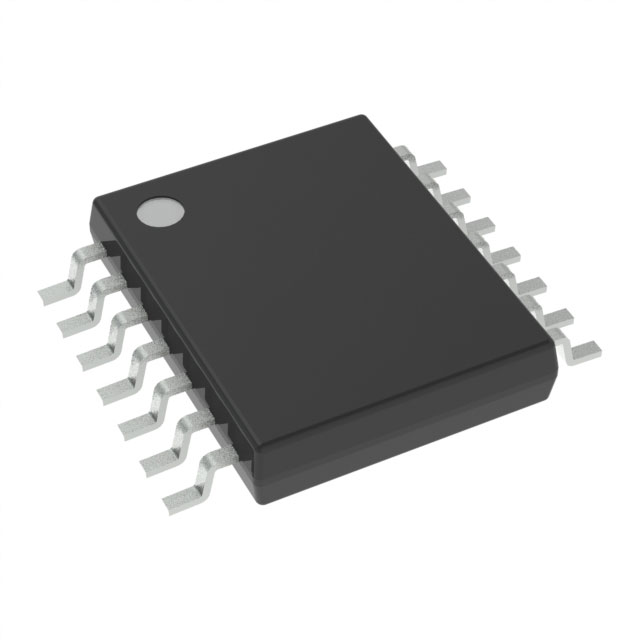
| Package / Case | 14-DIP (0.300", 7.62mm) | 14-TSSOP (0.173", 4.40mm Width) | Different package formats |
| Product Status | Obsolete | Active | SN74AC74PWR actively manufactured |
| RoHS Status | ROHS3 Compliant | ROHS3 Compliant | Both compliant |
Engineering Selection Recommendations
Functional Substitution Basis:
The SN74AC74PWR is the manufacturer-recommended substitute for the SN74LS74AN-NG. Both devices implement identical dual D-type flip-flop architectures with complementary outputs, positive edge triggering, and Set/Reset functionality. Pin-level functional compatibility is established through the common 74-series logic family standard.
Electrical Performance Advantages:
The SN74AC74PWR operates across a wider supply voltage range (2V ~ 6V versus 4.75V ~ 5.25V), provides significantly faster propagation delay (6 ns versus 40 ns), and delivers higher output current drive capability (24mA versus 400µA/8mA). Quiescent current consumption is substantially reduced (2 µA versus 8 mA), resulting in lower power dissipation in standby conditions.
Compliance and Availability:
Both devices maintain ROHS3 compliance. The SN74AC74PWR holds active product status with current manufacturing support and documented inventory availability (5389 pieces), whereas the SN74LS74AN-NG is classified as obsolete. The SN74AC74PWR is supplied in Cut Tape and Digi-Reel packaging formats.
Package and Mounting Considerations:
The SN74LS74AN-NG uses through-hole 14-DIP packaging (0.300", 7.62mm), while the SN74AC74PWR uses surface-mount 14-TSSOP packaging (0.173", 4.40mm Width). Design integration requires PCB layout modification and assembly process adjustment when transitioning between these package types.
Temperature Range Extension:
The SN74AC74PWR supports an extended operating temperature range (-40°C ~ 85°C) compared to the SN74LS74AN-NG (0°C ~ 70°C), enabling deployment in wider environmental conditions.
Frequently Asked Questions (FAQ)
Q: Can the SN74AC74PWR directly replace the SN74LS74AN-NG in existing designs?
A: Functional substitution is possible because both devices implement identical dual D-type flip-flop logic with complementary outputs and positive edge triggering. However, package format differs: the SN74LS74AN-NG uses through-hole 14-DIP mounting, while the SN74AC74PWR uses surface-mount 14-TSSOP. PCB redesign is required for physical integration.
Q: What are the key electrical differences between these parts?
A: The SN74AC74PWR provides superior electrical performance: clock frequency of 160 MHz versus 33 MHz, propagation delay of 6 ns versus 40 ns, supply voltage range of 2V ~ 6V versus 4.75V ~ 5.25V, and quiescent current of 2 µA versus 8 mA. Output current drive is higher (24mA symmetric versus 400µA/8mA asymmetric).
Q: Are there pin-to-pin compatibility considerations?
A: Both devices implement the standard 74-series dual D-type flip-flop pinout. Pin assignments are functionally equivalent. However, package physical dimensions differ significantly: 14-DIP (0.300" width) versus 14-TSSOP (0.173" width). Adapter solutions or PCB redesign may be required depending on application constraints.
Q: What is the significance of the different logic families (74LS versus 74AC)?
A: The 74LS series uses Low-Power Schottky technology, while the 74AC series uses Advanced CMOS technology. The 74AC family provides lower power consumption, faster switching speeds, and wider supply voltage tolerance. Both families maintain functional compatibility for standard logic operations.
Q: Is the SN74AC74PWR suitable for legacy system maintenance?
A: Yes. The SN74AC74PWR is actively manufactured and widely available, making it suitable for supporting obsolete SN74LS74AN-NG systems. The active product status ensures long-term supply continuity. Electrical performance improvements (lower power, faster speed) provide additional benefits for system upgrades.
Q: What compliance certifications apply to both parts?
A: Both the SN74LS74AN-NG and SN74AC74PWR maintain ROHS3 compliance. The SN74AC74PWR additionally carries REACH Unaffected status and EAR99 export classification.
Q: How does the operating temperature range affect substitution decisions?
A: The SN74LS74AN-NG operates from 0°C ~ 70°C, while the SN74AC74PWR operates from -40°C ~ 85°C. Applications requiring extended temperature operation benefit from the SN74AC74PWR. Conversely, applications with restricted temperature environments remain compatible with either device within their respective ranges.
Q: What packaging options are available for the SN74AC74PWR?
A: The SN74AC74PWR is supplied in Cut Tape (CT) and Digi-Reel packaging formats for surface-mount assembly. The SN74LS74AN-NG is supplied in through-hole DIP format. Packaging selection depends on manufacturing process and assembly equipment capabilities.
Alternative Parts

SJ6012L2TP
Littelfuse Inc.
6 Alternative Parts

JMK107BBJ476MA-RE
Taiyo Yuden
10 Alternative Parts

GMK107BBJ475MA-T
Taiyo Yuden
5 Alternative Parts
SJ6020N2ARP
Littelfuse Inc.
3 Alternative Parts
SJ6025R2ATP
Littelfuse Inc.
4 Alternative Parts

2474-05L
API Delevan Inc.
1 Alternative Parts

4590R-684K
API Delevan Inc.
1 Alternative Parts

CM6560R-334
API Delevan Inc.
1 Alternative Parts

CM6460-104
API Delevan Inc.
1 Alternative Parts

5526-12
API Delevan Inc.
1 Alternative Parts