


Request Quote
(Ships tomorrow)
SN74ACT373DBR Equivalent & Substitute Parts
Part Overview
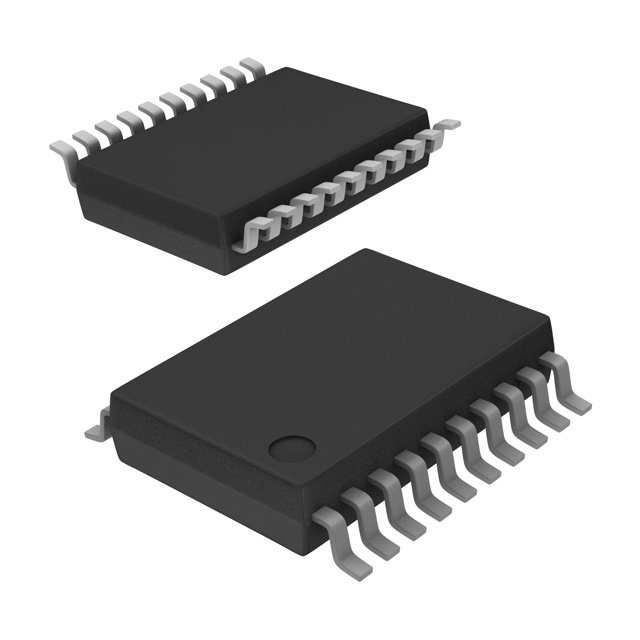
The SN74ACT373DBR is a D-Type Transparent Latch logic IC manufactured by Texas Instruments, featuring an 8:8 circuit configuration with tri-state output capability. This component is classified as active product status and is widely used in digital logic applications requiring transparent latch functionality with high-speed propagation characteristics. Equivalent and substitute parts are identified to provide design flexibility, inventory alternatives, and sourcing options while maintaining functional and electrical compatibility within specified parameter ranges.
Substiute Parts
Key Parameters
| Parameter | Value |
|---|---|
| Logic Type | D-Type Transparent Latch |
| Circuit Configuration | 8:8 |
| Output Type | Tri-State |
| Voltage Supply Range | 4.5V ~ 5.5V |
| Propagation Delay | 8.5ns |
| Output Current (High/Low) | 24mA / 24mA |
| Operating Temperature | -40°C ~ 85°C |
| Mounting Type | Surface Mount |
| Package Type | 20-SSOP |
| RoHS Status | ROHS3 Compliant |
Substitute Part Grouping Explanation
Substitute parts for the SN74ACT373DBR are identified based on functional equivalence within the 74AC logic family. The primary substitution criterion is the maintenance of core electrical and functional parameters: D-Type Transparent Latch logic type, 8:8 circuit configuration, tri-state output capability, and compatible operating temperature range.
The MC74AC373DTR2G, manufactured by onsemi, qualifies as a substitute based on the following alignment criteria:
- Identical logic type and circuit configuration (D-Type Transparent Latch, 8:8)
- Matching output type (Tri-State)
- Compatible supply voltage range (2V ~ 6V encompasses the 4.5V ~ 5.5V requirement)
- Equivalent output current specifications (24mA / 24mA)
- Matching operating temperature range (-40°C ~ 85°C)
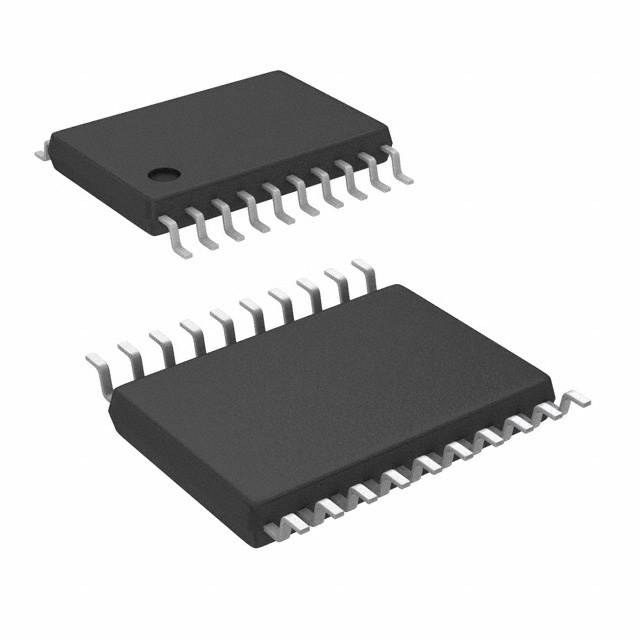
- Surface mount technology with compatible package family (20-TSSOP vs. 20-SSOP)
- Identical RoHS3 compliance and regulatory status
Package geometry differences (20-SSOP vs. 20-TSSOP) require PCB layout verification but do not affect electrical substitutability.
Parameter Comparison
| Parameter | SN74ACT373DBR (TI) | MC74AC373DTR2G (onsemi) | Compatibility |
|---|---|---|---|
| Logic Type | D-Type Transparent Latch | D-Type Transparent Latch | Identical |
| Circuit Configuration | 8:8 | 8:8 | Identical |
| Output Type | Tri-State | Tri-State | Identical |
| Supply Voltage Range | 4.5V ~ 5.5V | 2V ~ 6V | Compatible (wider range) |
| Propagation Delay | 8.5ns | 7.5ns | Compatible (faster) |
| Output Current (High/Low) | 24mA / 24mA | 24mA / 24mA | Identical |
| Operating Temperature | -40°C ~ 85°C | -40°C ~ 85°C | Identical |
| Mounting Type | Surface Mount | Surface Mount | Identical |
| Package Family | 20-SSOP | 20-TSSOP | Compatible (different geometry) |
| RoHS Status | ROHS3 Compliant | ROHS3 Compliant | Identical |
Engineering Selection Recommendations
Selection between SN74ACT373DBR and MC74AC373DTR2G is determined by application requirements and design constraints:
SN74ACT373DBR (Texas Instruments) is the primary specification component. Use this part when design documentation explicitly requires Texas Instruments sourcing, when existing inventory or supply chain relationships favor TI components, or when the 20-SSOP package geometry is already validated in PCB layout.
MC74AC373DTR2G (onsemi) serves as a functional substitute when Texas Instruments parts are unavailable, when supply chain diversification is required, or when the wider supply voltage range (2V ~ 6V) provides operational advantages. The faster propagation delay (7.5ns vs. 8.5ns) presents no compatibility issues for applications designed to the SN74ACT373DBR specification. PCB layout modification is required due to package geometry differences between 20-SSOP and 20-TSSOP.
Both parts maintain ROHS3 compliance and identical regulatory certifications, ensuring equivalent environmental and compliance status.
Frequently Asked Questions (FAQ)
Q: Can MC74AC373DTR2G be used as a direct replacement for SN74ACT373DBR without PCB modification?
A: Electrical substitution is valid. However, physical substitution requires PCB layout verification due to package geometry differences. The 20-SSOP (0.209" width) and 20-TSSOP (0.173" width) packages have different pin spacing and body dimensions. Footprint compatibility must be confirmed before assembly.
Q: What is the significance of the wider supply voltage range in the MC74AC373DTR2G (2V ~ 6V vs. 4.5V ~ 5.5V)?
A: The onsemi part accepts a broader input voltage range, providing operational flexibility in applications with variable supply conditions. For designs operating within the original 4.5V ~ 5.5V specification, both parts perform identically. The wider range does not affect compatibility when used in circuits designed for the SN74ACT373DBR.
Q: Are there functional differences between the 74ACT and 74AC logic families represented in these parts?
A: Both parts belong to the 74AC logic family. The SN74ACT373DBR designation includes the "T" suffix indicating Texas Instruments manufacturing. The MC74AC373DTR2G uses the base 74AC designation. Functional and electrical characteristics remain equivalent within the specified parameters.
Q: How does the faster propagation delay of MC74AC373DTR2G (7.5ns vs. 8.5ns) affect system performance?
A: The faster propagation delay in the onsemi part represents improved performance. Applications designed to tolerate 8.5ns delay will operate correctly with the faster 7.5ns specification. No system redesign or timing adjustment is required when substituting to the faster part.
Q: What compliance certifications apply to both substitute parts?
A: Both SN74ACT373DBR and MC74AC373DTR2G maintain ROHS3 compliance, REACH unaffected status, and identical EAR99 export classification. Regulatory and environmental compliance is equivalent between the two parts.
Q: Are there inventory or lead time considerations when selecting between these parts?
A: Inventory availability varies by supplier and time period. Current stock levels should be verified with component distributors. Both parts are active products with established supply chains, reducing long-term availability risk.
Alternative Parts

SJ6012L2TP
Littelfuse Inc.
6 Alternative Parts

JMK107BBJ476MA-RE
Taiyo Yuden
10 Alternative Parts

GMK107BBJ475MA-T
Taiyo Yuden
5 Alternative Parts
SJ6020N2ARP
Littelfuse Inc.
3 Alternative Parts
SJ6025R2ATP
Littelfuse Inc.
4 Alternative Parts

2474-05L
API Delevan Inc.
1 Alternative Parts

4590R-684K
API Delevan Inc.
1 Alternative Parts

CM6560R-334
API Delevan Inc.
1 Alternative Parts

CM6460-104
API Delevan Inc.
1 Alternative Parts

5526-12
API Delevan Inc.
1 Alternative Parts