


Request Quote
(Ships tomorrow)
SMS15CT1G Equivalent & Substitute Parts
Part Overview
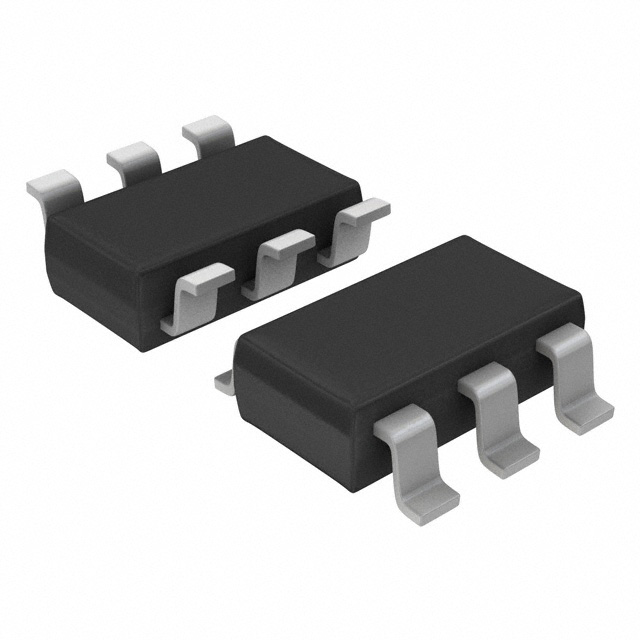
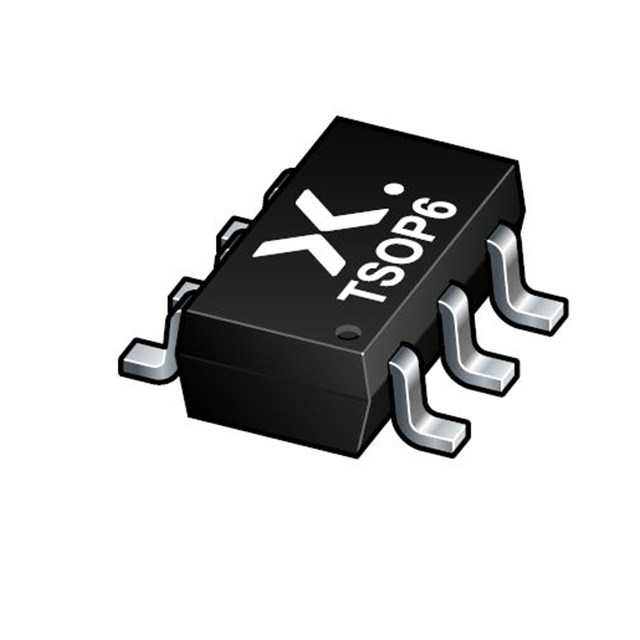
The SMS15CT1G is an active Transient Voltage Suppressor (TVS) diode manufactured by onsemi, designed for general-purpose overvoltage protection in surface-mount applications. This unidirectional 5-channel Zener diode operates across a temperature range of -40°C to 150°C and is packaged in a 6-TSOP form factor. The part is ROHS3 compliant and maintains unlimited moisture sensitivity rating (MSL 1). Finding equivalent or substitute parts may be necessary due to inventory constraints, lead time requirements, or application-specific performance needs.
Substiute Parts
Key Parameters
| Parameter | SMS15CT1G |
|---|---|
| Manufacturer | onsemi |
| Voltage - Reverse Standoff (Typ) | 15V (Max) |
| Voltage - Breakdown (Min) | 17V |
| Voltage - Clamping (Max) @ Ipp | 29V |
| Current - Peak Pulse (8/20µs) | 12A |
| Power - Peak Pulse | 350W |
| Unidirectional Channels | 5 |
| Capacitance @ 1MHz | 95pF |
| Operating Temperature | -40°C ~ 150°C (TJ) |
| Package / Case | SOT-23-6 Thin, TSOT-23-6 |
| RoHS Status | ROHS3 Compliant |
| Mounting Type | Surface Mount |
Substitute Part Grouping Explanation
Substitution eligibility for TVS diodes is determined by compatibility across critical electrical and mechanical parameters. The SMS15CT1G can be substituted with the PESD15VS5UD,115 based on the following criteria:
Matching Parameters:
- Voltage - Reverse Standoff (Typ): 15V (Max) — identical protection threshold
- Voltage - Breakdown (Min): 17V — identical trigger point
- Unidirectional Channels: 5 — same channel configuration
- Package / Case: 6-TSOP — identical physical form factor
- RoHS Status: ROHS3 Compliant — equivalent environmental compliance
- Mounting Type: Surface Mount — compatible assembly process
Differing Parameters:
- Voltage - Clamping (Max) @ Ipp: 29V (SMS15CT1G) vs. 33V (PESD15VS5UD,115)
- Current - Peak Pulse (8/20µs): 12A (SMS15CT1G) vs. 6A (PESD15VS5UD,115)
- Power - Peak Pulse: 350W (SMS15CT1G) vs. 200W (PESD15VS5UD,115)
- Capacitance @ 1MHz: 95pF (SMS15CT1G) vs. 60pF (PESD15VS5UD,115)
- Operating Temperature: -40°C ~ 150°C (TJ) (SMS15CT1G) vs. -65°C ~ 150°C (TA) (PESD15VS5UD,115)
Parameter Comparison
| Parameter | SMS15CT1G (onsemi) | PESD15VS5UD,115 (Nexperia USA Inc.) |
|---|---|---|
| Category | Transient Voltage Suppressors (TVS) | Transient Voltage Suppressors (TVS) |
| Type | Zener | Zener |
| Voltage - Reverse Standoff (Typ) | 15V (Max) | 15V (Max) |
| Voltage - Breakdown (Min) | 17V | 17V |
| Voltage - Clamping (Max) @ Ipp | 29V | 33V |
| Current - Peak Pulse (8/20µs) | 12A | 6A |
| Power - Peak Pulse | 350W | 200W |
| Unidirectional Channels | 5 | 5 |
| Capacitance @ 1MHz | 95pF | 60pF |
| Operating Temperature | -40°C ~ 150°C (TJ) | -65°C ~ 150°C (TA) |
| Package / Case | SOT-23-6 Thin, TSOT-23-6 | SC-74, SOT-457 |
| Mounting Type | Surface Mount | Surface Mount |
| RoHS Status | ROHS3 Compliant | ROHS3 Compliant |
| Product Status | Active | Active |
Engineering Selection Recommendations
Both the SMS15CT1G and PESD15VS5UD,115 are active products with ROHS3 compliance and identical reverse standoff and breakdown voltage specifications. The PESD15VS5UD,115 carries AEC-Q100 automotive qualification, making it suitable for applications requiring automotive-grade reliability.
Selection between these parts depends on application current and power dissipation requirements. The SMS15CT1G provides higher peak pulse current (12A vs. 6A) and peak pulse power (350W vs. 200W), making it appropriate for high-energy transient suppression. The PESD15VS5UD,115 operates across a wider temperature range (-65°C to 150°C vs. -40°C to 150°C) and features lower capacitance (60pF vs. 95pF), which may be advantageous in high-frequency signal integrity applications.
Frequently Asked Questions (FAQ)
Q: Can PESD15VS5UD,115 directly replace SMS15CT1G in all applications?
A: Direct replacement is possible only when application current requirements do not exceed 6A (8/20µs) and power dissipation remains below 200W. The SMS15CT1G is rated for 12A and 350W, providing higher transient energy handling capability.
Q: What is the significance of the different clamping voltages (29V vs. 33V)?
A: Both parts maintain the same reverse standoff (15V) and breakdown (17V) voltages. The clamping voltage difference reflects different internal design characteristics. Selection should be based on the maximum allowable voltage the protected circuit can tolerate during a transient event.
Q: Are the package designations SOT-23-6 and SC-74/SOT-457 physically compatible?
A: Both are 6-pin surface-mount packages in the TSOP family with identical pin spacing and footprint compatibility. PCB layout and assembly processes remain unchanged.
Q: Why does PESD15VS5UD,115 have AEC-Q100 qualification while SMS15CT1G does not?
A: AEC-Q100 qualification indicates automotive-grade testing and reliability standards. This certification is relevant only for applications requiring automotive compliance. General-purpose applications do not require this qualification.
Q: How does the capacitance difference (95pF vs. 60pF) affect circuit performance?
A: Lower capacitance in the PESD15VS5UD,115 reduces parasitic loading on high-frequency signal lines, making it preferable for applications involving RF or high-speed digital signals. The SMS15CT1G's higher capacitance is acceptable in power supply and low-frequency protection circuits.
Alternative Parts

SJ6012L2TP
Littelfuse Inc.
6 Alternative Parts

JMK107BBJ476MA-RE
Taiyo Yuden
10 Alternative Parts

GMK107BBJ475MA-T
Taiyo Yuden
5 Alternative Parts
SJ6020N2ARP
Littelfuse Inc.
3 Alternative Parts
SJ6025R2ATP
Littelfuse Inc.
4 Alternative Parts

2474-05L
API Delevan Inc.
1 Alternative Parts

4590R-684K
API Delevan Inc.
1 Alternative Parts

CM6560R-334
API Delevan Inc.
1 Alternative Parts

CM6460-104
API Delevan Inc.
1 Alternative Parts

5526-12
API Delevan Inc.
1 Alternative Parts