




Request Quote
(Ships tomorrow)
SMDB12/TR13 Equivalent & Substitute Parts Reference
Part Overview
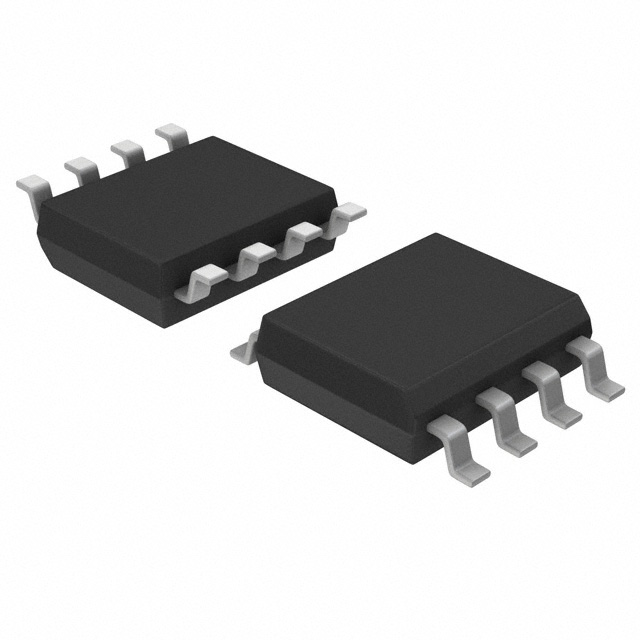
The SMDB12/TR13 is a Transient Voltage Suppressor (TVS) diode manufactured by Microchip Technology, part of the TVSarray™ series. This surface mount component provides transient overvoltage protection in general-purpose applications with a 12V reverse standoff voltage and 19V maximum clamping voltage. The part is currently Active in product status with 690 pieces available in original inventory. Substitute parts are identified when packaging format, supplier availability, or equivalent electrical performance requirements necessitate component alternatives while maintaining circuit protection specifications.
Substiute Parts
Key Parameters
| Parameter | Value | Unit |
|---|---|---|
| Voltage - Reverse Standoff (Typ) | 12V | V |
| Voltage - Breakdown (Min) | 13.3V | V |
| Voltage - Clamping (Max) @ Ipp | 19V | V |
| Current - Peak Pulse (8/20µs) | 5A | A |
| Power - Peak Pulse | 300W | W |
| Capacitance @ 1MHz | 185pF | pF |
| Operating Temperature Range | -55°C to 150°C | °C (TJ) |
| Package / Case | 8-SOIC (0.154", 3.90mm Width) | — |
| Mounting Type | Surface Mount | — |
| Unidirectional Channels | 4 | — |
Substitute Part Grouping Explanation
Substitution eligibility for the SMDB12/TR13 is determined by the following critical parameters: Voltage - Reverse Standoff (12V typical), Voltage - Breakdown minimum (13.3V), Voltage - Clamping maximum at Ipp (19V), Current - Peak Pulse rating (5A at 8/20µs), Power - Peak Pulse (300W), package type (8-SOIC), and mounting configuration (Surface Mount).
Direct Substitutes maintain identical electrical specifications across all key parameters and differ only in packaging format (Tape & Reel versus Cut Tape) or base product designation within the same manufacturer series.
Similar Substitutes share the same reverse standoff voltage (12V) and package footprint but exhibit variations in clamping voltage, peak pulse current, or other secondary parameters. These parts are suitable only when circuit design tolerances accommodate the specified parameter differences.
Parameter Comparison
| Parameter | SMDB12/TR13 (Main) | SMDA12/TR7 (Direct) | SMDB12/TR7 (Direct) | SMDA12.TBT (Similar) |
|---|---|---|---|---|
| Manufacturer | Microchip Technology | Microchip Technology | Microchip Technology | Semtech Corporation |
| Voltage - Reverse Standoff (Typ) | 12V | 12V | 12V | 12V (Max) |
| Voltage - Breakdown (Min) | 13.3V | 13.3V | 13.3V | 13.3V |
| Voltage - Clamping (Max) @ Ipp | 19V | 19V | 19V | 24V |
| Current - Peak Pulse (8/20µs) | 5A | 5A | 5A | 12A |
| Power - Peak Pulse | 300W | 300W | 300W | 300W |
| Capacitance @ 1MHz | 185pF | 185pF | 185pF | 150pF |
| Operating Temperature Range | -55°C to 150°C | -55°C to 150°C | -55°C to 150°C | -55°C to 125°C |
| Package / Case | 8-SOIC | 8-SOIC | 8-SOIC | 8-SOIC |
| Packaging Format | Tape & Reel (TR) | Cut Tape (CT) | Cut Tape (CT) | Tape & Reel (TR) |
| Unidirectional Channels | 4 | 4 | 4 | 4 |
| Product Status | Active | Active | Active | Active |
| RoHS Status | RoHS non-compliant | RoHS non-compliant | RoHS non-compliant | ROHS3 Compliant |
Engineering Selection Recommendations
SMDA12/TR7 and SMDB12/TR7 are direct electrical equivalents to the SMDB12/TR13. Both parts maintain identical voltage ratings (12V reverse standoff, 13.3V breakdown minimum, 19V clamping maximum), current handling (5A peak pulse), and thermal specifications. The primary distinction is packaging format: SMDA12/TR7 and SMDB12/TR7 are supplied in Cut Tape format rather than Tape & Reel. Selection between these direct substitutes depends on assembly line requirements and tape format compatibility. All three Microchip parts share identical RoHS non-compliant status and REACH Unaffected classification.
SMDA12.TBT (Semtech Corporation) is classified as a similar substitute due to parameter deviations. While maintaining the 12V reverse standoff voltage and 8-SOIC package footprint, this part specifies a higher clamping voltage (24V maximum versus 19V), elevated peak pulse current (12A versus 5A), and reduced capacitance (150pF versus 185pF). The operating temperature range is also narrower (-55°C to 125°C versus -55°C to 150°C). SMDA12.TBT achieves ROHS3 compliance, distinguishing it from the non-compliant Microchip alternatives. Selection of SMDA12.TBT requires verification that circuit design tolerates the higher clamping voltage and peak current specifications.
Frequently Asked Questions (FAQ)
Q: Can SMDA12/TR7 or SMDB12/TR7 be used as direct replacements for SMDB12/TR13?
A: Yes. SMDA12/TR7 and SMDB12/TR7 are direct electrical equivalents with identical voltage ratings, current ratings, and thermal specifications. The only difference is packaging format (Cut Tape versus Tape & Reel). Compatibility depends on assembly equipment capability to process Cut Tape format.
Q: What are the key differences between SMDB12/TR13 and SMDA12.TBT?
A: SMDA12.TBT differs in three critical parameters: clamping voltage (24V versus 19V), peak pulse current (12A versus 5A), and operating temperature maximum (125°C versus 150°C). SMDA12.TBT also achieves ROHS3 compliance. These differences require circuit design verification before substitution.
Q: Is the 8-SOIC package footprint identical across all listed parts?
A: Yes. All parts use the 8-SOIC package with 0.154" width (3.90mm). PCB layout and footprint design are compatible across SMDB12/TR13, SMDA12/TR7, SMDB12/TR7, and SMDA12.TBT.
Q: What does "Unidirectional Channels: 4" mean for these TVS diodes?
A: This indicates the component contains four independent unidirectional TVS diode channels within the single 8-SO package, enabling multi-line protection in a compact form factor.
Q: Are there RoHS compliance implications when selecting substitutes?
A: SMDB12/TR13, SMDA12/TR7, and SMDB12/TR7 are RoHS non-compliant. SMDA12.TBT is ROHS3 compliant. If RoHS compliance is a design requirement, SMDA12.TBT is the only qualified option among these substitutes.
Q: How does capacitance difference affect circuit performance?
A: SMDB12/TR13, SMDA12/TR7, and SMDB12/TR7 specify 185pF @ 1MHz. SMDA12.TBT specifies 150pF @ 1MHz. Lower capacitance may reduce signal coupling effects in high-frequency applications. Circuit simulation is recommended if operating frequency exceeds 1MHz.
Alternative Parts

SJ6012L2TP
Littelfuse Inc.
6 Alternative Parts

JMK107BBJ476MA-RE
Taiyo Yuden
10 Alternative Parts

GMK107BBJ475MA-T
Taiyo Yuden
5 Alternative Parts
SJ6020N2ARP
Littelfuse Inc.
3 Alternative Parts
SJ6025R2ATP
Littelfuse Inc.
4 Alternative Parts

2474-05L
API Delevan Inc.
1 Alternative Parts

4590R-684K
API Delevan Inc.
1 Alternative Parts

CM6560R-334
API Delevan Inc.
1 Alternative Parts

CM6460-104
API Delevan Inc.
1 Alternative Parts

5526-12
API Delevan Inc.
1 Alternative Parts