


Request Quote
(Ships tomorrow)
SMDA24CDR2G Equivalent & Substitute Parts
Part Overview
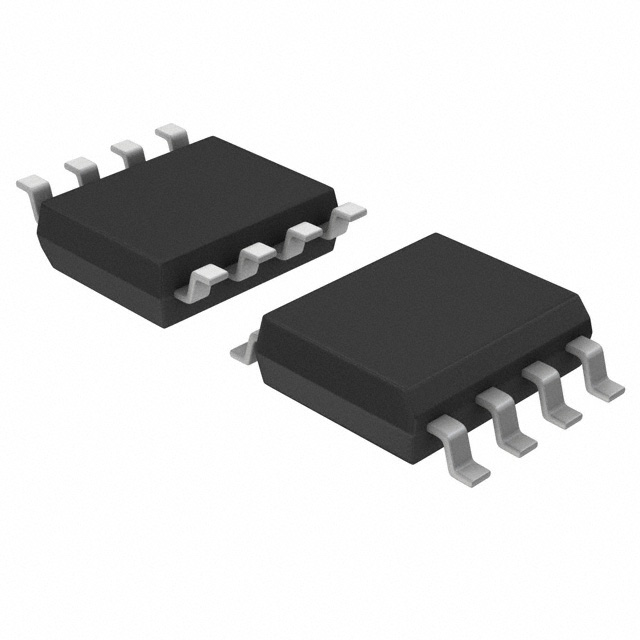
The SMDA24CDR2G is a bidirectional transient voltage suppressor (TVS) diode manufactured by onsemi, designed for general-purpose overvoltage protection applications. This component features a 24V reverse standoff voltage with a 55V maximum clamping voltage and 5A peak pulse current rating in an 8-SOIC surface mount package. The part is currently classified as obsolete, making identification of functionally equivalent alternatives essential for ongoing design support and procurement.
Substiute Parts
Key Parameters
| Parameter | Value |
|---|---|
| Manufacturer Part Number | SMDA24CDR2G |
| Manufacturer | onsemi |
| Category | Transient Voltage Suppressors (TVS) |
| Type | Zener |
| Bidirectional Channels | 4 |
| Voltage - Reverse Standoff (Typ) | 24V (Max) |
| Voltage - Breakdown (Min) | 26.7V |
| Voltage - Clamping (Max) @ Ipp | 55V |
| Current - Peak Pulse (10/1000µs) | 5A (8/20µs) |
| Power - Peak Pulse | 300W |
| Operating Temperature Range | -55°C ~ 150°C (TJ) |
| Package / Case | 8-SOIC (0.154", 3.90mm Width) |
| Mounting Type | Surface Mount |
| Product Status | Obsolete |
Substitute Part Grouping Explanation
Substitution of the SMDA24CDR2G is determined by the following critical electrical and mechanical parameters:
- Voltage - Reverse Standoff: 24V (Max)
- Voltage - Breakdown (Min): 26.7V
- Bidirectional Channels: 4
- Package / Case: 8-SOIC (0.154", 3.90mm Width)
- Mounting Type: Surface Mount
- Type: Zener
Substitute parts must maintain identical reverse standoff voltage, breakdown voltage, channel configuration, and physical package dimensions to ensure direct functional replacement without circuit redesign. Variations in clamping voltage, peak pulse current, or operating temperature range may be acceptable depending on application requirements, but the core electrical protection characteristics must align.
Parameter Comparison
| Parameter | SMDA24CDR2G (Main) | SMDA24C.TBT (Direct) | SMDA24C (Similar) |
|---|---|---|---|
| Manufacturer | onsemi | Semtech Corporation | SMC Diode Solutions |
| Product Status | Obsolete | Active | Active |
| Type | Zener | Zener | Zener |
| Bidirectional Channels | 4 | 4 | 4 |
| Voltage - Reverse Standoff (Typ) | 24V (Max) | 24V (Max) | 24V (Max) |
| Voltage - Breakdown (Min) | 26.7V | 26.7V | 26.7V |
| Voltage - Clamping (Max) @ Ipp | 55V | 55V | 43V |
| Current - Peak Pulse (10/1000µs) | 5A (8/20µs) | 5A (8/20µs) | Not specified |
| Power - Peak Pulse | 300W | 300W | 300W |
| Operating Temperature Range | -55°C ~ 150°C (TJ) | -55°C ~ 125°C (TJ) | -55°C ~ 125°C (TJ) |
| Package / Case | 8-SOIC (0.154", 3.90mm Width) | 8-SOIC (0.154", 3.90mm Width) | 8-SOIC (0.154", 3.90mm Width) |
| Mounting Type | Surface Mount | Surface Mount | Surface Mount |
| Capacitance @ Frequency | 50pF @ 1MHz | 50pF @ 1MHz | 45pF @ 1MHz |
| RoHS Status | Not specified | ROHS3 Compliant | ROHS3 Compliant |
| REACH Status | REACH Unaffected | REACH Unaffected | REACH Affected |
Engineering Selection Recommendations
SMDA24C.TBT (Semtech Corporation) is the primary direct substitute for the obsolete SMDA24CDR2G. This part maintains identical electrical specifications including 24V reverse standoff voltage, 26.7V breakdown voltage, 55V clamping voltage, and 5A peak pulse current. The part is currently in active production status with ROHS3 compliance and REACH unaffected classification. The operating temperature range is reduced to -55°C ~ 125°C compared to the original 150°C maximum, which may require verification against application thermal requirements.
SMDA24C (SMC Diode Solutions) is a similar alternative that maintains core voltage and channel specifications but features a lower 43V clamping voltage and does not specify peak pulse current. This part is also in active production with ROHS3 compliance but carries REACH affected status. The reduced clamping voltage and unspecified current rating require application-level evaluation before selection.
Both substitute parts are available in active production status, addressing the obsolescence of the original component. Selection between these alternatives depends on compliance requirements, thermal operating range constraints, and specific clamping voltage performance needs within the target application.
Frequently Asked Questions (FAQ)
Q: Can SMDA24C.TBT be used as a direct replacement for SMDA24CDR2G?
A: Yes. SMDA24C.TBT maintains identical reverse standoff voltage (24V), breakdown voltage (26.7V), clamping voltage (55V), peak pulse current (5A), and package configuration (8-SOIC). The primary difference is the reduced maximum operating temperature (125°C vs. 150°C). Verify that your application does not require operation above 125°C junction temperature.
Q: What is the difference between SMDA24C.TBT and SMDA24C?
A: Both parts share the same 24V reverse standoff and 26.7V breakdown specifications. SMDA24C.TBT has a 55V clamping voltage matching the original part, while SMDA24C has a lower 43V clamping voltage. SMDA24C does not specify peak pulse current. SMDA24C.TBT is REACH unaffected; SMDA24C is REACH affected.
Q: Are all three parts pin-compatible?
A: Yes. All three parts use the 8-SOIC (0.154", 3.90mm Width) surface mount package with 4 bidirectional channels, ensuring mechanical and electrical pin compatibility on the PCB.
Q: Does the reduced operating temperature range of the substitutes affect my design?
A: The substitutes operate to -55°C ~ 125°C (TJ) versus the original -55°C ~ 150°C (TJ). If your application requires junction temperatures above 125°C, the substitutes may not be suitable. Evaluate your thermal design and worst-case operating conditions.
Q: What is the significance of REACH status in part selection?
A: REACH affected status indicates the part may contain substances of concern under EU regulations. REACH unaffected parts have no such restrictions. If your supply chain or end-market requires REACH compliance, SMDA24C.TBT is the appropriate choice over SMDA24C.
Q: Can I use SMDA24C if my application allows for lower clamping voltage?
A: SMDA24C provides 43V clamping versus 55V for the original part. Lower clamping voltage may result in higher transient voltages reaching protected circuitry. Verify that your circuit design tolerates this difference and that the unspecified peak pulse current meets your protection requirements.
Alternative Parts

SJ6012L2TP
Littelfuse Inc.
6 Alternative Parts

JMK107BBJ476MA-RE
Taiyo Yuden
10 Alternative Parts

GMK107BBJ475MA-T
Taiyo Yuden
5 Alternative Parts
SJ6020N2ARP
Littelfuse Inc.
3 Alternative Parts
SJ6025R2ATP
Littelfuse Inc.
4 Alternative Parts

2474-05L
API Delevan Inc.
1 Alternative Parts

4590R-684K
API Delevan Inc.
1 Alternative Parts

CM6560R-334
API Delevan Inc.
1 Alternative Parts

CM6460-104
API Delevan Inc.
1 Alternative Parts

5526-12
API Delevan Inc.
1 Alternative Parts