



Request Quote
(Ships tomorrow)
SMDA12C-5/TR7 Equivalent & Substitute Parts
Part Overview
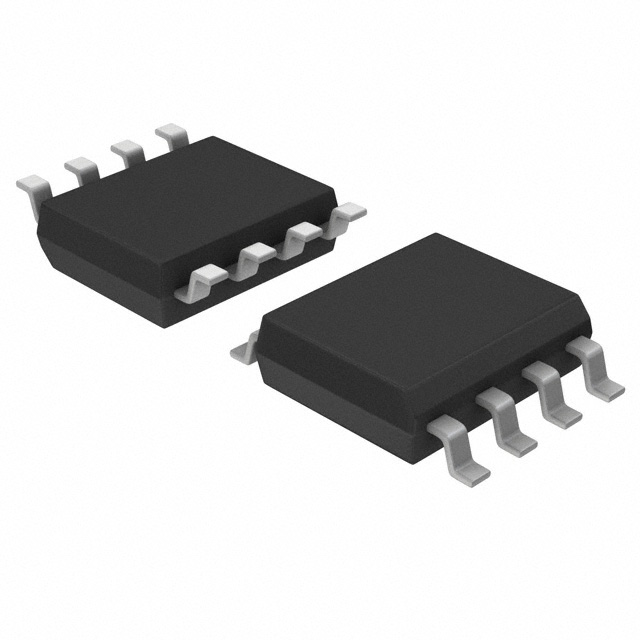
The SMDA12C-5/TR7 is a bidirectional transient voltage suppressor (TVS) diode manufactured by Microchip Technology, designed for general-purpose overvoltage protection applications. This surface-mount component features a 12V reverse standoff voltage with a 24V maximum clamping voltage and 5A peak pulse current capability in an 8-SOIC package. The product maintains active status in the manufacturer's portfolio.
Substitute parts are identified to address inventory availability, extended lead times, or specific application requirements where alternative electrical characteristics remain within acceptable operational parameters for the target circuit.
Substiute Parts
Key Parameters
| Parameter | Value | Unit |
|---|---|---|
| Voltage - Reverse Standoff (Typ) | 12V | V |
| Voltage - Breakdown (Min) | 13.3V | V |
| Voltage - Clamping (Max) @ Ipp | 24V | V |
| Current - Peak Pulse (8/20µs) | 5A | A |
| Power - Peak Pulse | 300W | W |
| Bidirectional Channels | 5 | Channels |
| Capacitance @ 1MHz | 75pF | pF |
| Operating Temperature Range | -55°C to 150°C | °C |
| Package / Case | 8-SOIC (0.154", 3.90mm Width) | — |
| Mounting Type | Surface Mount | — |
| Type | Zener | — |
Substitute Part Grouping Explanation
Substitution eligibility for the SMDA12C-5/TR7 is determined by the following critical parameters:
Primary Compatibility Criteria:
- Identical reverse standoff voltage (12V nominal)
- Identical bidirectional channel configuration (5 channels)
- Identical package type (8-SOIC surface mount)
- Zener diode type classification
- General-purpose TVS application category
Secondary Compatibility Parameters:
- Clamping voltage within acceptable circuit tolerance
- Peak pulse current rating sufficient for application requirements
- Operating temperature range encompassing circuit operating conditions
- Capacitance characteristics suitable for signal integrity
The SMDA12C-5.TBT from Semtech meets the primary compatibility criteria while introducing variations in secondary parameters. These variations are permissible when the substitute part's electrical characteristics remain within the design margins of the target application.
Parameter Comparison
| Parameter | SMDA12C-5/TR7 (Microchip) | SMDA12C-5.TBT (Semtech) | Unit |
|---|---|---|---|
| Voltage - Reverse Standoff (Typ) | 12V | 12V (Max) | V |
| Voltage - Breakdown (Min) | 13.3V | 16.7V | V |
| Voltage - Clamping (Max) @ Ipp | 24V | 19V | V |
| Current - Peak Pulse (8/20µs) | 5A | 12A | A |
| Power - Peak Pulse | 300W | 300W | W |
| Bidirectional Channels | 5 | 5 | Channels |
| Capacitance @ 1MHz | 75pF | 120pF | pF |
| Operating Temperature Range | -55°C to 150°C | -55°C to 125°C | °C |
| Package / Case | 8-SOIC (0.154", 3.90mm Width) | 8-SOIC (0.154", 3.90mm Width) | — |
| Mounting Type | Surface Mount | Surface Mount | — |
| Type | Zener | Zener | — |
| RoHS Status | RoHS non-compliant | ROHS3 Compliant | — |
Engineering Selection Recommendations
SMDA12C-5/TR7 (Microchip Technology)
Select this part when the application requires the original specification, including the extended operating temperature range (-55°C to 150°C) and the specific clamping voltage characteristic of 24V maximum. This part is active in the manufacturer's product line and carries RoHS non-compliant status.
SMDA12C-5.TBT (Semtech)
This substitute part is suitable for applications where the following conditions are met:
- The circuit design accommodates a lower maximum clamping voltage (19V versus 24V)
- The higher peak pulse current rating (12A versus 5A) provides additional margin for transient suppression
- The operating temperature range of -55°C to 125°C satisfies circuit requirements
- RoHS3 compliance is required or preferred for the end application
- The increased capacitance (120pF versus 75pF) does not adversely affect signal integrity in the target circuit
Both parts share identical reverse standoff voltage, bidirectional channel configuration, and 8-SOIC package footprint, enabling direct PCB layout compatibility.
Frequently Asked Questions (FAQ)
Q: Can the SMDA12C-5.TBT directly replace the SMDA12C-5/TR7 on the PCB?
A: Yes. Both parts use the 8-SOIC (0.154", 3.90mm Width) package with identical pinout and footprint. No PCB layout modifications are required.
Q: What is the primary difference between these two parts?
A: The SMDA12C-5.TBT features a lower maximum clamping voltage (19V versus 24V), higher peak pulse current capability (12A versus 5A), and higher capacitance (120pF versus 75pF). The Semtech part also maintains ROHS3 compliance, whereas the Microchip part is RoHS non-compliant.
Q: Does the lower clamping voltage of the SMDA12C-5.TBT affect circuit protection?
A: The lower clamping voltage (19V) provides tighter voltage regulation during transient events compared to the original part (24V). This characteristic is beneficial for protecting sensitive downstream components. Verify that the protected circuit components tolerate this lower clamping voltage within their absolute maximum ratings.
Q: Are the reverse standoff voltages identical?
A: Both parts maintain a 12V reverse standoff voltage, though the Semtech part specifies this as a maximum value (12V Max) while the Microchip part specifies it as typical (12V Typ). This difference does not affect substitution eligibility for general-purpose applications.
Q: What is the impact of the higher capacitance in the SMDA12C-5.TBT?
A: The SMDA12C-5.TBT exhibits 120pF capacitance at 1MHz compared to 75pF for the original part. In high-frequency signal applications, this increased capacitance may introduce additional loading on signal lines. Evaluate the impact on signal integrity and timing-critical circuits before substitution.
Q: Does the operating temperature range difference matter?
A: The SMDA12C-5/TR7 operates from -55°C to 150°C, while the SMDA12C-5.TBT operates from -55°C to 125°C. If the application requires operation above 125°C, the original Microchip part is required. For applications within the -55°C to 125°C range, both parts are suitable.
Q: Is RoHS compliance a factor in selecting between these parts?
A: RoHS compliance is a regulatory and supply chain consideration. The SMDA12C-5.TBT is ROHS3 compliant, while the SMDA12C-5/TR7 is RoHS non-compliant. Applications subject to RoHS regulations or customer requirements must use the Semtech part.
Q: Can the higher peak pulse current of the SMDA12C-5.TBT cause issues?
A: The higher peak pulse current rating (12A versus 5A) indicates greater transient suppression capability. This characteristic does not introduce compatibility issues; it provides additional design margin for transient protection.
Alternative Parts

SJ6012L2TP
Littelfuse Inc.
6 Alternative Parts

JMK107BBJ476MA-RE
Taiyo Yuden
10 Alternative Parts

GMK107BBJ475MA-T
Taiyo Yuden
5 Alternative Parts
SJ6020N2ARP
Littelfuse Inc.
3 Alternative Parts
SJ6025R2ATP
Littelfuse Inc.
4 Alternative Parts

2474-05L
API Delevan Inc.
1 Alternative Parts

4590R-684K
API Delevan Inc.
1 Alternative Parts

CM6560R-334
API Delevan Inc.
1 Alternative Parts

CM6460-104
API Delevan Inc.
1 Alternative Parts

5526-12
API Delevan Inc.
1 Alternative Parts