



Request Quote
(Ships tomorrow)
SMDA05C-5/TR7 Equivalent & Substitute Parts
Part Overview
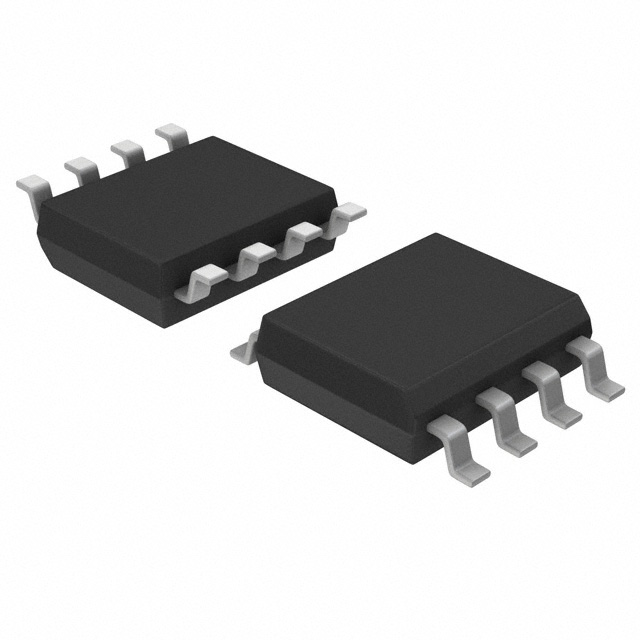
The SMDA05C-5/TR7 is a bidirectional transient voltage suppressor (TVS) diode manufactured by Microchip Technology. This surface-mount component operates in the 5V reverse standoff voltage class and provides transient protection for general-purpose applications. The device features five bidirectional channels in an 8-SOIC package and is classified as an active product. Substitute parts are identified when equivalent electrical performance and mechanical compatibility can be maintained across the specified parameter ranges, enabling procurement flexibility and supply chain continuity.
Substiute Parts
Key Parameters
| Parameter | Value | Unit |
|---|---|---|
| Voltage - Reverse Standoff (Typ) | 5V | V |
| Voltage - Breakdown (Min) | 6V | V |
| Voltage - Clamping (Max) @ Ipp | 11V | V |
| Current - Peak Pulse (8/20µs) | 5A | A |
| Power - Peak Pulse | 300W | W |
| Bidirectional Channels | 5 | — |
| Package / Case | 8-SOIC (0.154", 3.90mm Width) | — |
| Operating Temperature Range | -55°C ~ 150°C | °C (TJ) |
| Capacitance @ 1MHz | 200pF | pF |
| Mounting Type | Surface Mount | — |
Substitute Part Grouping Explanation
Substitution eligibility for the SMDA05C-5/TR7 is determined by the following criteria:
Mandatory Compatibility Parameters:
- Reverse standoff voltage classification: 5V
- Breakdown voltage minimum: 6V or greater
- Package type: 8-SOIC surface mount
- Bidirectional channel count: 5 channels
- Clamping voltage performance: within acceptable system protection thresholds
- Peak pulse power rating: 300W minimum
Allowed Variation Parameters:
- Clamping voltage (Max) @ Ipp: may vary within the 5V class protection envelope
- Peak pulse current (8/20µs): may exceed the primary part specification
- Capacitance @ 1MHz: may vary based on die design
- Operating temperature range: may extend beyond the primary part range
- RoHS compliance status: may differ between manufacturers
The SMDA05C-5.TBT from Semtech Corporation qualifies as a substitute based on matching reverse standoff voltage, breakdown voltage, package configuration, channel count, and peak pulse power rating. Differences in clamping voltage, peak pulse current, and operating temperature range remain within acceptable substitution parameters for general-purpose transient protection applications.
Parameter Comparison
| Parameter | SMDA05C-5/TR7 (Microchip) | SMDA05C-5.TBT (Semtech) | Compatibility |
|---|---|---|---|
| Manufacturer | Microchip Technology | Semtech Corporation | Different manufacturers |
| Voltage - Reverse Standoff (Typ) | 5V | 5V (Max) | Equivalent |
| Voltage - Breakdown (Min) | 6V | 6V | Equivalent |
| Voltage - Clamping (Max) @ Ipp | 11V | 9.8V | Compatible (lower clamp voltage) |
| Current - Peak Pulse (8/20µs) | 5A | 17A | Compatible (higher current rating) |
| Power - Peak Pulse | 300W | 300W | Equivalent |
| Bidirectional Channels | 5 | 5 | Equivalent |
| Package / Case | 8-SOIC (0.154", 3.90mm Width) | 8-SOIC (0.154", 3.90mm Width) | Equivalent |
| Mounting Type | Surface Mount | Surface Mount | Equivalent |
| Operating Temperature Range | -55°C ~ 150°C (TJ) | -55°C ~ 125°C (TJ) | Compatible (primary part has extended range) |
| Capacitance @ 1MHz | 200pF | 350pF | Compatible (higher capacitance) |
| RoHS Status | RoHS non-compliant | RoHS Compliant | Different compliance status |
| Product Status | Active | Active | Both active |
Engineering Selection Recommendations
SMDA05C-5/TR7 (Microchip Technology):
- Primary selection for applications requiring extended operating temperature range (-55°C to 150°C)
- Suitable for designs where RoHS non-compliance is acceptable or not required
- Lower capacitance (200pF) appropriate for applications sensitive to parasitic capacitance effects
- Specified peak pulse current of 5A adequate for standard transient protection scenarios
SMDA05C-5.TBT (Semtech Corporation):
- Preferred for RoHS-compliant designs and regulated supply chains
- Superior peak pulse current rating (17A) provides additional margin for high-energy transient events
- Lower clamping voltage (9.8V vs. 11V) offers tighter voltage regulation during transient suppression
- Operating temperature range (-55°C to 125°C) suitable for most industrial and commercial applications
- Higher capacitance (350pF) may require evaluation in high-frequency signal integrity applications
Both parts maintain identical reverse standoff voltage, breakdown voltage, package configuration, channel count, and peak pulse power rating. Selection between these substitutes depends on compliance requirements, thermal operating envelope, and transient energy specifications of the target application.
Frequently Asked Questions (FAQ)
Q: Can the SMDA05C-5.TBT directly replace the SMDA05C-5/TR7 in existing designs?
A: Yes, for applications where the operating temperature range does not exceed 125°C and RoHS compliance is not a constraint. The SMDA05C-5.TBT maintains equivalent reverse standoff voltage, breakdown voltage, package dimensions, and channel configuration. The lower clamping voltage (9.8V vs. 11V) and higher peak pulse current (17A vs. 5A) represent performance improvements for transient suppression. Designs operating above 125°C require the SMDA05C-5/TR7 due to its extended temperature rating to 150°C.
Q: What is the significance of the different clamping voltages (11V vs. 9.8V)?
A: Clamping voltage determines the maximum voltage level the TVS diode allows across the protected circuit during a transient event. The SMDA05C-5.TBT's lower clamping voltage (9.8V) provides tighter voltage regulation and may offer superior protection for sensitive components. The SMDA05C-5/TR7's higher clamping voltage (11V) is acceptable for applications with greater voltage tolerance. Both values remain within the 5V reverse standoff class and are suitable for general-purpose protection.
Q: Why does the SMDA05C-5.TBT have a higher peak pulse current rating (17A vs. 5A)?
A: Peak pulse current rating reflects the maximum transient current the device can safely conduct during an 8/20 microsecond pulse. The SMDA05C-5.TBT's 17A rating indicates superior transient energy handling capability compared to the SMDA05C-5/TR7's 5A rating. Both devices share identical peak pulse power (300W), meaning the Semtech part achieves this power dissipation at higher current levels. Applications experiencing high-energy transients benefit from the increased current margin provided by the SMDA05C-5.TBT.
Q: Are there package or pinout differences between these parts?
A: No. Both the SMDA05C-5/TR7 and SMDA05C-5.TBT use identical 8-SOIC packaging with 0.154-inch (3.90mm) width. Pinout and footprint compatibility are guaranteed, enabling direct board-level substitution without layout modifications.
Q: What is the impact of the different capacitance values (200pF vs. 350pF)?
A: Capacitance affects the device's behavior at high frequencies. The SMDA05C-5/TR7's lower capacitance (200pF) introduces less parasitic capacitance into the circuit, beneficial for high-speed signal lines where capacitive loading must be minimized. The SMDA05C-5.TBT's higher capacitance (350pF) may provide additional filtering of high-frequency noise but could impact signal integrity in bandwidth-sensitive applications. Evaluate capacitance requirements based on the protected signal frequency and impedance characteristics.
Q: How does the operating temperature range difference affect part selection?
A: The SMDA05C-5/TR7 operates from -55°C to 150°C (TJ), while the SMDA05C-5.TBT operates from -55°C to 125°C (TJ). Applications requiring junction temperatures above 125°C must use the SMDA05C-5/TR7. Most industrial and commercial applications operate within the 125°C limit, making the SMDA05C-5.TBT suitable. Verify the maximum expected junction temperature in your thermal analysis before selecting between these parts.
Q: Does RoHS compliance status affect electrical performance?
A: No. RoHS compliance is a regulatory and supply chain consideration, not an electrical performance parameter. The SMDA05C-5.TBT is RoHS compliant, while the SMDA05C-5/TR7 is RoHS non-compliant. Selection depends on whether your application, customer requirements, or regional regulations mandate RoHS compliance. Electrical characteristics remain independent of RoHS status.
Alternative Parts

SJ6012L2TP
Littelfuse Inc.
6 Alternative Parts

JMK107BBJ476MA-RE
Taiyo Yuden
10 Alternative Parts

GMK107BBJ475MA-T
Taiyo Yuden
5 Alternative Parts
SJ6020N2ARP
Littelfuse Inc.
3 Alternative Parts
SJ6025R2ATP
Littelfuse Inc.
4 Alternative Parts

2474-05L
API Delevan Inc.
1 Alternative Parts

4590R-684K
API Delevan Inc.
1 Alternative Parts

CM6560R-334
API Delevan Inc.
1 Alternative Parts

CM6460-104
API Delevan Inc.
1 Alternative Parts

5526-12
API Delevan Inc.
1 Alternative Parts