


Request Quote
(Ships tomorrow)
SIM3C154-B-GM Equivalent & Substitute Parts
Part Overview
The SIM3C154-B-GM is an ARM Cortex-M3 32-bit microcontroller manufactured by Silicon Labs, featuring 128KB FLASH memory and integrated peripherals for embedded applications. This device is classified as Not For New Designs, indicating it has reached end-of-life status. Organizations requiring functional equivalents or direct substitutes must evaluate alternative microcontrollers that maintain compatibility across core electrical and mechanical parameters while considering current product availability and support status.
Substiute Parts
Key Parameters
| Parameter | Value |
|---|---|
| Core Processor | ARM Cortex-M3 |
| Core Size | 32-Bit Single-Core |
| Speed | 80MHz |
| Program Memory Size | 128KB FLASH |
| RAM Size | 32K x 8 |
| Voltage Supply (Vcc/Vdd) | 1.8V ~ 3.6V |
| Operating Temperature | -40°C ~ 85°C |
| Mounting Type | Surface Mount |
| Package | 40-VFQFN Exposed Pad (6x6) |
| RoHS Status | ROHS3 Compliant |
Substitute Part Grouping Explanation
Substitution eligibility for the SIM3C154-B-GM is determined by the following critical parameters:
- Memory Configuration: Program memory must be 128KB FLASH minimum; RAM must support 32K x 8 or greater
- Voltage Compatibility: Supply voltage range must encompass 1.8V ~ 3.6V
- Temperature Range: Operating temperature must cover -40°C ~ 85°C
- Connectivity & Peripherals: I2C, SPI, UART/USART, and SmartCard support required
- Regulatory Compliance: RoHS3 compliance mandatory
The LPC11E37FBD48/501E qualifies as a functional substitute based on matching memory capacity, voltage range, temperature specifications, and regulatory compliance. However, architectural differences exist in processor core, clock speed, and package form factor that must be evaluated for specific application requirements.
Parameter Comparison
| Parameter | SIM3C154-B-GM | LPC11E37FBD48/501E | Compatibility Notes |
|---|---|---|---|
| Manufacturer | Silicon Labs | NXP USA Inc. | Different manufacturers |
| Core Processor | ARM Cortex-M3 | ARM Cortex-M0 | Different core architecture |
| Core Size | 32-Bit Single-Core | 32-Bit Single-Core | Compatible |
| Speed | 80MHz | 50MHz | Substitute operates at lower frequency |
| Program Memory | 128KB FLASH | 128KB FLASH | Compatible |
| RAM Size | 32K x 8 | 12K x 8 | Substitute has reduced RAM capacity |
| Voltage Supply | 1.8V ~ 3.6V | 1.8V ~ 3.6V | Compatible |
| Operating Temperature | -40°C ~ 85°C | -40°C ~ 85°C | Compatible |
| I/O Count | 28 | 40 | Substitute provides additional I/O |
| Package | 40-VFQFN (6x6) | 48-LQFP (7x7) | Different package form factors |
| RoHS Status | ROHS3 Compliant | ROHS3 Compliant | Compatible |
| Product Status | Not For New Designs | Active | Substitute is actively supported |
Engineering Selection Recommendations
The LPC11E37FBD48/501E presents a viable substitute for the SIM3C154-B-GM based on the following engineering criteria:
Compliance & Support: The LPC11E37FBD48/501E maintains Active product status with full RoHS3 compliance, whereas the SIM3C154-B-GM is designated Not For New Designs. This distinction is critical for long-term supply chain reliability and regulatory support.
Electrical Compatibility: Both devices operate within identical voltage supply ranges (1.8V ~ 3.6V) and temperature specifications (-40°C ~ 85°C), ensuring compatibility with existing power distribution and thermal management designs.
Memory Specifications: Both devices provide 128KB FLASH program memory. However, the substitute offers reduced RAM (12K x 8 versus 32K x 8), which may impact applications requiring extensive runtime memory for buffering or data processing.
Architectural Differences: The substitute employs an ARM Cortex-M0 processor operating at 50MHz, compared to the Cortex-M3 at 80MHz in the original device. This represents a performance reduction that must be validated against application timing requirements and real-time constraints.
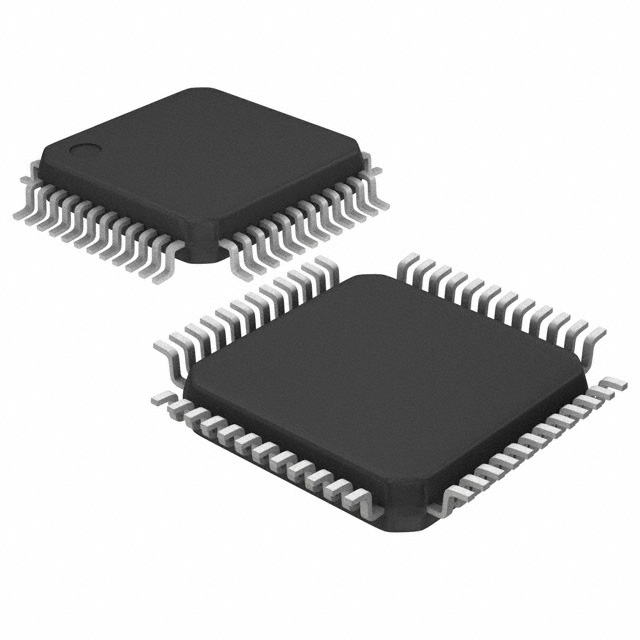
Package Considerations: The substitute utilizes a 48-LQFP package (7x7mm) versus the original 40-VFQFN (6x6mm). PCB layout redesign is required, including trace routing, via placement, and thermal management modifications.
Frequently Asked Questions (FAQ)
Q: Can the LPC11E37FBD48/501E be used as a direct pin-for-pin replacement?
A: No. The devices employ different package types (40-VQFN versus 48-LQFP) with different pin counts and pinout configurations. PCB redesign is mandatory.
Q: What is the impact of the reduced clock speed (50MHz versus 80MHz)?
A: Applications dependent on high-frequency processing, real-time signal handling, or tight timing loops may experience performance degradation. Firmware timing validation is required.
Q: Does the reduced RAM capacity (12K versus 32K) affect compatibility?
A: Applications utilizing the full 32KB RAM capacity will require code optimization or memory management restructuring. Stack and heap allocation must be re-evaluated.
Q: Are the connectivity interfaces compatible?
A: Both devices support I2C, SPI, UART/USART, and SmartCard interfaces. However, peripheral register definitions and driver implementations differ between manufacturers and require firmware adaptation.
Q: What is the significance of the product status difference?
A: The SIM3C154-B-GM is Not For New Designs, indicating Silicon Labs has discontinued active development and support. The LPC11E37FBD48/501E is Active, ensuring ongoing availability, technical support, and potential firmware updates from NXP.
Q: Are both devices RoHS3 compliant?
A: Yes. Both devices meet ROHS3 compliance requirements, ensuring compatibility with environmental and regulatory standards.
Q: What additional I/O capability does the substitute provide?
A: The LPC11E37FBD48/501E provides 40 I/O pins compared to 28 on the original device. This additional I/O capacity may enable expanded peripheral integration without external multiplexing.
Alternative Parts

SJ6012L2TP
Littelfuse Inc.
6 Alternative Parts

JMK107BBJ476MA-RE
Taiyo Yuden
10 Alternative Parts

GMK107BBJ475MA-T
Taiyo Yuden
5 Alternative Parts
SJ6020N2ARP
Littelfuse Inc.
3 Alternative Parts
SJ6025R2ATP
Littelfuse Inc.
4 Alternative Parts

2474-05L
API Delevan Inc.
1 Alternative Parts

4590R-684K
API Delevan Inc.
1 Alternative Parts

CM6560R-334
API Delevan Inc.
1 Alternative Parts

CM6460-104
API Delevan Inc.
1 Alternative Parts

5526-12
API Delevan Inc.
1 Alternative Parts