


Request Quote
(Ships tomorrow)
SI8420BB-C-ISR Digital Isolator Equivalent & Substitute Parts
Part Overview
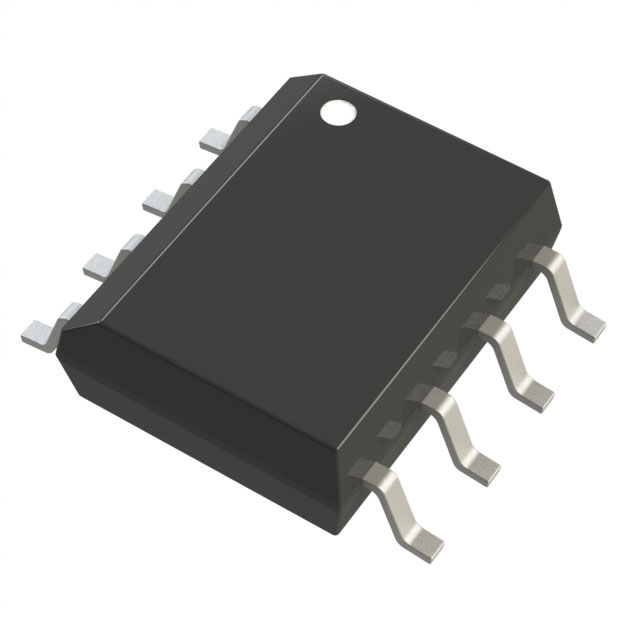
The SI8420BB-C-ISR is a general purpose digital isolator manufactured by Skyworks Solutions Inc., featuring 2500Vrms isolation voltage and 2-channel unidirectional configuration in an 8-SOIC package. This device utilizes capacitive coupling technology for signal isolation with a maximum data rate of 150Mbps and common mode transient immunity of 25kV/µs (typical).
The SI8420BB-C-ISR carries a "Not For New Designs" product status, indicating it has been superseded in the manufacturer's product line. For new applications and ongoing production requirements, identifying qualified substitute components is essential to ensure design continuity and long-term supply chain stability.
Substiute Parts
Key Parameters
| Parameter | SI8420BB-C-ISR |
|---|---|
| Isolation Voltage | 2500Vrms |
| Number of Channels | 2 |
| Channel Configuration | Unidirectional (2 inputs / 0 outputs) |
| Data Rate | 150Mbps |
| Common Mode Transient Immunity (Min) | 25kV/µs (Typ) |
| Supply Voltage Range | 2.7V ~ 5.5V |
| Operating Temperature Range | -40°C ~ 125°C |
| Package / Case | 8-SOIC (0.154", 3.90mm Width) |
| Technology | Capacitive Coupling |
| RoHS Status | ROHS3 Compliant |
Substitute Part Grouping Explanation
The SI8620BB-B-ISR qualifies as a direct substitute for the SI8420BB-C-ISR based on the following alignment of critical electrical and mechanical parameters:
Matching Parameters:
- Isolation voltage: 2500Vrms (identical)
- Number of channels: 2 (identical)
- Channel configuration: Unidirectional, 2 inputs / 0 outputs (identical)
- Data rate: 150Mbps (identical)
- Package type: 8-SOIC (0.154", 3.90mm Width) (identical)
- Technology: Capacitive coupling (identical)
- Operating temperature range: -40°C ~ 125°C (identical)
- RoHS compliance: ROHS3 Compliant (identical)
Enhanced Parameters:
- Common mode transient immunity: 35kV/µs (improved from 25kV/µs)
- Supply voltage range: 2.5V ~ 5.5V (expanded lower limit from 2.7V)
The SI8620BB-B-ISR maintains full functional and mechanical compatibility while offering superior common mode transient immunity performance and broader supply voltage tolerance.
Parameter Comparison
| Parameter | SI8420BB-C-ISR | SI8620BB-B-ISR | Compatibility |
|---|---|---|---|
| Isolation Voltage | 2500Vrms | 2500Vrms | Identical |
| Number of Channels | 2 | 2 | Identical |
| Channel Configuration | Unidirectional (2/0) | Unidirectional (2/0) | Identical |
| Data Rate | 150Mbps | 150Mbps | Identical |
| Common Mode Transient Immunity (Min) | 25kV/µs (Typ) | 35kV/µs | Enhanced |
| Propagation Delay tpLH / tpHL (Max) | 9.5ns / 9.5ns | 13ns / 13ns | Slightly Increased |
| Pulse Width Distortion (Max) | 2.5ns | 4.5ns | Slightly Increased |
| Supply Voltage Range | 2.7V ~ 5.5V | 2.5V ~ 5.5V | Expanded |
| Operating Temperature Range | -40°C ~ 125°C | -40°C ~ 125°C | Identical |
| Package / Case | 8-SOIC (0.154", 3.90mm Width) | 8-SOIC (0.154", 3.90mm Width) | Identical |
| Technology | Capacitive Coupling | Capacitive Coupling | Identical |
| RoHS Status | ROHS3 Compliant | ROHS3 Compliant | Identical |
| Moisture Sensitivity Level (MSL) | 2A (4 Weeks) | 2A (4 Weeks) | Identical |
Engineering Selection Recommendations
The SI8620BB-B-ISR is the qualified substitute for the SI8420BB-C-ISR. The primary driver for substitution is the "Not For New Designs" status of the original part, which indicates manufacturer discontinuation and reduced long-term availability.
The SI8620BB-B-ISR carries an "Active" product status, ensuring ongoing manufacturing support and supply chain reliability. Both devices maintain identical RoHS3 compliance and MSL ratings, supporting equivalent environmental and handling requirements.
The SI8620BB-B-ISR provides enhanced common mode transient immunity (35kV/µs versus 25kV/µs) and expanded supply voltage tolerance (2.5V minimum versus 2.7V minimum). These improvements offer greater design margin without introducing compatibility concerns. Minor increases in propagation delay and pulse width distortion remain within acceptable tolerances for general purpose digital isolation applications operating at 150Mbps data rates.
Pin-to-pin compatibility and identical package geometry ensure direct replacement capability without PCB redesign.
Frequently Asked Questions (FAQ)
Q: Can the SI8620BB-B-ISR be used as a direct replacement for the SI8420BB-C-ISR in existing designs?
A: Yes. Both devices share identical isolation voltage, channel count, channel configuration, data rate, package type, and operating temperature range. Pin-to-pin compatibility is maintained, allowing direct substitution without circuit modification or PCB redesign.
Q: What are the key differences between these two parts?
A: The SI8620BB-B-ISR offers improved common mode transient immunity (35kV/µs versus 25kV/µs typical) and expanded supply voltage range (2.5V to 5.5V versus 2.7V to 5.5V). Propagation delay and pulse width distortion are slightly higher but remain suitable for 150Mbps applications. The SI8620BB-B-ISR maintains active product status, whereas the SI8420BB-C-ISR is not recommended for new designs.
Q: Are there any package or handling differences?
A: No. Both devices use the 8-SOIC (0.154", 3.90mm Width) package with identical moisture sensitivity level (2A, 4 weeks). Handling, storage, and soldering procedures are equivalent.
Q: Does the SI8620BB-B-ISR meet the same compliance requirements?
A: Yes. Both parts are ROHS3 compliant with identical environmental and regulatory certifications. The SI8620BB-B-ISR maintains equivalent compliance status for applications requiring RoHS certification.
Q: Why is the SI8420BB-C-ISR marked "Not For New Designs"?
A: This designation indicates the manufacturer has superseded this part in their product portfolio. The SI8620BB-B-ISR represents the active successor, offering equivalent or improved performance characteristics while ensuring long-term supply availability.
Q: Are there any timing or performance considerations when switching to the SI8620BB-B-ISR?
A: Propagation delay increases from 9.5ns to 13ns maximum, and pulse width distortion increases from 2.5ns to 4.5ns maximum. For applications operating at 150Mbps with general purpose isolation requirements, these timing differences remain within acceptable design margins. Applications with strict timing constraints should verify compatibility through detailed timing analysis.
Alternative Parts

SJ6012L2TP
Littelfuse Inc.
6 Alternative Parts

JMK107BBJ476MA-RE
Taiyo Yuden
10 Alternative Parts

GMK107BBJ475MA-T
Taiyo Yuden
5 Alternative Parts
SJ6020N2ARP
Littelfuse Inc.
3 Alternative Parts
SJ6025R2ATP
Littelfuse Inc.
4 Alternative Parts

2474-05L
API Delevan Inc.
1 Alternative Parts

4590R-684K
API Delevan Inc.
1 Alternative Parts

CM6560R-334
API Delevan Inc.
1 Alternative Parts

CM6460-104
API Delevan Inc.
1 Alternative Parts

5526-12
API Delevan Inc.
1 Alternative Parts