


Request Quote
(Ships tomorrow)
SE1470-004L Infrared Emitter Equivalent & Substitute Parts
Part Overview
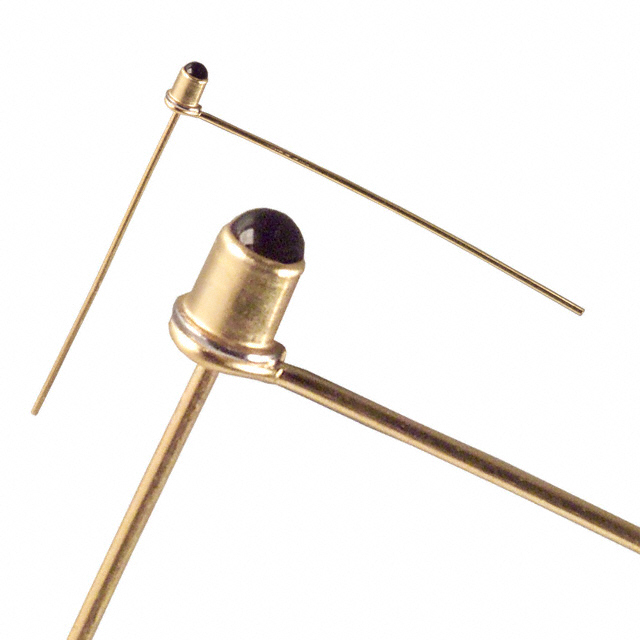
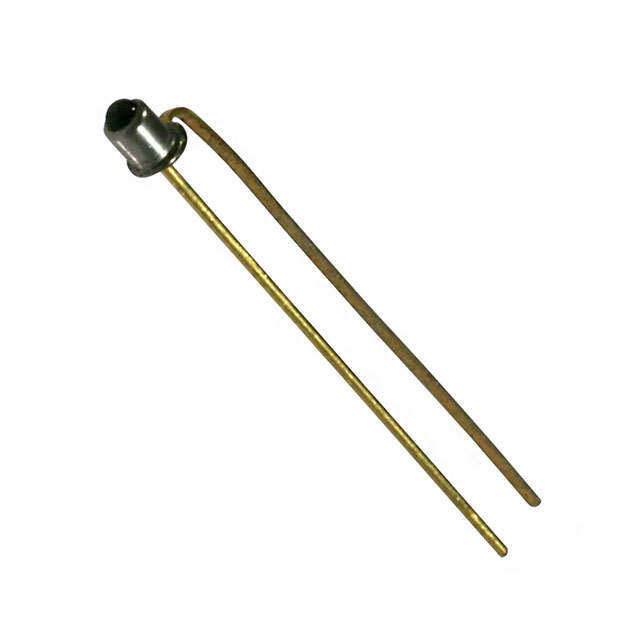
The SE1470-004L is an infrared (IR) emitter manufactured by Honeywell Sensing and Productivity Solutions, designed for applications requiring 880nm wavelength emission at 50mA maximum forward current. This component features a coaxial metal can package with a 24° viewing angle and operates across the temperature range of -55°C to 125°C.
The SE1470-004L is classified as obsolete. Locating equivalent or substitute components is necessary to support ongoing system maintenance, repair, and new design implementations where this specific part number is no longer available from primary sources.
Substiute Parts
Key Parameters
| Parameter | Value | Unit |
|---|---|---|
| Wavelength | 880 | nm |
| Current - DC Forward (If) Max | 50 | mA |
| Voltage - Forward (Vf) Typical | 1.8 | V |
| Radiant Intensity (Ie) Min @ If | 1.65 | mW/cm² @ 20mA |
| Viewing Angle | 24 | ° |
| Operating Temperature Range | -55 to 125 | °C |
| Package / Case | Coaxial, Metal Can | |
| Mounting Type | Through Hole | |
| RoHS Status | RoHS Compliant |
Substitute Part Grouping Explanation
Substitution of the SE1470-004L requires evaluation of electrical and mechanical compatibility based on the following critical parameters:
Wavelength Compatibility: The SE1470-004L operates at 880nm. Substitute components must operate within a narrow wavelength band to maintain system performance in applications dependent on specific infrared absorption or detection characteristics.
Forward Current Rating: The SE1470-004L is rated for 50mA maximum forward current. Substitute parts must support the required operating current of the application circuit.
Forward Voltage: The SE1470-004L has a typical forward voltage of 1.8V. Substitute components must present compatible voltage characteristics to function within existing circuit designs.
Radiant Intensity: The SE1470-004L delivers 1.65mW/cm² at 20mA. Substitute parts must provide sufficient optical output for the intended application.
Viewing Angle: The SE1470-004L features a 24° viewing angle. This parameter determines the spatial distribution of infrared emission and must align with application requirements.
Package and Mounting: The SE1470-004L uses a coaxial metal can package with through-hole mounting. Mechanical compatibility with PCB layouts and mechanical assemblies is essential.
Operating Temperature Range: The SE1470-004L operates from -55°C to 125°C. Substitute components must support the thermal environment of the application.
Parameter Comparison
| Parameter | SE1470-004L (Honeywell) | OP216A (TT Electronics/Optek) | Compatibility Notes |
|---|---|---|---|
| Wavelength | 880 nm | 890 nm | 10nm difference; wavelength-dependent applications require evaluation |
| Current - DC Forward (If) Max | 50 mA | 100 mA | OP216A rated for higher current; circuit must limit to 50mA for equivalent operation |
| Voltage - Forward (Vf) Typical | 1.8 V | 1.8 V | Identical; direct electrical compatibility |
| Radiant Intensity (Ie) Min @ If | 1.65 mW/cm² @ 20mA | 1.2 mW/cm² @ 50mA | SE1470-004L provides higher intensity at lower current; optical output differs |
| Viewing Angle | 24° | 24° | Identical; spatial distribution compatible |
| Operating Temperature Range | -55 to 125°C | -65 to 125°C | OP216A supports lower minimum temperature; SE1470-004L adequate for most applications |
| Package / Case | Coaxial, Metal Can | Radial | Different package types; mechanical redesign required |
| Mounting Type | Through Hole | Through Hole | Both through-hole; mounting method compatible |
| Product Status | Obsolete | Active | OP216A actively manufactured and available |
| RoHS Status | RoHS Compliant | ROHS3 Compliant | Both compliant with applicable regulations |
Engineering Selection Recommendations
OP216A as Substitute for SE1470-004L:
The OP216A from TT Electronics/Optek Technology presents a functional alternative to the obsolete SE1470-004L based on the following factors:
Electrical Compatibility: Both components share identical typical forward voltage (1.8V), enabling direct integration into existing power supply circuits without modification.
Optical Characteristics: The OP216A operates at 890nm wavelength compared to the SE1470-004L at 880nm. Applications utilizing these components in wavelength-specific detection systems must evaluate whether the 10nm difference affects system performance. The OP216A delivers 1.2mW/cm² at 50mA, compared to the SE1470-004L at 1.65mW/cm² at 20mA. Circuit design must account for this optical output difference.
Current Rating: The OP216A is rated for 100mA maximum forward current, exceeding the SE1470-004L specification of 50mA. Existing circuits designed for 50mA operation remain compatible when current-limiting resistors maintain the original operating point.
Viewing Angle: Both components feature identical 24° viewing angles, ensuring compatible spatial emission characteristics.
Mechanical Considerations: The OP216A uses a radial package configuration, while the SE1470-004L uses a coaxial metal can package. PCB layout and mechanical assembly modifications are required to accommodate the different package geometry.
Product Status and Availability: The OP216A is actively manufactured and maintained by TT Electronics/Optek Technology, ensuring long-term availability and supply chain stability compared to the obsolete SE1470-004L.
Compliance: Both components meet applicable RoHS requirements. The OP216A carries ROHS3 compliance certification.
Frequently Asked Questions (FAQ)
Q: Can the OP216A directly replace the SE1470-004L without circuit modification?
A: Electrical substitution is possible due to identical forward voltage (1.8V). However, the different package type (radial vs. coaxial metal can) requires mechanical redesign of the PCB layout and mechanical assembly. Additionally, the higher maximum current rating of the OP216A (100mA vs. 50mA) requires that existing current-limiting circuits maintain the original operating current.
Q: What is the significance of the 10nm wavelength difference between 880nm and 890nm?
A: The 10nm difference between the SE1470-004L (880nm) and OP216A (890nm) may be significant in applications where infrared emission is matched to specific detector sensitivities or absorption characteristics. Applications utilizing narrowband detection filters or wavelength-dependent optical systems require evaluation to confirm compatibility. General-purpose infrared applications typically tolerate this wavelength variation.
Q: How does the radiant intensity difference affect system performance?
A: The SE1470-004L delivers 1.65mW/cm² at 20mA, while the OP216A delivers 1.2mW/cm² at 50mA. The SE1470-004L provides higher intensity at lower current. Applications requiring specific optical output levels must evaluate whether the OP216A intensity meets system requirements. Circuit design may require adjustment of operating current or optical path geometry to compensate for intensity differences.
Q: Are both components RoHS compliant?
A: Yes. The SE1470-004L is RoHS Compliant. The OP216A is ROHS3 Compliant. Both meet applicable regulatory requirements for hazardous substance restrictions.
Q: What are the package implications for PCB design?
A: The SE1470-004L uses a coaxial metal can package with through-hole mounting. The OP216A uses a radial package with through-hole mounting. These different package geometries require modification of PCB footprints, hole spacing, and mechanical clearances. Existing PCB designs for the SE1470-004L cannot accommodate the OP216A without layout revision.
Q: Is the OP216A suitable for the full operating temperature range of the SE1470-004L?
A: The SE1470-004L operates from -55°C to 125°C. The OP216A operates from -65°C to 125°C. The OP216A supports a lower minimum temperature, making it suitable for applications requiring the full SE1470-004L temperature range and applications requiring operation below -55°C.
Alternative Parts

SJ6012L2TP
Littelfuse Inc.
6 Alternative Parts

JMK107BBJ476MA-RE
Taiyo Yuden
10 Alternative Parts

GMK107BBJ475MA-T
Taiyo Yuden
5 Alternative Parts
SJ6020N2ARP
Littelfuse Inc.
3 Alternative Parts
SJ6025R2ATP
Littelfuse Inc.
4 Alternative Parts

2474-05L
API Delevan Inc.
1 Alternative Parts

4590R-684K
API Delevan Inc.
1 Alternative Parts

CM6560R-334
API Delevan Inc.
1 Alternative Parts

CM6460-104
API Delevan Inc.
1 Alternative Parts

5526-12
API Delevan Inc.
1 Alternative Parts