


Request Quote
(Ships tomorrow)
SE1470-001 Infrared Emitter Equivalent & Substitute Parts
Part Overview
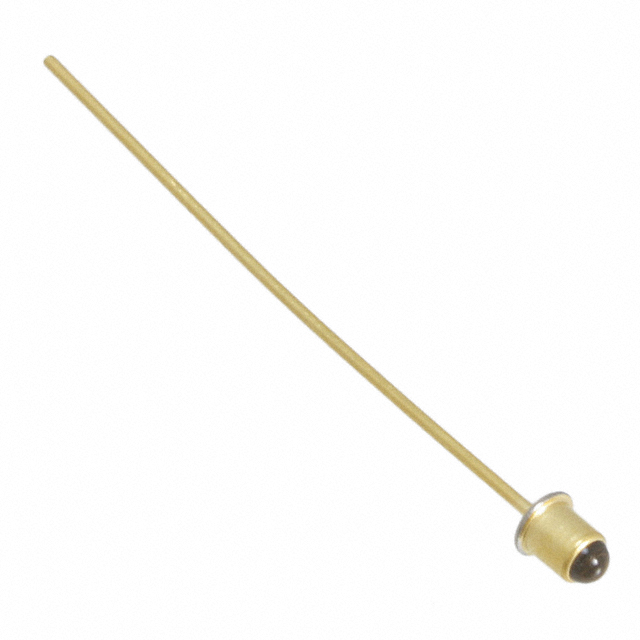
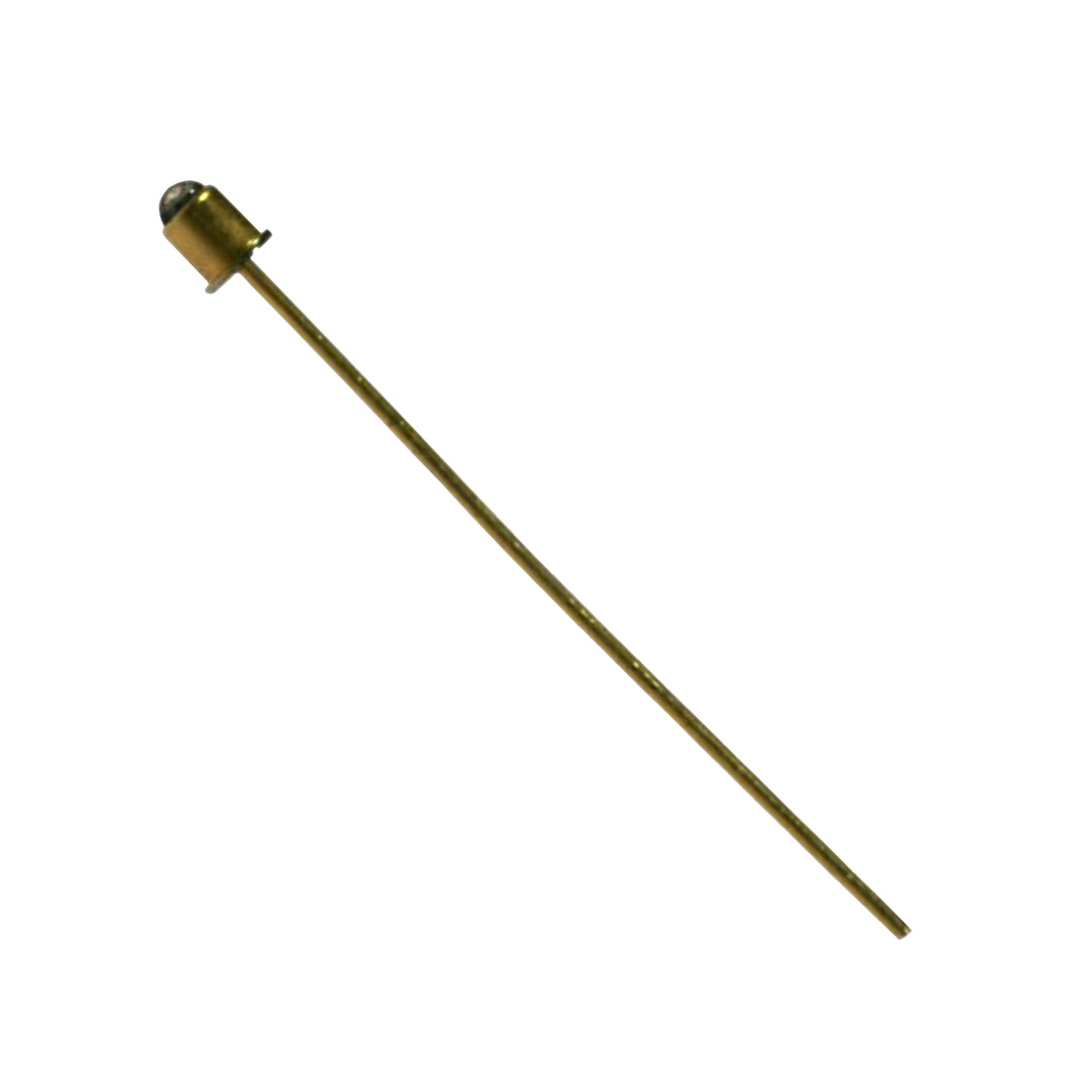
The SE1470-001 is an infrared (IR) emitter manufactured by Honeywell Sensing and Productivity Solutions, operating at 880nm wavelength with a maximum forward current of 50mA and typical forward voltage of 1.8V. This component features a coaxial metal can package with a 24° viewing angle, designed for through-hole mounting applications.
The SE1470-001 is classified as obsolete. Locating equivalent or substitute components is necessary to support ongoing system maintenance, repair, and new design implementations where this part is specified or functionally required.
Substiute Parts
Key Parameters
| Parameter | Value | Unit |
|---|---|---|
| Type | Infrared (IR) Emitter | — |
| Wavelength | 880 | nm |
| Current - DC Forward (If) Max | 50 | mA |
| Voltage - Forward (Vf) Typical | 1.8 | V |
| Radiant Intensity (Ie) Min @ If | 0.35 @ 20mA | mW/cm² |
| Viewing Angle | 24 | ° |
| Operating Temperature Range | -55 to 125 | °C |
| Mounting Type | Through Hole | — |
| Package / Case | Coaxial, Metal Can | — |
| RoHS Status | RoHS Compliant | — |
Substitute Part Grouping Explanation
Substitution of infrared emitters is determined by the following critical parameters:
Wavelength Compatibility: The SE1470-001 operates at 880nm. Substitute parts must operate within the near-infrared spectrum at wavelengths compatible with receiver photodiodes and optical system design. The OP215A operates at 890nm, representing a 10nm offset within acceptable tolerance for most IR receiver applications.
Electrical Characteristics: Forward voltage (Vf) and maximum forward current (If) must be compatible with existing drive circuitry. Both the SE1470-001 (1.8V, 50mA max) and OP215A (1.8V, 100mA max) share identical typical forward voltage, ensuring direct circuit compatibility.
Optical Performance: Radiant intensity and viewing angle determine system performance. Both components maintain a 24° viewing angle. The OP215A provides higher radiant intensity (1.2mW/cm² @ 50mA) compared to the SE1470-001 (0.35mW/cm² @ 20mA), indicating enhanced optical output capability.
Package and Mounting: The SE1470-001 uses coaxial metal can through-hole mounting, while the OP215A uses radial through-hole mounting. Both are through-hole technologies; however, physical package geometry differs and requires PCB layout verification.
Environmental and Compliance: Both components operate across -55°C to -65°C minimum and 125°C maximum temperature ranges. The OP215A holds active product status with ROHS3 compliance, whereas the SE1470-001 is obsolete with RoHS compliance.
Parameter Comparison
| Parameter | SE1470-001 (Main Part) | OP215A (Substitute) |
|---|---|---|
| Manufacturer | Honeywell Sensing and Productivity Solutions | TT Electronics/Optek Technology |
| Type | Infrared (IR) Emitter | Infrared (IR) Emitter |
| Wavelength | 880 nm | 890 nm |
| Current - DC Forward (If) Max | 50 mA | 100 mA |
| Voltage - Forward (Vf) Typical | 1.8 V | 1.8 V |
| Radiant Intensity (Ie) Min @ If | 0.35 mW/cm² @ 20mA | 1.2 mW/cm² @ 50mA |
| Viewing Angle | 24° | 24° |
| Operating Temperature Range | -55°C to 125°C | -65°C to 125°C |
| Mounting Type | Through Hole | Through Hole |
| Package / Case | Coaxial, Metal Can | Radial |
| Product Status | Obsolete | Active |
| RoHS Status | RoHS Compliant | ROHS3 Compliant |
Engineering Selection Recommendations
Product Status Consideration: The SE1470-001 is classified as obsolete, making the OP215A a viable active alternative for new designs and ongoing production support. The OP215A maintains active product status with current manufacturing availability.
Compliance and Certification: Both components meet RoHS requirements. The OP215A carries ROHS3 compliance, representing current regulatory standards. The OP215A is REACH Unaffected, confirming compliance with chemical substance regulations.
Electrical Compatibility: Identical typical forward voltage (1.8V) ensures direct substitution in existing drive circuits without modification. The OP215A supports higher maximum forward current (100mA versus 50mA), providing design margin and flexibility for current-limited applications.
Optical Performance: The OP215A delivers superior radiant intensity, enabling equivalent or improved system performance in IR detection applications. The 10nm wavelength offset (890nm versus 880nm) remains within the operational range of standard silicon photodiode receivers.
Package Consideration: Physical package geometry differs between coaxial metal can (SE1470-001) and radial (OP215A) configurations. PCB layout and mechanical mounting must be verified for compatibility with existing designs.
Frequently Asked Questions (FAQ)
Q: Can the OP215A directly replace the SE1470-001 without circuit modification?
A: Electrical substitution is direct due to identical typical forward voltage (1.8V). However, physical package geometry differs (coaxial metal can versus radial), requiring PCB layout verification and potential mechanical mounting adjustment.
Q: What is the significance of the 10nm wavelength difference between 880nm and 890nm?
A: The 10nm offset falls within the operational bandwidth of standard silicon photodiode receivers used in IR detection systems. System performance validation is necessary to confirm receiver sensitivity at 890nm wavelength.
Q: Does the higher maximum forward current of the OP215A (100mA versus 50mA) affect compatibility?
A: The OP215A supports higher current capability, providing design flexibility. Existing circuits designed for 50mA operation remain compatible; the higher rating does not impose additional requirements on drive circuitry.
Q: What are the temperature operating range differences?
A: The OP215A extends the minimum operating temperature to -65°C compared to the SE1470-001 at -55°C. Both components share a 125°C maximum operating temperature. The OP215A provides broader low-temperature capability.
Q: Is the OP215A suitable for new product designs?
A: Yes. The OP215A holds active product status with current manufacturing availability and ROHS3 compliance, making it appropriate for new designs requiring infrared emitter functionality at 890nm wavelength.
Q: How does radiant intensity affect system performance?
A: The OP215A provides higher radiant intensity (1.2mW/cm² @ 50mA) compared to the SE1470-001 (0.35mW/cm² @ 20mA), resulting in increased optical output. This enables improved detection range and signal-to-noise ratio in IR receiver applications.
Alternative Parts

SJ6012L2TP
Littelfuse Inc.
6 Alternative Parts

JMK107BBJ476MA-RE
Taiyo Yuden
10 Alternative Parts

GMK107BBJ475MA-T
Taiyo Yuden
5 Alternative Parts
SJ6020N2ARP
Littelfuse Inc.
3 Alternative Parts
SJ6025R2ATP
Littelfuse Inc.
4 Alternative Parts

2474-05L
API Delevan Inc.
1 Alternative Parts

4590R-684K
API Delevan Inc.
1 Alternative Parts

CM6560R-334
API Delevan Inc.
1 Alternative Parts

CM6460-104
API Delevan Inc.
1 Alternative Parts

5526-12
API Delevan Inc.
1 Alternative Parts