



Request Quote
(Ships tomorrow)
SD2440-002 Equivalent & Substitute Parts Reference
Part Overview
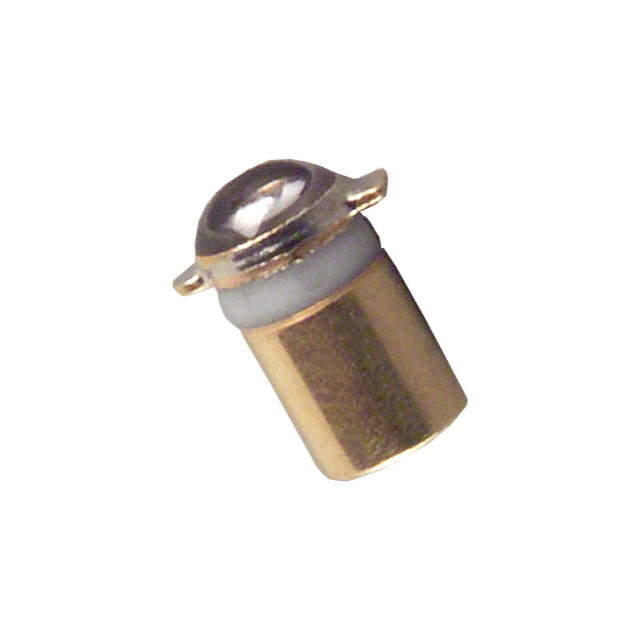
The SD2440-002 is a phototransistor optical sensor manufactured by Honeywell Sensing and Productivity Solutions, designed for 880nm wavelength detection in a top view pill package configuration. This component is classified as obsolete, necessitating identification of equivalent substitute parts for ongoing design requirements and production continuity. The sensor operates across an extended temperature range of -55°C to 125°C and features through-hole PCB mounting with a 48° viewing angle. Due to its obsolete status, equivalent active alternatives must be evaluated to maintain system functionality and supply chain reliability.
Substiute Parts
Key Parameters
| Parameter | SD2440-002 Value | Specification Basis |
|---|---|---|
| Wavelength | 880 nm | Primary detection characteristic |
| Voltage - Collector Emitter Breakdown (Max) | 30 V | Maximum safe operating voltage |
| Current - Dark (Id) (Max) | 100 nA | Leakage current specification |
| Viewing Angle | 48° | Optical field of view |
| Power - Max | 125 mW | Maximum dissipation rating |
| Mounting Type | PCB, Through Hole | Physical assembly method |
| Orientation | Top View | Package configuration |
| Operating Temperature | -55°C to 125°C | Functional temperature range |
| Package / Case | Pill | Physical form factor |
| RoHS Status | RoHS Compliant | Environmental compliance |
Substitute Part Grouping Explanation
Substitution eligibility for the SD2440-002 is determined by the following critical parameters:
Wavelength Compatibility: Substitute parts must operate within the near-infrared spectrum at 880-890nm. The OP600A and OP600C operate at 890nm, representing a 10nm offset within acceptable phototransistor tolerance for similar optical detection applications.
Electrical Ratings: Substitute parts must maintain dark current specifications at or below 100 nA maximum. Both OP600A and OP600C meet this requirement at 100 nA maximum.
Package Configuration: All substitute parts must maintain the pill package form factor with top view orientation to ensure optical alignment and mechanical compatibility.
Thermal Operating Range: Substitute parts must support the required temperature envelope. The OP600A and OP600C extend the lower temperature limit to -65°C, exceeding the SD2440-002 specification of -55°C.
Compliance Status: Substitute parts must maintain RoHS compliance. Both OP600A and OP600C are ROHS3 Compliant, meeting regulatory requirements.
Mounting Consideration: The SD2440-002 uses through-hole PCB mounting, while OP600A and OP600C are surface mount devices. This represents a mechanical interface change requiring circuit board redesign.
Parameter Comparison
| Parameter | SD2440-002 | OP600A | OP600C |
|---|---|---|---|
| Manufacturer | Honeywell Sensing and Productivity Solutions | TT Electronics/Optek Technology | TT Electronics/Optek Technology |
| Wavelength | 880 nm | 890 nm | 890 nm |
| Voltage - Collector Emitter Breakdown (Max) | 30 V | 25 V | 25 V |
| Current - Dark (Id) (Max) | 100 nA | 100 nA | 100 nA |
| Power - Max | 125 mW | 50 mW | 50 mW |
| Mounting Type | PCB, Through Hole | Surface Mount | Surface Mount |
| Orientation | Top View | Top View | Top View |
| Operating Temperature | -55°C to 125°C | -65°C to 125°C | -65°C to 125°C |
| Package / Case | Pill | Pill | Pill |
| Product Status | Obsolete | Active | Active |
| RoHS Status | RoHS Compliant | ROHS3 Compliant | ROHS3 Compliant |
Engineering Selection Recommendations
Active Product Availability: Both OP600A and OP600C maintain active product status with current manufacturing support, ensuring long-term supply chain availability compared to the obsolete SD2440-002.
Compliance Alignment: OP600A and OP600C are ROHS3 Compliant with REACH Unaffected status, meeting current environmental and regulatory requirements for new designs and production continuity.
Electrical Performance Trade-offs: The OP600A and OP600C operate at reduced maximum power dissipation (50 mW versus 125 mW) and lower collector-emitter breakdown voltage (25 V versus 30 V). Circuit designs must verify that operating conditions remain within these reduced specifications.
Wavelength Offset: The 10nm wavelength difference (890nm versus 880nm) falls within standard phototransistor manufacturing tolerances and optical filter acceptance bands for near-infrared detection applications.
Mounting Architecture Change: Substitution requires transition from through-hole to surface mount assembly. This necessitates PCB layout modification and updated assembly procedures.
Frequently Asked Questions (FAQ)
Q: Can OP600A and OP600C be used as direct pin-for-pin replacements for SD2440-002?
A: No. While both substitute parts maintain the pill package form factor and top view orientation, the mounting type differs fundamentally. SD2440-002 uses through-hole PCB mounting, while OP600A and OP600C are surface mount devices. PCB redesign is required.
Q: What is the significance of the 10nm wavelength difference between 880nm and 890nm?
A: The 10nm offset represents approximately 1.1% wavelength variation. For phototransistor applications, this falls within standard manufacturing tolerance bands and is compatible with optical filter specifications designed for 880nm detection. System-level optical performance validation is recommended for critical applications.
Q: Are OP600A and OP600C electrically identical?
A: Yes. Both parts share identical electrical specifications including 25V maximum collector-emitter breakdown voltage, 100nA maximum dark current, 50mW maximum power dissipation, and -65°C to 125°C operating temperature range. Selection between these parts depends on packaging and inventory availability.
Q: How does the reduced power dissipation rating (50mW versus 125mW) affect circuit design?
A: Circuit designs must verify that actual operating power remains below 50mW. This may require adjustment of collector resistor values or operating bias conditions compared to designs optimized for the SD2440-002's 125mW rating.
Q: What compliance advantages do OP600A and OP600C provide over SD2440-002?
A: Both substitute parts are ROHS3 Compliant with REACH Unaffected status, representing current environmental compliance standards. SD2440-002 is RoHS Compliant but carries obsolete product status, limiting future availability and support.
Q: Is the extended lower temperature range (-65°C versus -55°C) a design advantage?
A: The OP600A and OP600C extended lower temperature limit provides additional thermal margin for applications requiring operation below -55°C. For applications limited to -55°C and above, this specification difference does not impact performance.
Alternative Parts

SJ6012L2TP
Littelfuse Inc.
6 Alternative Parts

JMK107BBJ476MA-RE
Taiyo Yuden
10 Alternative Parts

GMK107BBJ475MA-T
Taiyo Yuden
5 Alternative Parts
SJ6020N2ARP
Littelfuse Inc.
3 Alternative Parts
SJ6025R2ATP
Littelfuse Inc.
4 Alternative Parts

2474-05L
API Delevan Inc.
1 Alternative Parts

4590R-684K
API Delevan Inc.
1 Alternative Parts

CM6560R-334
API Delevan Inc.
1 Alternative Parts

CM6460-104
API Delevan Inc.
1 Alternative Parts

5526-12
API Delevan Inc.
1 Alternative Parts