



Request Quote
(Ships tomorrow)
RT9183-18GLF Linear Voltage Regulator Equivalent & Substitute Parts
Part Overview
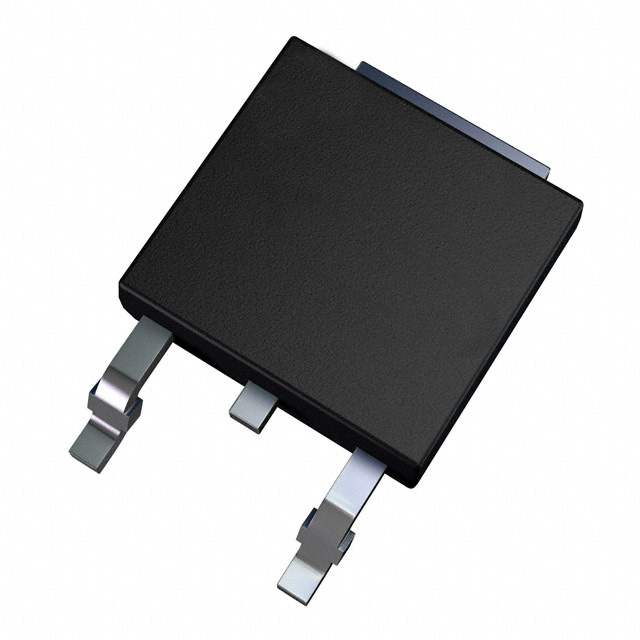
The RT9183-18GLF is an active linear voltage regulator IC from Richtek USA Inc., classified as a Power Management (PMIC) component. This positive fixed output regulator delivers 1.5A at a fixed 1.8V output and operates across an input voltage range up to 5.5V. The device is currently in active production status with 10,400 units in stock. Alternative equivalent parts may be required due to supply chain considerations, inventory availability, or specific application requirements where substitute devices meet identical electrical and mechanical specifications.
Substiute Parts
Key Parameters
| Parameter | Value |
|---|---|
| Manufacturer Part Number | RT9183-18GLF |
| Manufacturer | Richtek USA Inc. |
| Category | Power Management (PMIC) |
| Package / Case | TO-252-3, DPAK (2 Leads + Tab), SC-63 |
| Voltage - Input (Max) | 5.5V |
| Voltage - Output (Fixed) | 1.8V |
| Current - Output | 1.5A |
| Voltage Dropout (Max) | 0.5V @ 1.5A |
| Current - Quiescent (Iq) | 500 µA |
| Protection Features | Over Current, Over Temperature |
| Operating Temperature | -40°C ~ 125°C |
| Mounting Type | Surface Mount |
| RoHS Status | ROHS3 Compliant |
| Product Status | Active |
Substitute Part Grouping Explanation
Substitution of the RT9183-18GLF is permissible with the AP7363-18D-13 based on the following critical parameters that determine functional equivalence:
- Package Compatibility: Both devices use TO-252-3 (DPAK with 2 Leads + Tab, SC-63) surface mount packaging, ensuring mechanical and thermal compatibility on PCB layouts.
- Output Voltage: Both regulators provide a fixed 1.8V output, meeting identical voltage requirements.
- Output Current: Both devices deliver 1.5A maximum output current, supporting equivalent load conditions.
- Input Voltage Range: Both accept maximum input voltages of 5.5V, maintaining consistent supply chain compatibility.
- Protection Features: Both include Over Current and Over Temperature protection, ensuring equivalent safety mechanisms.
- Regulatory Compliance: Both are ROHS3 Compliant and REACH Unaffected, meeting identical environmental and regulatory standards.
The AP7363-18D-13 operates within a narrower temperature range (-40°C ~ 85°C) compared to the RT9183-18GLF (-40°C ~ 125°C) and exhibits lower quiescent current (1.2 mA vs. 500 µA) and superior dropout voltage performance (0.24V @ 1.5A vs. 0.5V @ 1.5A).
Parameter Comparison
| Parameter | RT9183-18GLF | AP7363-18D-13 |
|---|---|---|
| Manufacturer | Richtek USA Inc. | Diodes Incorporated |
| Package / Case | TO-252-3, DPAK (2 Leads + Tab), SC-63 | TO-252-3, DPAK (2 Leads + Tab), SC-63 |
| Voltage - Input (Max) | 5.5V | 5.5V |
| Voltage - Output (Fixed) | 1.8V | 1.8V |
| Current - Output | 1.5A | 1.5A |
| Voltage Dropout (Max) | 0.5V @ 1.5A | 0.24V @ 1.5A |
| Current - Quiescent (Iq) | 500 µA | 1.2 mA |
| Protection Features | Over Current, Over Temperature | Over Current, Over Temperature |
| Operating Temperature | -40°C ~ 125°C | -40°C ~ 85°C |
| Mounting Type | Surface Mount | Surface Mount |
| RoHS Status | ROHS3 Compliant | ROHS3 Compliant |
| Product Status | Active | Active |
Engineering Selection Recommendations
Both the RT9183-18GLF and AP7363-18D-13 are active production devices with ROHS3 compliance and REACH unaffected status, qualifying them for equivalent use in applications meeting the specified electrical and mechanical parameters. Selection between these devices should be based on application-specific requirements:
The RT9183-18GLF supports extended operating temperatures to 125°C and features lower quiescent current consumption at 500 µA, making it suitable for high-temperature environments or battery-powered applications requiring minimal standby power draw.
The AP7363-18D-13 provides superior dropout voltage performance (0.24V vs. 0.5V at 1.5A), reducing thermal dissipation and improving efficiency in low-headroom supply applications. This device is available in higher inventory quantities (15,145 units vs. 10,400 units).
Both devices maintain identical output voltage, current capacity, input voltage limits, and protection mechanisms, ensuring functional interchangeability within the specified parameter boundaries.
Frequently Asked Questions (FAQ)
Q: Can the AP7363-18D-13 directly replace the RT9183-18GLF in existing designs?
A: Yes, direct substitution is permissible. Both devices share identical TO-252-3 packaging, 1.8V fixed output, 1.5A output current, and 5.5V maximum input voltage. PCB layout and thermal management remain unchanged. Verify that your application operating temperature does not exceed 85°C, as the AP7363-18D-13 is rated to -40°C ~ 85°C versus the RT9183-18GLF's -40°C ~ 125°C range.
Q: What are the key differences between these two regulators?
A: The primary differences are operating temperature range, dropout voltage, and quiescent current. The RT9183-18GLF operates to 125°C with 0.5V dropout and 500 µA quiescent current. The AP7363-18D-13 operates to 85°C with superior 0.24V dropout and higher 1.2 mA quiescent current. Both provide identical output voltage and current capacity.
Q: Are there package compatibility concerns when substituting these parts?
A: No. Both devices use TO-252-3 (DPAK with 2 Leads + Tab, SC-63) surface mount packaging. Footprints, pin assignments, and thermal characteristics are identical, eliminating PCB redesign requirements.
Q: Do both devices meet the same regulatory standards?
A: Yes. Both the RT9183-18GLF and AP7363-18D-13 are ROHS3 Compliant and REACH Unaffected, meeting identical environmental and regulatory requirements.
Q: Which device should I select for a high-temperature application?
A: The RT9183-18GLF is rated for operation to 125°C, while the AP7363-18D-13 is limited to 85°C. For applications requiring extended temperature operation, the RT9183-18GLF is the appropriate choice.
Q: Which device offers better efficiency in low-headroom applications?
A: The AP7363-18D-13 provides superior dropout voltage performance at 0.24V @ 1.5A compared to the RT9183-18GLF at 0.5V @ 1.5A. This lower dropout reduces power dissipation and improves efficiency when input-to-output voltage differential is minimal.
Alternative Parts

SJ6012L2TP
Littelfuse Inc.
6 Alternative Parts

JMK107BBJ476MA-RE
Taiyo Yuden
10 Alternative Parts

GMK107BBJ475MA-T
Taiyo Yuden
5 Alternative Parts
SJ6020N2ARP
Littelfuse Inc.
3 Alternative Parts
SJ6025R2ATP
Littelfuse Inc.
4 Alternative Parts

2474-05L
API Delevan Inc.
1 Alternative Parts

4590R-684K
API Delevan Inc.
1 Alternative Parts

CM6560R-334
API Delevan Inc.
1 Alternative Parts

CM6460-104
API Delevan Inc.
1 Alternative Parts

5526-12
API Delevan Inc.
1 Alternative Parts