


Request Quote
(Ships tomorrow)
RM25C256C-LSNI-B Equivalent & Substitute Parts
Part Overview
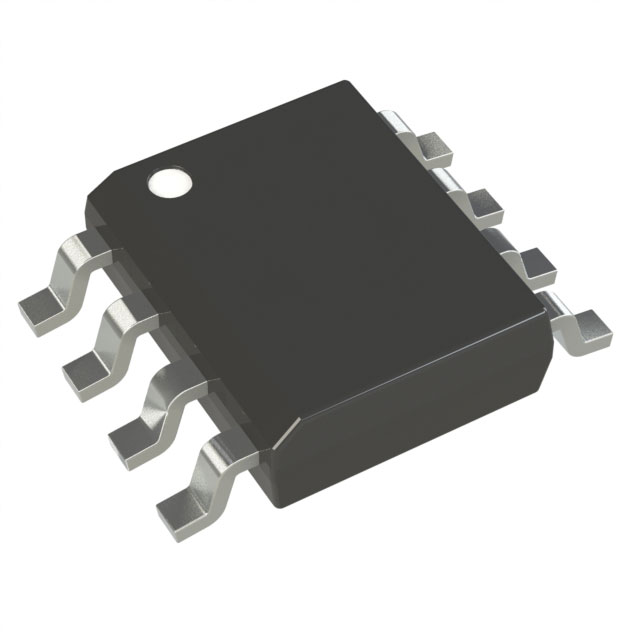
The RM25C256C-LSNI-B is a CBRAM (Conductive Bridging RAM) memory IC manufactured by Renesas Electronics Corporation. This 256Kbit non-volatile memory device operates via SPI interface at 10 MHz and is housed in an 8-SOIC surface mount package. The part is currently classified as obsolete, making identification of functionally equivalent alternatives essential for ongoing system support and new design implementations. Substitute parts must maintain compatibility across memory capacity, interface protocol, electrical specifications, and physical packaging to ensure direct replacement capability.
Substiute Parts
Key Parameters
| Parameter | Value |
|---|---|
| Memory Type | Non-Volatile |
| Memory Size | 256Kbit |
| Memory Interface | SPI |
| Clock Frequency | 10 MHz |
| Package / Case | 8-SOIC (0.154", 3.90mm Width) |
| Voltage - Supply | 1.65V ~ 3.6V |
| Operating Temperature | -40°C ~ 85°C (TA) |
| Mounting Type | Surface Mount |
| RoHS Status | ROHS3 Compliant |
Substitute Part Grouping Explanation
Substitution eligibility for the RM25C256C-LSNI-B is determined by the following critical parameters:
- Memory capacity of 256Kbit
- SPI serial interface protocol
- 10 MHz clock frequency support
- 8-SOIC surface mount package with identical physical dimensions
- Non-volatile memory technology
- Operating temperature range of -40°C to 85°C
- RoHS3 compliance
The substitute part 25AA256-I/SN meets all these criteria. While the main part uses CBRAM technology and the substitute uses EEPROM technology, both are non-volatile memory architectures that satisfy the functional requirements of 256Kbit SPI-based storage. The substitute maintains identical package geometry, electrical interface characteristics, and environmental operating specifications.
Parameter Comparison
| Parameter | RM25C256C-LSNI-B (Main) | 25AA256-I/SN (Substitute) |
|---|---|---|
| Manufacturer | Renesas Electronics Corporation | Microchip Technology |
| Memory Type | Non-Volatile | Non-Volatile |
| Memory Format | CBRAM® | EEPROM |
| Memory Size | 256Kbit | 256Kbit |
| Memory Organization | 64 Bytes Page Size | 32K x 8 |
| Memory Interface | SPI | SPI |
| Clock Frequency | 10 MHz | 10 MHz |
| Write Cycle Time - Page | 5ms | 5ms |
| Voltage - Supply | 1.65V ~ 3.6V | 1.8V ~ 5.5V |
| Operating Temperature | -40°C ~ 85°C (TA) | -40°C ~ 85°C (TA) |
| Package / Case | 8-SOIC (0.154", 3.90mm Width) | 8-SOIC (0.154", 3.90mm Width) |
| Mounting Type | Surface Mount | Surface Mount |
| RoHS Status | ROHS3 Compliant | ROHS3 Compliant |
| Product Status | Obsolete | Active |
Engineering Selection Recommendations
The 25AA256-I/SN is qualified as a direct substitute for the RM25C256C-LSNI-B based on the following factors:
- Both devices maintain identical 256Kbit capacity and SPI interface specifications
- Package geometry and pin configuration are identical (8-SOIC)
- Operating temperature range is fully compatible
- Both parts are RoHS3 compliant
- The substitute part is currently in active production status, ensuring long-term availability
- The substitute's supply voltage range (1.8V ~ 5.5V) encompasses the original part's range (1.65V ~ 3.6V), providing broader system compatibility
The primary technical difference is the memory technology: CBRAM versus EEPROM. Both technologies deliver non-volatile storage with equivalent write cycle performance (5ms page write time). System designers should verify that application-specific requirements regarding memory endurance cycles and data retention characteristics are satisfied by EEPROM technology before implementation.
Frequently Asked Questions (FAQ)
Q: Can the 25AA256-I/SN be used as a direct pin-for-pin replacement?
A: Yes. Both the RM25C256C-LSNI-B and 25AA256-I/SN use identical 8-SOIC packaging with matching pin assignments for SPI interface signals (MOSI, MISO, CLK, CS). No PCB modifications are required.
Q: What is the difference between CBRAM and EEPROM technologies?
A: CBRAM and EEPROM are distinct non-volatile memory technologies. Both retain data without power and support identical SPI communication protocols. The technologies differ in internal architecture, write cycle mechanisms, and endurance characteristics. Application requirements regarding write cycle endurance should be evaluated against the substitute part's specifications.
Q: Is the supply voltage range difference significant?
A: The substitute part's wider supply voltage range (1.8V ~ 5.5V) versus the original (1.65V ~ 3.6V) provides greater flexibility. If the original system operates within 1.65V to 3.6V, the substitute will function identically. Systems operating above 3.6V can utilize the substitute's extended upper voltage limit.
Q: Are there any compliance or certification differences?
A: Both parts are RoHS3 compliant and REACH unaffected. The substitute part carries EAR99 classification versus the original's 3A991B1A classification. Compliance requirements should be verified against specific application and export regulations.
Q: What is the inventory status of each part?
A: The RM25C256C-LSNI-B is obsolete with limited stock availability (795 pcs). The 25AA256-I/SN is in active production with higher availability (1723 pcs), supporting long-term supply chain continuity.
Alternative Parts

SJ6012L2TP
Littelfuse Inc.
6 Alternative Parts

JMK107BBJ476MA-RE
Taiyo Yuden
10 Alternative Parts

GMK107BBJ475MA-T
Taiyo Yuden
5 Alternative Parts
SJ6020N2ARP
Littelfuse Inc.
3 Alternative Parts
SJ6025R2ATP
Littelfuse Inc.
4 Alternative Parts

2474-05L
API Delevan Inc.
1 Alternative Parts

4590R-684K
API Delevan Inc.
1 Alternative Parts

CM6560R-334
API Delevan Inc.
1 Alternative Parts

CM6460-104
API Delevan Inc.
1 Alternative Parts

5526-12
API Delevan Inc.
1 Alternative Parts