



Request Quote
(Ships tomorrow)
PVI5080NS Equivalent & Substitute Parts
Part Overview
The PVI5080NS is an optoisolator with photovoltaic output manufactured by Infineon Technologies, rated for 4000Vrms isolation voltage in a single-channel configuration. This component is classified as obsolete, which necessitates identification of equivalent and substitute parts for ongoing design support and procurement.
The PVI5080NS features DC input, photovoltaic output topology, and surface mount packaging in an 8-SMD gull wing configuration. Due to its obsolete status, alternative components with compatible electrical and mechanical characteristics are required for new designs and production continuity.
Substiute Parts
Key Parameters
| Parameter | Value |
|---|---|
| Manufacturer | Infineon Technologies |
| Category | Optoisolators |
| Number of Channels | 1 |
| Voltage - Isolation | 4000Vrms |
| Input Type | DC |
| Output Type | Photovoltaic |
| Voltage - Output (Max) | 5V |
| Current - Output / Channel | 8µA |
| Operating Temperature | -40°C ~ 85°C |
| Mounting Type | Surface Mount |
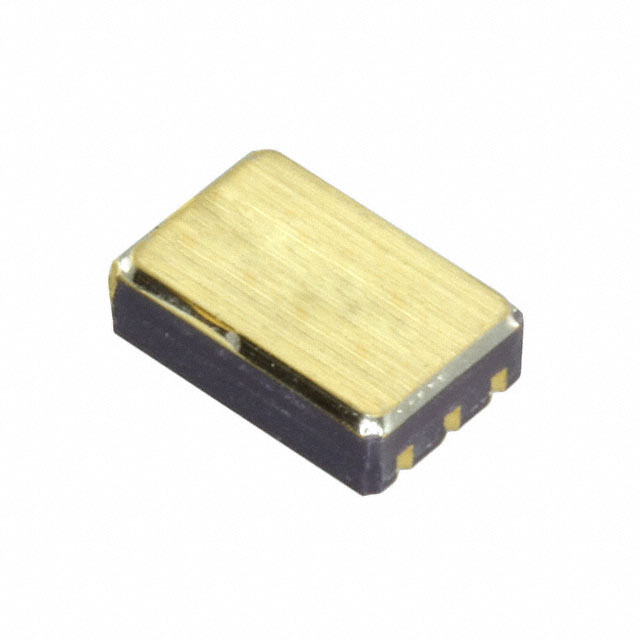
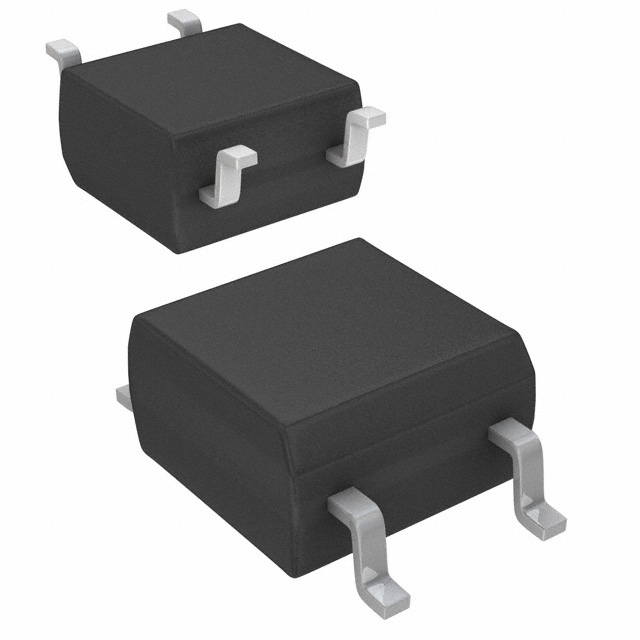
| Package / Case | 8-SMD, Gull Wing, 4 Leads |
| Product Status | Obsolete |
| RoHS Status | RoHS non-compliant |
Substitute Part Grouping Explanation
Substitute parts for the PVI5080NS are classified based on the following electrical and mechanical compatibility criteria:
Primary Substitution Criteria:
- Single-channel optoisolator configuration
- Photovoltaic output topology
- DC input type
- Surface mount technology
- Operating temperature range compatibility (-40°C minimum and 85°C maximum coverage)
Isolation Voltage Consideration: The PVI5080NS specifies 4000Vrms isolation. Substitute parts are grouped by isolation voltage rating, as this parameter determines functional equivalence in isolation-critical applications.
Secondary Compatibility Factors:
- Output voltage and current characteristics
- Package form factor and lead configuration
- Compliance status (RoHS3, REACH)
- Product status (Active vs. Obsolete)
Substitutes are presented in order of electrical compatibility, with direct equivalents listed first, followed by parts with reduced isolation voltage ratings that may be suitable depending on application requirements.
Parameter Comparison
| Parameter | PVI5080NS | PVI5080NSPBF | APV1121S | APV1121SX | APV2111VY | OLS910 | TLP3906(TPL,E | VOM1271T |
|---|---|---|---|---|---|---|---|---|
| Manufacturer | Infineon | Infineon | Panasonic | Panasonic | Panasonic | Isolink | Toshiba | Vishay |
| Number of Channels | 1 | 1 | 1 | 1 | 1 | 1 | 1 | 1 |
| Voltage - Isolation | 4000Vrms | 4000Vrms | 2500Vrms | 2500Vrms | 1500Vrms | 1500VDC | 3750Vrms | 3750Vrms |
| Input Type | DC | DC | DC | DC | DC | DC | DC | DC |
| Output Type | Photovoltaic | Photovoltaic | Photovoltaic | Photovoltaic | Photovoltaic | Photovoltaic | Photovoltaic | Photovoltaic |
| Voltage - Output (Max) | 5V | 5V | 8.7V | 8.7V | 8.2V | 20V | 7V | - |
| Current - Output / Channel | 8µA | 8µA | 14µA | 14µA | 8µA | - | 12µA | - |
| Operating Temperature | -40°C ~ 85°C | -40°C ~ 85°C | -40°C ~ 85°C | -40°C ~ 85°C | -40°C ~ 85°C | -55°C ~ 125°C | -40°C ~ 125°C | -40°C ~ 100°C |
| Mounting Type | Surface Mount | Surface Mount | Surface Mount | Surface Mount | Surface Mount | Surface Mount | Surface Mount | Surface Mount |
| Package / Case | 8-SMD, Gull Wing, 4 Leads | 8-SMD, Gull Wing, 4 Leads | 4-SMD, Gull Wing | 4-SMD, Gull Wing | 4-SMD, Flat Leads | 6-CLCC | 6-SOIC, 4 Leads | 4-SMD, Gull Wing |
| Product Status | Obsolete | Active | Active | Active | Active | Active | Active | Active |
| RoHS Status | RoHS non-compliant | ROHS3 Compliant | ROHS3 Compliant | ROHS3 Compliant | ROHS3 Compliant | RoHS non-compliant | ROHS3 Compliant | ROHS3 Compliant |
Engineering Selection Recommendations
Direct Equivalent (Recommended Primary Substitute):
PVI5080NSPBF is the direct equivalent to PVI5080NS, manufactured by Infineon Technologies with identical electrical specifications: 4000Vrms isolation, 1 channel, 5V maximum output, and 8µA output current. The primary distinction is product status—PVI5080NSPBF is active and ROHS3 compliant, whereas PVI5080NS is obsolete and RoHS non-compliant. Packaging differs only in format (Tube vs. standard), with no impact on component functionality. This substitute provides full compatibility with existing designs.
High Isolation Voltage Alternatives (3750Vrms):
TLP3906(TPL,E (Toshiba) and VOM1271T (Vishay) both provide 3750Vrms isolation, representing 93.75% of the PVI5080NS isolation rating. Both are active, ROHS3 compliant components with photovoltaic output and DC input. TLP3906(TPL,E offers 12µA output current in a 6-SOP package with 200µs/300µs turn-on/turn-off timing. VOM1271T provides 53µs/24µs switching performance in a 4-SOP package. These options are suitable for applications where isolation voltage margin permits reduction from 4000Vrms to 3750Vrms.
Reduced Isolation Voltage Alternatives (2500Vrms and Below):
APV1121S, APV1121SX (Panasonic, 2500Vrms), APV2111VY (Panasonic, 1500Vrms), and OLS910 (Isolink, 1500VDC) represent lower isolation voltage ratings. These components are active and ROHS3 compliant (except OLS910, which is RoHS non-compliant). Selection of these alternatives requires confirmation that application isolation requirements can be met at reduced voltage levels. APV1121S and APV1121SX are electrically identical, differing only in packaging (Tube vs. Tape & Reel). APV2111VY provides 8µA output current matching PVI5080NS specifications. OLS910 offers extended temperature range (-55°C to 125°C) and higher output voltage (20V maximum).
Compliance Considerations:
For new designs subject to RoHS3 requirements, PVI5080NSPBF, TLP3906(TPL,E, VOM1271T, APV1121S, APV1121SX, and APV2111VY are compliant. OLS910 is RoHS non-compliant and should be avoided in applications requiring RoHS certification.
Frequently Asked Questions (FAQ)
Q: Can PVI5080NSPBF be used as a direct replacement for PVI5080NS?
A: Yes. PVI5080NSPBF is electrically and functionally identical to PVI5080NS. Both components share the same isolation voltage (4000Vrms), output specifications (5V maximum, 8µA current), and operating temperature range (-40°C to 85°C). The primary differences are product status (Active vs. Obsolete) and RoHS compliance (ROHS3 vs. non-compliant). No design modifications are required.
Q: What is the significance of isolation voltage rating in optoisolator selection?
A: Isolation voltage rating specifies the maximum voltage differential that can be safely applied across the isolation barrier without risk of electrical breakdown. The PVI5080NS is rated for 4000Vrms isolation. Substitutes with lower isolation ratings (such as 3750Vrms or 2500Vrms) can only be used in applications where the actual isolation voltage requirement does not exceed the substitute's rating. Exceeding the rated isolation voltage may result in component failure or safety hazards.
Q: Are package differences between substitutes significant?
A: Package differences affect PCB layout, footprint design, and assembly compatibility. The PVI5080NS uses an 8-SMD gull wing package. Substitutes such as APV1121S (4-SOP), APV2111VY (4-SSOP), OLS910 (6-CLCC), TLP3906(TPL,E (6-SOP), and VOM1271T (4-SOP) employ different package configurations. These differences require PCB redesign and may affect assembly processes. Package selection should be based on existing PCB constraints and manufacturing capabilities.
Q: Why is RoHS compliance important for optoisolator selection?
A: RoHS3 compliance indicates that the component meets European Union restrictions on hazardous substances, specifically limiting lead, cadmium, mercury, and other restricted materials. Many industries and regions mandate RoHS3 compliance for new component procurement. PVI5080NS is RoHS non-compliant, whereas most active substitutes (PVI5080NSPBF, TLP3906(TPL,E, VOM1271T, APV1121S, APV1121SX, APV2111VY) are ROHS3 compliant. OLS910 remains RoHS non-compliant.
Q: Can lower isolation voltage substitutes be used if the application only requires partial isolation voltage margin?
A: Substitutes with lower isolation voltage ratings may be acceptable only if the application's maximum isolation voltage requirement is confirmed to be below the substitute's rating with appropriate safety margin. This determination requires detailed circuit analysis and must be documented in design specifications. Isolation voltage selection should never be based on cost reduction alone; it must reflect actual application requirements.
Q: What are the implications of different output voltage and current specifications among substitutes?
A: Output voltage and current specifications determine the electrical load that the optoisolator can drive. The PVI5080NS provides 5V maximum output at 8µA. Substitutes with higher output voltage (such as OLS910 at 20V or APV1121S at 8.7V) may provide greater drive capability but require verification that downstream circuitry can tolerate the higher voltage. Output current differences affect the number of logic gates or devices that can be driven directly from the optoisolator output.
Q: How do switching speed differences affect substitute selection?
A: Turn-on and turn-off times determine the maximum switching frequency and response time of the optoisolator. The PVI5080NS specifies 300µs turn-on and 220µs turn-off (maximum). VOM1271T offers significantly faster switching (53µs turn-on, 24µs turn-off), while APV1121S and APV2111VY are slower (400µs and 800µs turn-on, respectively). Faster switching enables higher frequency operation but may introduce noise or EMI considerations. Slower switching may be acceptable in low-frequency applications but could limit bandwidth.
Alternative Parts

SJ6012L2TP
Littelfuse Inc.
6 Alternative Parts

JMK107BBJ476MA-RE
Taiyo Yuden
10 Alternative Parts

GMK107BBJ475MA-T
Taiyo Yuden
5 Alternative Parts
SJ6020N2ARP
Littelfuse Inc.
3 Alternative Parts
SJ6025R2ATP
Littelfuse Inc.
4 Alternative Parts

2474-05L
API Delevan Inc.
1 Alternative Parts

4590R-684K
API Delevan Inc.
1 Alternative Parts

CM6560R-334
API Delevan Inc.
1 Alternative Parts

CM6460-104
API Delevan Inc.
1 Alternative Parts

5526-12
API Delevan Inc.
1 Alternative Parts