


Request Quote
(Ships tomorrow)
PSMN3R2-25YLC,115 N-Channel MOSFET Equivalent & Substitute Parts
Part Overview
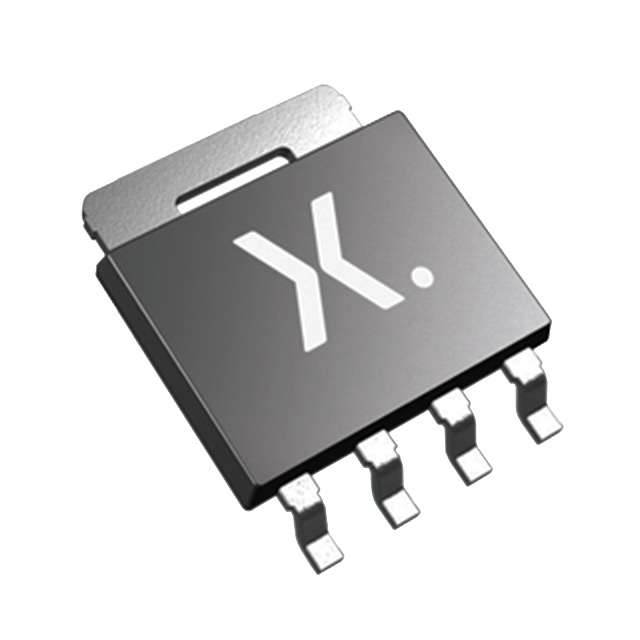
The PSMN3R2-25YLC,115 is an N-Channel 25V 100A surface mount MOSFET manufactured by NXP USA Inc., housed in the LFPAK56 (Power-SO8) package. This device is classified as obsolete, making identification of functionally equivalent alternatives essential for ongoing design support and production continuity. The part operates across a temperature range of -55°C to 175°C (TJ) and dissipates up to 79W at case temperature, serving applications requiring high-current switching in compact form factors.
Substiute Parts
Key Parameters
| Parameter | Value | Unit |
|---|---|---|
| Drain to Source Voltage (Vdss) | 25 | V |
| Continuous Drain Current (Id) @ 25°C | 100 | A (Tc) |
| Rds On (Max) @ 25A, 10V | 3.4 | mOhm |
| Gate Threshold Voltage (Vgs(th)) @ 1mA | 1.95 | V |
| Gate Charge (Qg) @ 10V | 30 | nC |
| Input Capacitance (Ciss) @ 12V | 1781 | pF |
| Power Dissipation (Max) | 79 | W (Tc) |
| Operating Temperature Range | -55 to 175 | °C (TJ) |
| Package Type | LFPAK56, Power-SO8 | SC-100, SOT-669 |
| Mounting Type | Surface Mount |
Substitute Part Grouping Explanation
Substitution of the PSMN3R2-25YLC,115 is determined by strict equivalence across the following critical parameters:
Electrical Equivalence Criteria:
- Drain to Source Voltage (Vdss): Must equal 25V
- Continuous Drain Current (Id) @ 25°C: Must equal 100A (Tc)
- FET Type: Must be N-Channel
- Technology: Must be MOSFET (Metal Oxide)
- Gate Threshold Voltage (Vgs(th)): Must equal 1.95V @ 1mA
- Maximum Gate Voltage (Vgs): Must equal ±20V
- Operating Temperature Range: Must span -55°C to 175°C (TJ)
Mechanical Equivalence Criteria:
- Package Type: Must be LFPAK56, Power-SO8 (SC-100, SOT-669)
- Mounting Type: Must be Surface Mount
Compliance Equivalence Criteria:
- RoHS Status: Must be ROHS3 Compliant
- Moisture Sensitivity Level (MSL): Must be 1 (Unlimited)
- REACH Status: Must be REACH Unaffected
The PSMN2R9-25YLC,115 meets all substitution criteria and is identified as the manufacturer-recommended equivalent.
Parameter Comparison
| Parameter | PSMN3R2-25YLC,115 (Main) | PSMN2R9-25YLC,115 (Substitute) | Unit |
|---|---|---|---|
| Manufacturer | NXP USA Inc. | Nexperia USA Inc. | |
| Product Status | Obsolete | Active | |
| Drain to Source Voltage (Vdss) | 25 | 25 | V |
| Continuous Drain Current (Id) @ 25°C | 100 | 100 | A (Tc) |
| Rds On (Max) @ 25A, 10V | 3.4 | 3.15 | mOhm |
| Gate Threshold Voltage (Vgs(th)) @ 1mA | 1.95 | 1.95 | V |
| Gate Charge (Qg) @ 10V | 30 | 33 | nC |
| Input Capacitance (Ciss) @ 12V | 1781 | 2083 | pF |
| Power Dissipation (Max) | 79 | 92 | W (Tc) |
| Operating Temperature Range | -55 to 175 | -55 to 175 | °C (TJ) |
| Package Type | LFPAK56, Power-SO8 | LFPAK56, Power-SO8 | SC-100, SOT-669 |
| Mounting Type | Surface Mount | Surface Mount | |
| RoHS Status | ROHS3 Compliant | ROHS3 Compliant | |
| Moisture Sensitivity Level (MSL) | 1 (Unlimited) | 1 (Unlimited) | |
| REACH Status | REACH Unaffected | REACH Unaffected |
Engineering Selection Recommendations
The PSMN2R9-25YLC,115 is the direct substitute for the obsolete PSMN3R2-25YLC,115. Both devices share identical voltage ratings (25V Vdss), current ratings (100A continuous drain current), threshold voltage (1.95V), and operating temperature range (-55°C to 175°C TJ). Both are housed in the LFPAK56 (Power-SO8) package and are pin-compatible for direct board-level replacement.
The PSMN2R9-25YLC,115 carries Active product status, ensuring long-term availability and manufacturing support. Both parts maintain ROHS3 compliance, MSL 1 (Unlimited) moisture sensitivity rating, and REACH Unaffected status, satisfying equivalent regulatory and environmental requirements.
The PSMN2R9-25YLC,115 exhibits improved on-resistance (3.15 mOhm versus 3.4 mOhm at 25A, 10V) and higher power dissipation capability (92W versus 79W at case temperature), providing enhanced thermal performance in equivalent applications. Gate charge increases marginally (33 nC versus 30 nC at 10V), and input capacitance increases (2083 pF versus 1781 pF at 12V), with negligible impact on switching characteristics in standard circuit topologies.
Frequently Asked Questions (FAQ)
Q: Can the PSMN2R9-25YLC,115 be used as a direct replacement for the PSMN3R2-25YLC,115 without circuit modification?
A: Yes. Both devices are electrically and mechanically equivalent across all critical parameters: 25V Vdss, 100A continuous drain current, 1.95V gate threshold voltage, identical operating temperature range, and identical LFPAK56 package. No circuit redesign is required for direct substitution.
Q: What are the differences between these two parts?
A: The PSMN2R9-25YLC,115 provides lower on-resistance (3.15 mOhm versus 3.4 mOhm), higher power dissipation rating (92W versus 79W), slightly higher gate charge (33 nC versus 30 nC), and higher input capacitance (2083 pF versus 1781 pF). These differences represent performance improvements in the substitute part.
Q: Why is the PSMN3R2-25YLC,115 listed as obsolete?
A: The PSMN3R2-25YLC,115 has reached end-of-life status. The PSMN2R9-25YLC,115 is the active equivalent recommended by the manufacturer for new designs and production continuity.
Q: Are both parts available in the same packaging options?
A: Both parts use the LFPAK56 (Power-SO8) package designation (SC-100, SOT-669). The PSMN2R9-25YLC,115 is supplied in Tape & Reel (TR) packaging format.
Q: Do these parts meet the same compliance standards?
A: Yes. Both the PSMN3R2-25YLC,115 and PSMN2R9-25YLC,115 are ROHS3 Compliant, carry MSL 1 (Unlimited) moisture sensitivity rating, and are REACH Unaffected, satisfying identical regulatory requirements.
Q: What is the impact of increased gate charge on circuit performance?
A: The gate charge increase from 30 nC to 33 nC (10% increase) has minimal impact on switching speed in standard gate driver circuits. This parameter affects gate drive current requirements and switching transition time, with negligible practical effect in most applications operating within the specified voltage and current ranges.
Q: How does the higher power dissipation rating of the substitute affect thermal design?
A: The PSMN2R9-25YLC,115 dissipates up to 92W versus 79W for the original part, indicating improved thermal capability. This allows the substitute to operate at higher power levels or with reduced thermal management requirements in equivalent applications.
Alternative Parts

SJ6012L2TP
Littelfuse Inc.
6 Alternative Parts

JMK107BBJ476MA-RE
Taiyo Yuden
10 Alternative Parts

GMK107BBJ475MA-T
Taiyo Yuden
5 Alternative Parts
SJ6020N2ARP
Littelfuse Inc.
3 Alternative Parts
SJ6025R2ATP
Littelfuse Inc.
4 Alternative Parts

2474-05L
API Delevan Inc.
1 Alternative Parts

4590R-684K
API Delevan Inc.
1 Alternative Parts

CM6560R-334
API Delevan Inc.
1 Alternative Parts

CM6460-104
API Delevan Inc.
1 Alternative Parts

5526-12
API Delevan Inc.
1 Alternative Parts