




Request Quote
(Ships tomorrow)
PS7122-1A Solid State Relay - Equivalent & Substitute Parts
Part Overview
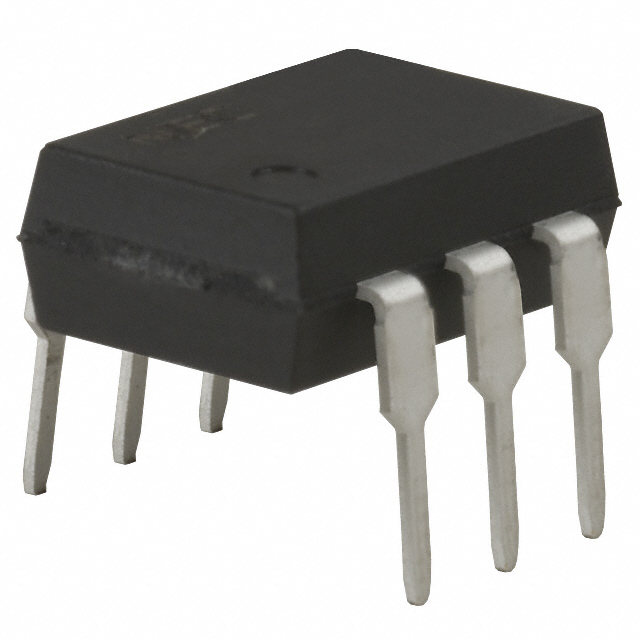
The PS7122-1A is a solid state relay (SSR) manufactured by CEL, configured as a SPST-NO (Single-Pole Single-Throw, Normally Open) relay with a 200 mA load capacity and 0–200 V output voltage range. The device features a 1.2 VDC input and is packaged in a 6-DIP through-hole configuration. This part has been classified as obsolete, making identification of equivalent and substitute components necessary for ongoing production and maintenance applications.
Substiute Parts
Key Parameters
| Parameter | Specification |
|---|---|
| Manufacturer Part Number | PS7122-1A |
| Manufacturer | CEL |
| Circuit Configuration | SPST-NO (1 Form A) |
| Output Type | AC, DC |
| Voltage - Input | 1.2 VDC |
| Voltage - Load (Output) | 0 V ~ 200 V |
| Load Current | 200 mA |
| On-State Resistance (Max) | 5 Ohms |
| Package / Case | 6-DIP (0.300", 7.62 mm) |
| Mounting Type | Through Hole |
| Product Status | Obsolete |
Substitute Part Grouping Explanation
Substitutes for the PS7122-1A have been identified based on compatibility across the following critical parameters:
- Circuit Configuration: All substitutes must maintain SPST-NO (1 Form A) switching capability
- Package / Case: All substitutes must use 6-DIP (0.300", 7.62 mm) through-hole packaging for direct PCB compatibility
- Voltage - Load (Output): All substitutes must support the full 0–200 V range or higher
- Output Type: All substitutes must support both AC and DC switching
- Load Current: Substitutes must meet or exceed the 200 mA requirement
- Termination Style: All substitutes must use PC pin termination for compatibility with existing designs
Two direct substitutes have been identified: AQV217 and AQV257 from Panasonic Electric Works. A similar substitute, PLA150 from IXYS Integrated Circuits Division, offers enhanced voltage capability (0–250 V) while maintaining electrical and mechanical compatibility.
Parameter Comparison
| Parameter | PS7122-1A | AQV217 | AQV257 | PLA150 |
|---|---|---|---|---|
| Manufacturer | CEL | Panasonic Electric Works | Panasonic Electric Works | IXYS Integrated Circuits Division |
| Series | PS, OCMOS | PhotoMOS™ AQV | PhotoMOS™ AQV | PLA, OptoMOS® |
| Product Status | Obsolete | Active | Active | Active |
| Circuit Configuration | SPST-NO (1 Form A) | SPST-NO (1 Form A) | SPST-NO (1 Form A) | SPST-NO (1 Form A) |
| Output Type | AC, DC | AC, DC | AC, DC | AC, DC |
| Voltage - Input | 1.2 VDC | 1.14 VDC | 1.14 VDC | 1.2 VDC |
| Voltage - Load (Output) | 0 V ~ 200 V | 0 V ~ 200 V | 0 V ~ 200 V | 0 V ~ 250 V |
| Load Current | 200 mA | 180 mA | 250 mA | 250 mA |
| On-State Resistance (Max) | 5 Ohms | 15 Ohms | 4 Ohms | 7 Ohms |
| Package / Case | 6-DIP (0.300", 7.62 mm) | 6-DIP (0.300", 7.62 mm) | 6-DIP (0.300", 7.62 mm) | 6-DIP (0.300", 7.62 mm) |
| Mounting Type | Through Hole | Through Hole | Through Hole | Through Hole |
| Termination Style | PC Pin | PC Pin | PC Pin | PC Pin |
| RoHS Status | RoHS non-compliant | ROHS3 Compliant | RoHS Compliant | ROHS3 Compliant |
Engineering Selection Recommendations
Primary Recommendation: AQV257
The AQV257 from Panasonic Electric Works is the preferred substitute for the PS7122-1A. Both devices share identical mechanical compatibility (6-DIP through-hole packaging with PC pin termination) and equivalent electrical load specifications (250 mA exceeds the 200 mA requirement). The AQV257 delivers superior on-state resistance (4 Ohms vs. 5 Ohms) and is classified as active product status with RoHS compliance. The marginally lower input voltage (1.14 VDC vs. 1.2 VDC) is within acceptable design tolerances.
Secondary Recommendation: AQV217
The AQV217 is an alternative substitute from Panasonic Electric Works. It meets all mechanical requirements and voltage specifications but operates at 180 mA, which is below the original 200 mA specification. This device is appropriate for designs with load current requirements not exceeding 180 mA. The AQV217 is active product status with RoHS compliance.
Tertiary Recommendation: PLA150
The PLA150 from IXYS Integrated Circuits Division is compatible with all mechanical and electrical requirements of the PS7122-1A and offers enhanced voltage capability (0–250 V). This device meets the original 1.2 VDC input specification exactly. The PLA150 is active product status with RoHS compliance and is suitable for applications requiring extended load voltage tolerance.
Frequently Asked Questions (FAQ)
Q: Can I directly replace the PS7122-1A with AQV217 in my circuit?
A: The AQV217 is mechanically and electrically compatible for most applications. However, the load current specification is 180 mA compared to the original 200 mA. Verify that your load current requirement does not exceed 180 mA before substitution.
Q: What is the primary difference between AQV257 and AQV217?
A: The AQV257 supports 250 mA load current while the AQV217 supports 180 mA. Both devices are identical in all other electrical and mechanical parameters. Select based on your circuit's load current requirement.
Q: Why does the PLA150 have a higher maximum load voltage (250 V vs. 200 V)?
A: The PLA150 specifications allow for 0–250 V operation. This provides additional margin for applications approaching the 200 V limit of the original PS7122-1A. The higher rating does not negatively affect designs within the 0–200 V range.
Q: Are there any compliance differences between the substitutes?
A: All active substitutes (AQV217, AQV257, and PLA150) are RoHS compliant, while the original PS7122-1A is RoHS non-compliant. If your assembly process or application requires RoHS compliance, all substitutes are acceptable.
Q: Will these substitutes fit my existing PCB without modifications?
A: Yes. All substitutes use the identical 6-DIP (0.300", 7.62 mm) through-hole package with PC pin termination. No PCB layout changes are required.
Q: What input voltage tolerance should I consider when substituting?
A: The original PS7122-1A requires 1.2 VDC. The AQV217 and AQV257 require 1.14 VDC, while the PLA150 requires 1.2 VDC. These differences are within typical design tolerances. Verify your circuit can supply the specified input voltage before substitution.
Alternative Parts

SJ6012L2TP
Littelfuse Inc.
6 Alternative Parts

JMK107BBJ476MA-RE
Taiyo Yuden
10 Alternative Parts

GMK107BBJ475MA-T
Taiyo Yuden
5 Alternative Parts
SJ6020N2ARP
Littelfuse Inc.
3 Alternative Parts
SJ6025R2ATP
Littelfuse Inc.
4 Alternative Parts

2474-05L
API Delevan Inc.
1 Alternative Parts

4590R-684K
API Delevan Inc.
1 Alternative Parts

CM6560R-334
API Delevan Inc.
1 Alternative Parts

CM6460-104
API Delevan Inc.
1 Alternative Parts

5526-12
API Delevan Inc.
1 Alternative Parts