



Request Quote
(Ships tomorrow)
PS385ESE Equivalent & Substitute Parts
Part Overview
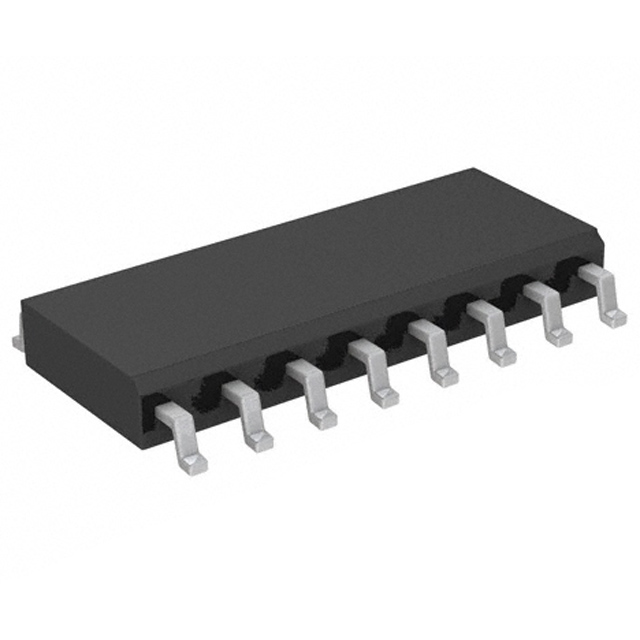
The PS385ESE is a 2-circuit IC switch with DPST-NO configuration manufactured by Diodes Incorporated. This component functions as a 2:1 multiplexer/demultiplexer with 30Ohm on-state resistance in a 16-SOIC surface mount package. The PS385ESE is classified as obsolete, making identification of functionally equivalent alternatives necessary for ongoing design support and production continuity.
Substiute Parts
Key Parameters
| Parameter | Value |
|---|---|
| Manufacturer Part Number | PS385ESE |
| Manufacturer | Diodes Incorporated |
| Category | Interface |
| Switch Circuit | DPST - NO |
| Multiplexer/Demultiplexer Circuit | 2:1 |
| Number of Circuits | 2 |
| On-State Resistance (Max) | 30Ohm |
| Voltage - Supply, Single (V+) | 3V ~ 15V |
| Voltage - Supply, Dual (V±) | ±3V ~ 8V |
| Switch Time (Ton, Toff) (Max) | 130ns, 75ns |
| Package / Case | 16-SOIC (0.295", 7.50mm Width) |
| Operating Temperature | -40°C ~ 85°C (TA) |
| Product Status | Obsolete |
| RoHS Status | RoHS non-compliant |
Substitute Part Grouping Explanation
Substitution eligibility for the PS385ESE is determined by the following critical parameters:
Functional Requirements:
- Switch circuit type: DPST - NO
- Multiplexer configuration: 2:1
- Number of circuits: 2
- Package type: 16-SOIC
Electrical Compatibility Criteria:
- On-state resistance tolerance: Maximum 35Ohm (allowing up to 5Ohm increase from 30Ohm baseline)
- Supply voltage range: Minimum 3V ~ 15V (single) or ±3V ~ 8V (dual)
- Operating temperature range: Must encompass or match -40°C ~ 85°C
- Switch timing: Acceptable within design margin
Compliance Considerations:
- RoHS compliance status
- Moisture sensitivity level
- REACH and ECCN classifications
The MAX385CSE+ from Analog Devices Inc./Maxim Integrated meets the functional and electrical substitution criteria for the PS385ESE.
Parameter Comparison
| Parameter | PS385ESE | MAX385CSE+ | Compatibility Notes |
|---|---|---|---|
| Manufacturer | Diodes Incorporated | Analog Devices Inc./Maxim Integrated | Different manufacturer |
| Switch Circuit | DPST - NO | DPST - NO | Identical |
| Multiplexer/Demultiplexer Circuit | 2:1 | 2:1 | Identical |
| Number of Circuits | 2 | 2 | Identical |
| On-State Resistance (Max) | 30Ohm | 35Ohm | 5Ohm increase acceptable for most applications |
| Channel-to-Channel Matching (ΔRon) | 200mOhm | 500mOhm | Reduced matching precision in substitute |
| Voltage - Supply, Single (V+) | 3V ~ 15V | 3V ~ 15V | Identical |
| Voltage - Supply, Dual (V±) | ±3V ~ 8V | ±3V ~ 8V | Identical |
| Switch Time (Ton, Toff) (Max) | 130ns, 75ns | 175ns, 100ns | Slower switching in substitute |
| Charge Injection | 2pC | 2pC | Identical |
| Channel Capacitance (CS(off), CD(off)) | 12pF, 12pF | 12pF, 12pF | Identical |
| Current - Leakage (IS(off)) (Max) | 100pA | 200pA | Doubled leakage current in substitute |
| Crosstalk | -90dB @ 1MHz | -90dB @ 1MHz | Identical |
| Operating Temperature | -40°C ~ 85°C (TA) | 0°C ~ 70°C (TA) | Reduced temperature range in substitute |
| Package / Case | 16-SOIC (0.295", 7.50mm Width) | 16-SOIC (0.154", 3.90mm Width) | Same package type, different physical dimensions |
| Product Status | Obsolete | Active | Substitute is in active production |
| RoHS Status | RoHS non-compliant | ROHS3 Compliant | Substitute meets current RoHS requirements |
| Moisture Sensitivity Level (MSL) | 1 (Unlimited) | 1 (Unlimited) | Identical |
Engineering Selection Recommendations
The MAX385CSE+ is the manufacturer-recommended substitute for the PS385ESE. Selection of this alternative is justified by the following factors:
Product Status: The PS385ESE is obsolete, while the MAX385CSE+ is in active production, ensuring long-term availability and supply chain continuity.
Compliance: The MAX385CSE+ is ROHS3 compliant, meeting current regulatory requirements for new designs and manufacturing. The PS385ESE is RoHS non-compliant, which may restrict its use in certain applications and markets.
Functional Equivalence: Both components share identical switch circuit topology (DPST - NO), multiplexer configuration (2:1), circuit count (2), supply voltage ranges, and crosstalk performance.
Performance Trade-offs: The MAX385CSE+ exhibits measurable differences in three parameters: on-state resistance increases by 5Ohm (30Ohm to 35Ohm), switch timing increases (Ton: 130ns to 175ns; Toff: 75ns to 100ns), and leakage current doubles (100pA to 200pA). These differences are acceptable for applications where the original PS385ESE specifications provided design margin.
Temperature Range Limitation: The MAX385CSE+ operates over 0°C ~ 70°C, compared to the PS385ESE range of -40°C ~ 85°C. Applications requiring the full -40°C ~ 85°C range must verify that the reduced temperature specification of the substitute is acceptable for the intended operating environment.
Package Consideration: Both components use 16-SOIC packaging. Physical dimensions differ (7.50mm vs. 3.90mm width), requiring PCB layout verification to confirm mechanical compatibility.
Frequently Asked Questions (FAQ)
Q: Can the MAX385CSE+ directly replace the PS385ESE without circuit modifications?
A: The MAX385CSE+ is functionally equivalent for most applications. However, verify that the increased on-state resistance (35Ohm vs. 30Ohm), slower switch timing (175ns/100ns vs. 130ns/75ns), and doubled leakage current (200pA vs. 100pA) are acceptable for your specific circuit design. The reduced operating temperature range (0°C ~ 70°C vs. -40°C ~ 85°C) must also be confirmed as compatible with your application environment.
Q: Are there pinout differences between the PS385ESE and MAX385CSE+?
A: Both components use 16-SOIC packaging. Verify pinout compatibility in the respective component datasheets before substitution, as pin assignments may differ between manufacturers.
Q: What is the significance of the different 16-SOIC package widths (7.50mm vs. 3.90mm)?
A: The package width difference indicates different physical dimensions. PCB footprint and layout must be verified to ensure the MAX385CSE+ fits the existing PS385ESE pad pattern. Consult component datasheets for precise dimensional specifications.
Q: Why is the MAX385CSE+ operating temperature range narrower than the PS385ESE?
A: The MAX385CSE+ is specified for 0°C ~ 70°C operation, while the PS385ESE covers -40°C ~ 85°C. Applications requiring operation below 0°C or above 70°C cannot use the MAX385CSE+ as a substitute. Verify your application's temperature requirements before selection.
Q: Does the RoHS compliance difference affect substitution decisions?
A: The MAX385CSE+ is ROHS3 compliant, while the PS385ESE is RoHS non-compliant. For new designs and applications subject to RoHS regulations, the MAX385CSE+ is the appropriate choice. For legacy systems where RoHS compliance is not required, either component may be used based on availability and performance requirements.
Q: What is the impact of increased channel-to-channel matching (ΔRon) in the MAX385CSE+?
A: The MAX385CSE+ has a channel-to-channel matching specification of 500mOhm compared to 200mOhm for the PS385ESE. This indicates reduced precision in resistance matching between channels. Applications sensitive to channel-to-channel resistance variation must evaluate whether this difference affects circuit performance.
Alternative Parts

SJ6012L2TP
Littelfuse Inc.
6 Alternative Parts

JMK107BBJ476MA-RE
Taiyo Yuden
10 Alternative Parts

GMK107BBJ475MA-T
Taiyo Yuden
5 Alternative Parts
SJ6020N2ARP
Littelfuse Inc.
3 Alternative Parts
SJ6025R2ATP
Littelfuse Inc.
4 Alternative Parts

2474-05L
API Delevan Inc.
1 Alternative Parts

4590R-684K
API Delevan Inc.
1 Alternative Parts

CM6560R-334
API Delevan Inc.
1 Alternative Parts

CM6460-104
API Delevan Inc.
1 Alternative Parts

5526-12
API Delevan Inc.
1 Alternative Parts