



Request Quote
(Ships tomorrow)
PIMZ2,125 Equivalent & Substitute Parts
Part Overview
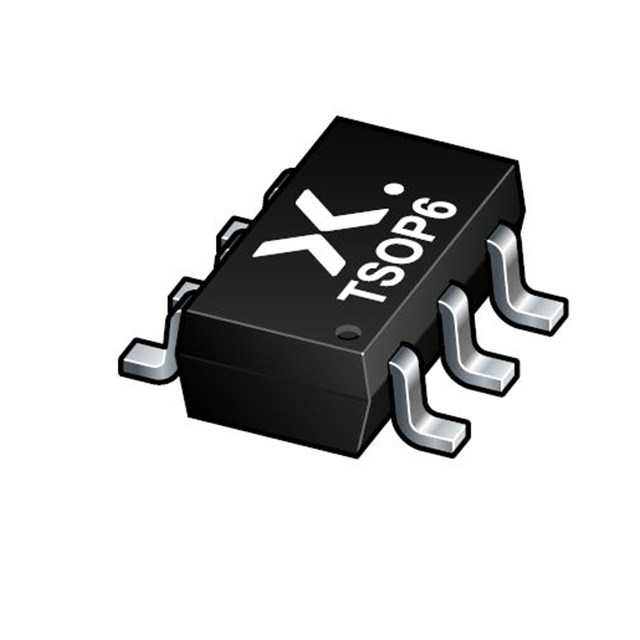
The PIMZ2,125 is an active-status bipolar junction transistor (BJT) array manufactured by Nexperia USA Inc. This surface-mount component integrates NPN and PNP transistor pairs in a 6-TSOP package, rated for 50V collector-emitter breakdown voltage and 150mA maximum collector current. The device is designed for small-signal switching and amplification applications requiring dual-polarity transistor functionality in compact form factors.
Substitute parts are identified to address inventory availability, extended lead times, or design flexibility requirements while maintaining electrical and mechanical compatibility within specified parameter tolerances.
Substiute Parts
Key Parameters
| Parameter | Value | Unit |
|---|---|---|
| Transistor Type | NPN, PNP | — |
| Current - Collector (Ic) (Max) | 150 | mA |
| Voltage - Collector Emitter Breakdown (Max) | 50 | V |
| Power - Max | 300 | mW |
| Frequency - Transition | 100, 190 | MHz |
| Package / Case | SC-74, SOT-457 | — |
| Mounting Type | Surface Mount | — |
| Operating Temperature (Max) | 150 | °C (TJ) |
| RoHS Status | ROHS3 Compliant | — |
Substitute Part Grouping Explanation
Substitution eligibility for the PIMZ2,125 is determined by the following criteria:
Mandatory Matching Parameters:
- Transistor Type: NPN, PNP configuration
- Package / Case: SC-74 or SOT-457 (6-TSOP equivalent)
- Mounting Type: Surface Mount
- Voltage - Collector Emitter Breakdown (Max): 50V or greater
- Operating Temperature Range: Must support maximum junction temperature of 150°C
Allowable Parameter Variations:
- Current - Collector (Ic) (Max): Substitute must equal or exceed 150mA
- Power - Max: Substitute must equal or exceed 300mW
- Frequency - Transition: Substitute specifications may differ if not specified in original part
- DC Current Gain (hFE): Substitute specifications may differ within active device operating range
The HN1B01FDW1T1G meets all mandatory matching criteria and exceeds several electrical performance specifications, qualifying it as a direct substitute.
Parameter Comparison
| Parameter | PIMZ2,125 (Nexperia) | HN1B01FDW1T1G (Fairchild) | Compatibility |
|---|---|---|---|
| Transistor Type | NPN, PNP | NPN, PNP | Match |
| Current - Collector (Ic) (Max) | 150 mA | 200 mA | Substitute exceeds requirement |
| Voltage - Collector Emitter Breakdown (Max) | 50 V | 50 V | Match |
| Vce Saturation (Max) @ Ib, Ic | 250mV @ 5mA, 50mA / 500mV @ 5mA, 50mA | 250mV @ 10mA, 100mA / 300mV @ 10mA, 100mA | Substitute specifications differ at higher current levels |
| Current - Collector Cutoff (Max) | 100 nA (ICBO) | 2 µA | Substitute exceeds specification |
| DC Current Gain (hFE) (Min) @ Ic, Vce | 120 @ 1mA, 6V | 200 @ 2mA, 6V | Substitute exceeds minimum gain |
| Power - Max | 300 mW | 380 mW | Substitute exceeds requirement |
| Frequency - Transition | 100, 190 MHz | Not specified | Substitute specification not provided |
| Operating Temperature (Max) | 150°C (TJ) | 150°C (TJ) | Match |
| Package / Case | SC-74, SOT-457 | SC-74, SOT-457 | Match |
| Mounting Type | Surface Mount | Surface Mount | Match |
| ECCN | EAR99 | EAR99 | Match |
Engineering Selection Recommendations
PIMZ2,125 (Nexperia USA Inc.)
- Product Status: Active
- RoHS Status: ROHS3 Compliant
- Moisture Sensitivity Level: 1 (Unlimited)
- REACH Status: REACH Unaffected
- Recommended for applications requiring Nexperia device qualification or where original design specifications mandate this manufacturer
HN1B01FDW1T1G (Fairchild Semiconductor)
- Product Status: Active
- Electrical Performance: Exceeds PIMZ2,125 specifications in collector current (200mA vs. 150mA), power dissipation (380mW vs. 300mW), and DC current gain (200 vs. 120 minimum)
- Package Compatibility: Identical SC-74/SOT-457 footprint and pinout
- Regulatory Compliance: ECCN EAR99 classification matches original part
- Recommended for applications where higher current capacity or power dissipation margin is beneficial, or where Fairchild device qualification is acceptable
Both parts maintain identical voltage ratings, package form factors, and operating temperature ranges. Selection between these devices depends on manufacturer qualification requirements and inventory availability rather than functional limitations.
Frequently Asked Questions (FAQ)
Q: Can HN1B01FDW1T1G be used as a direct replacement for PIMZ2,125 in existing PCB designs?
A: Yes. Both devices use identical SC-74/SOT-457 package geometry and pinout. No PCB layout modifications are required. The substitute part exceeds the original specification in collector current capacity and power dissipation, making it electrically compatible for all applications within the PIMZ2,125 design envelope.
Q: What are the key differences between these two parts?
A: The primary differences are manufacturer (Nexperia vs. Fairchild) and electrical performance margins. HN1B01FDW1T1G provides higher maximum collector current (200mA vs. 150mA), greater power dissipation capability (380mW vs. 300mW), and higher minimum DC current gain (200 vs. 120). Transition frequency specifications are provided for PIMZ2,125 but not specified for HN1B01FDW1T1G.
Q: Are there any compliance or certification differences?
A: Both parts carry identical ECCN classification (EAR99) and are RoHS3 compliant. PIMZ2,125 specifies REACH Unaffected status and MSL Level 1. Fairchild part specifications do not include these details in the provided data. Verify compliance documentation with the supplier if these certifications are required for your application.
Q: What is the saturation voltage difference, and does it affect circuit performance?
A: PIMZ2,125 specifies 250mV saturation at 5mA/50mA base-collector current, while HN1B01FDW1T1G specifies 250mV at 10mA/100mA. The substitute part is tested at higher current levels. For switching applications operating at or below the original part's rated currents, saturation voltage performance is equivalent. For higher-current applications, the substitute part's saturation characteristics are defined at those elevated levels.
Q: Can I use HN1B01FDW1T1G in a design originally specified for PIMZ2,125?
A: Yes, provided your design does not require specific Nexperia device qualification or depend on the transition frequency specifications (100MHz, 190MHz) that are documented for PIMZ2,125 but not provided for the Fairchild part. The substitute part meets or exceeds all other electrical and mechanical requirements.
Q: What should I verify before switching to the substitute part?
A: Confirm that your application does not require: (1) specific manufacturer qualification for Nexperia devices, (2) documented transition frequency performance at 100MHz or 190MHz, or (3) specific moisture sensitivity or REACH compliance documentation beyond EAR99 classification. If your design operates within the electrical parameters of both parts, substitution is valid.
Alternative Parts

SJ6012L2TP
Littelfuse Inc.
6 Alternative Parts

JMK107BBJ476MA-RE
Taiyo Yuden
10 Alternative Parts

GMK107BBJ475MA-T
Taiyo Yuden
5 Alternative Parts
SJ6020N2ARP
Littelfuse Inc.
3 Alternative Parts
SJ6025R2ATP
Littelfuse Inc.
4 Alternative Parts

2474-05L
API Delevan Inc.
1 Alternative Parts

4590R-684K
API Delevan Inc.
1 Alternative Parts

CM6560R-334
API Delevan Inc.
1 Alternative Parts

CM6460-104
API Delevan Inc.
1 Alternative Parts

5526-12
API Delevan Inc.
1 Alternative Parts