


Request Quote
(Ships tomorrow)
PIC18LC452-I/L Equivalent & Substitute Parts
Part Overview
The PIC18LC452-I/L is an 8-bit microcontroller from Microchip Technology's PIC® 18C series, featuring 32KB OTP program memory, 1.5KB RAM, and 33 I/O pins in a 44-PLCC package. The device operates at 40MHz with a supply voltage range of 2.5V to 5.5V and includes integrated peripherals such as PWM, watchdog timer, brown-out detection, and low-voltage detection. Currently in active product status with 50,400 units in stock, this component is ROHS3 compliant and suitable for embedded applications requiring OTP-based firmware storage.
Substitute parts become necessary when OTP memory limitations require reprogramming capability, when package form factors must change for manufacturing constraints, or when enhanced peripheral integration is required for system upgrades.
Substiute Parts
Key Parameters
| Parameter | Value |
|---|---|
| Core Processor | PIC |
| Core Size | 8-Bit |
| Speed | 40MHz |
| Program Memory Size | 32KB (16K x 16) |
| Program Memory Type | OTP |
| RAM Size | 1.5K x 8 |
| Voltage - Supply (Vcc/Vdd) | 2.5V ~ 5.5V |
| Number of I/O | 33 |
| Connectivity | I2C, SPI, UART/USART |
| Data Converters | A/D 8x10b |
| Operating Temperature | -40°C ~ 85°C |
| Package / Case | 44-PLCC (16.59x16.59) |
Substitute Part Grouping Explanation
The PIC18LF4520-I/ML qualifies as a direct substitute based on the following alignment criteria:
Core Architecture Match: Both devices utilize the PIC core processor with 8-bit architecture and identical 40MHz operating speed, ensuring firmware compatibility at the instruction set level.
Memory Capacity Equivalence: Both parts provide 32KB program memory (16K x 16) and 1.5KB RAM, maintaining identical memory footprint for application code and data storage.
Voltage Supply Compatibility: The PIC18LF4520-I/ML operates within 2V to 5.5V, which encompasses the PIC18LC452-I/L supply range of 2.5V to 5.5V, ensuring operation across the original device's voltage envelope.
Connectivity Preservation: Both devices include I2C, SPI, and UART/USART interfaces, maintaining peripheral communication capability.
Operating Temperature Range: Both devices support -40°C to 85°C operation, ensuring thermal compatibility across industrial and commercial applications.
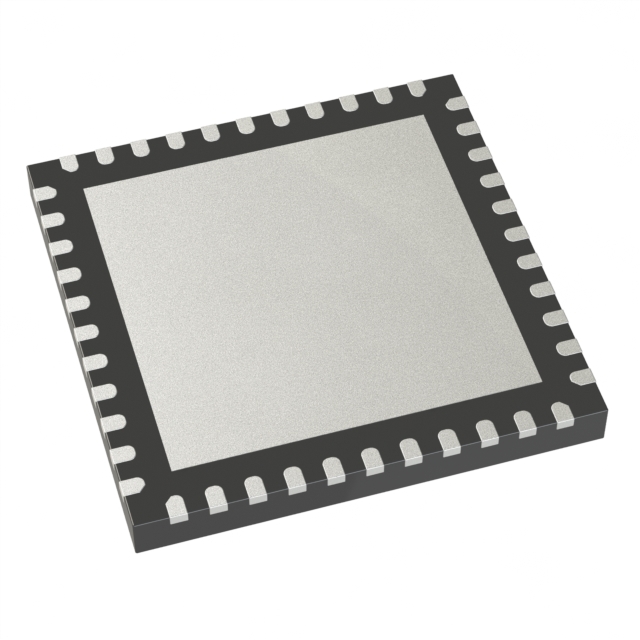
Key Differentiators: The substitute features FLASH program memory instead of OTP, enabling field reprogramming; includes EEPROM (256 x 8) for non-volatile data storage; provides 36 I/O pins versus 33; includes 13x10-bit A/D converters versus 8x10-bit; supports internal oscillator in addition to external; and uses 44-QFN packaging instead of 44-PLCC.
Parameter Comparison
| Parameter | PIC18LC452-I/L | PIC18LF4520-I/ML |
|---|---|---|
| Manufacturer | Microchip Technology | Microchip Technology |
| Series | PIC® 18C | PIC® 18F |
| Core Processor | PIC | PIC |
| Core Size | 8-Bit | 8-Bit |
| Speed | 40MHz | 40MHz |
| Program Memory Size | 32KB (16K x 16) | 32KB (16K x 16) |
| Program Memory Type | OTP | FLASH |
| EEPROM Size | — | 256 x 8 |
| RAM Size | 1.5K x 8 | 1.5K x 8 |
| Voltage - Supply (Vcc/Vdd) | 2.5V ~ 5.5V | 2V ~ 5.5V |
| Number of I/O | 33 | 36 |
| Connectivity | I2C, SPI, UART/USART | I2C, SPI, UART/USART |
| Data Converters | A/D 8x10b | A/D 13x10b |
| Operating Temperature | -40°C ~ 85°C | -40°C ~ 85°C |
| Mounting Type | Surface Mount | Surface Mount |
| Package / Case | 44-PLCC (16.59x16.59) | 44-VQFN Exposed Pad (8x8) |
| RoHS Status | ROHS3 Compliant | ROHS3 Compliant |
| Moisture Sensitivity Level (MSL) | 3 (168 Hours) | 1 (Unlimited) |
| Product Status | Active | Active |
Engineering Selection Recommendations
Substitution Validity: The PIC18LF4520-I/ML is a valid substitute for the PIC18LC452-I/L based on matching core architecture, memory capacity, speed, voltage compatibility, and operating temperature range. Both devices maintain ROHS3 compliance and active product status from Microchip Technology.
Primary Advantage: The substitute provides FLASH program memory, enabling in-system and field reprogramming without device replacement, compared to the one-time programmable limitation of the original part.
Secondary Advantages: The PIC18LF4520-I/ML includes integrated EEPROM for non-volatile data storage, additional I/O pins (36 versus 33), enhanced analog-to-digital conversion capability (13 channels versus 8), and internal oscillator support for simplified clock generation.
Packaging Consideration: The substitute uses 44-QFN packaging (8x8mm) versus 44-PLCC (16.59x16.59mm), resulting in significantly reduced board footprint. PCB layout and thermal management designs must be re-evaluated for the smaller package form factor.
Moisture Handling: The substitute features MSL 1 (unlimited moisture sensitivity level) compared to MSL 3 (168 hours) for the original part, reducing moisture-related handling and storage constraints during manufacturing.
Compliance Alignment: Both devices maintain identical ECCN (3A991A2) and HTSUS (8542.31.0001) classifications, with REACH unaffected status, ensuring regulatory consistency in supply chain documentation.
Frequently Asked Questions (FAQ)
Q: Can firmware written for the PIC18LC452-I/L run on the PIC18LF4520-I/ML without modification?
A: Yes. Both devices share identical PIC core architecture, 40MHz speed, and 32KB program memory organization. Firmware compiled for the PIC18LC452-I/L will execute on the PIC18LF4520-I/ML without code changes. However, applications utilizing EEPROM or additional I/O pins on the substitute require code additions to leverage these enhanced features.
Q: What are the implications of switching from OTP to FLASH program memory?
A: OTP memory is programmed once during manufacturing and cannot be altered. FLASH memory in the substitute allows reprogramming during development, testing, and field deployment. This eliminates the need for device replacement during firmware updates and reduces development cycle time.
Q: Are the pin assignments identical between these two devices?
A: Both devices use 44-pin packages with matching core I/O functionality. However, the PIC18LF4520-I/ML provides 36 I/O pins versus 33 on the original part, indicating additional functional pins. Pin-by-pin compatibility must be verified against device datasheets for specific application requirements.
Q: What packaging changes must be considered for PCB redesign?
A: The original PIC18LC452-I/L uses 44-PLCC packaging (16.59x16.59mm), while the substitute uses 44-QFN (8x8mm). The QFN package reduces board area by approximately 77%, requiring PCB layout revision, via placement adjustment, and thermal management re-evaluation. QFN packages with exposed pads require solder reflow processes optimized for thermal pad connection.
Q: Does the lower supply voltage minimum (2V versus 2.5V) on the substitute provide additional operating margin?
A: The PIC18LF4520-I/ML operates from 2V to 5.5V, extending the lower voltage boundary by 0.5V compared to the PIC18LC452-I/L (2.5V to 5.5V). This provides additional margin for low-power applications and systems with marginal power supplies, though both devices remain compatible within the original 2.5V to 5.5V envelope.
Q: What is the significance of the MSL rating difference?
A: The original part carries MSL 3 (168-hour moisture sensitivity), requiring controlled storage and handling during manufacturing. The substitute carries MSL 1 (unlimited), eliminating moisture-related constraints. This reduces manufacturing complexity and storage requirements, particularly for high-volume production environments.
Q: Can the additional A/D converter channels (13 versus 8) be utilized in existing firmware?
A: The substitute provides 13 analog input channels versus 8 on the original part. Existing firmware using 8 channels will function without modification. Applications requiring additional analog inputs can be enhanced to utilize the 5 additional channels through firmware updates and pin assignment changes.
Alternative Parts

SJ6012L2TP
Littelfuse Inc.
6 Alternative Parts

JMK107BBJ476MA-RE
Taiyo Yuden
10 Alternative Parts

GMK107BBJ475MA-T
Taiyo Yuden
5 Alternative Parts
SJ6020N2ARP
Littelfuse Inc.
3 Alternative Parts
SJ6025R2ATP
Littelfuse Inc.
4 Alternative Parts

2474-05L
API Delevan Inc.
1 Alternative Parts

4590R-684K
API Delevan Inc.
1 Alternative Parts

CM6560R-334
API Delevan Inc.
1 Alternative Parts

CM6460-104
API Delevan Inc.
1 Alternative Parts

5526-12
API Delevan Inc.
1 Alternative Parts