


Request Quote
(Ships tomorrow)
PIC17C44-16I/L Equivalent & Substitute Parts
Part Overview
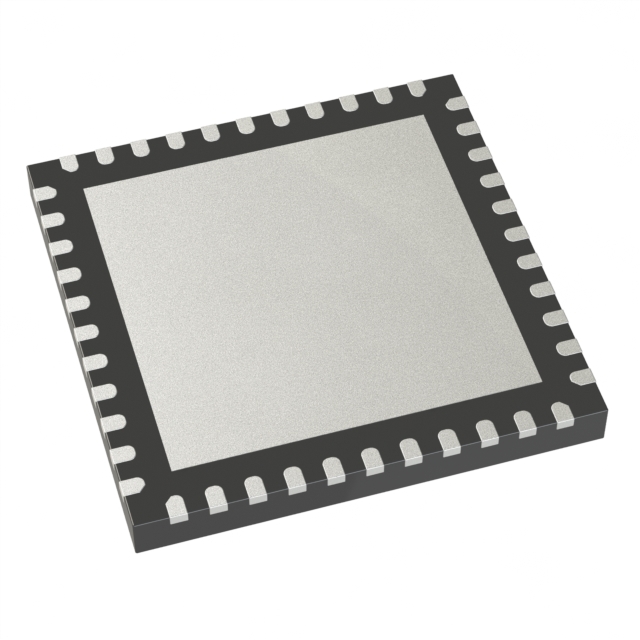
The PIC17C44-16I/L is an 8-bit microcontroller from Microchip Technology's PIC® 17C series, featuring 16KB OTP program memory and operating at 16MHz. This device is classified as Active product status and is currently in stock with 737 units available. The PIC17C44-16I/L is housed in a 44-PLCC package and is designed for embedded applications requiring OTP-based firmware storage.
Finding equivalent and substitute parts becomes necessary when OTP memory devices reach end-of-life phases, when design requirements shift toward reprogrammable solutions, or when supply constraints necessitate alternative sourcing. Substitute parts must maintain functional compatibility across core processor architecture, memory capacity, I/O count, and operating voltage ranges.
Substiute Parts
Key Parameters
| Parameter | PIC17C44-16I/L |
|---|---|
| Core Processor | PIC |
| Core Size | 8-Bit |
| Speed | 16MHz |
| Program Memory Size | 16KB (8K x 16) |
| Program Memory Type | OTP |
| RAM Size | 454 x 8 |
| Number of I/O | 33 |
| Voltage - Supply (Vcc/Vdd) | 4.5V ~ 6V |
| Operating Temperature | -40°C ~ 85°C (TA) |
| Mounting Type | Surface Mount |
| Package / Case | 44-LCC (J-Lead) |
| Peripherals | POR, PWM, WDT |
| Connectivity | UART/USART |
Substitute Part Grouping Explanation
Substitution of the PIC17C44-16I/L is based on the following critical parameters:
- Core Processor Architecture: Both main and substitute parts must use the PIC processor family to ensure instruction set compatibility and firmware portability.
- Core Size: 8-bit architecture is mandatory for functional equivalence.
- Program Memory Capacity: 16KB (8K x 16) is the minimum requirement to accommodate existing firmware.
- I/O Count: Minimum 33 I/O pins required to maintain pin-level compatibility with existing designs.
- Operating Voltage Range: Supply voltage must overlap or encompass the 4.5V ~ 6V range.
- Operating Temperature Range: Must support -40°C ~ 85°C operation.
- Mounting Type: Surface mount packages are required for PCB compatibility.
The PIC18F4420-I/ML qualifies as a substitute based on these parameters. While it introduces enhanced capabilities (FLASH memory, higher speed, expanded RAM, and additional peripherals), it maintains core compatibility across processor family, memory capacity, I/O count, voltage range, and temperature specifications.
Parameter Comparison
| Parameter | PIC17C44-16I/L | PIC18F4420-I/ML |
|---|---|---|
| Manufacturer | Microchip Technology | Microchip Technology |
| Series | PIC® 17C | PIC® 18F |
| Core Processor | PIC | PIC |
| Core Size | 8-Bit | 8-Bit |
| Speed | 16MHz | 40MHz |
| Program Memory Size | 16KB (8K x 16) | 16KB (8K x 16) |
| Program Memory Type | OTP | FLASH |
| RAM Size | 454 x 8 | 768 x 8 |
| EEPROM Size | — | 256 x 8 |
| Number of I/O | 33 | 36 |
| Voltage - Supply (Vcc/Vdd) | 4.5V ~ 6V | 4.2V ~ 5.5V |
| Operating Temperature | -40°C ~ 85°C (TA) | -40°C ~ 85°C (TA) |
| Mounting Type | Surface Mount | Surface Mount |
| Supplier Device Package | 44-PLCC (16.59x16.59) | 44-QFN (8x8) |
| Peripherals | POR, PWM, WDT | Brown-out Detect/Reset, HLVD, POR, PWM, WDT |
| Connectivity | UART/USART | I2C, SPI, UART/USART |
| RoHS Status | ROHS3 Compliant | ROHS3 Compliant |
| Product Status | Active | Active |
Engineering Selection Recommendations
Both the PIC17C44-16I/L and PIC18F4420-I/ML maintain Active product status with Microchip Technology, ensuring ongoing support and availability. Both devices are ROHS3 compliant and REACH unaffected, meeting current environmental and regulatory requirements.
The PIC18F4420-I/ML offers superior capabilities including FLASH reprogrammability versus OTP, higher clock speed (40MHz versus 16MHz), expanded RAM (768 x 8 versus 454 x 8), integrated EEPROM, and enhanced peripheral set. These enhancements provide design flexibility and extended product lifecycle management.
Package differences exist: the PIC17C44-16I/L uses 44-PLCC (16.59x16.59) while the PIC18F4420-I/ML uses 44-QFN (8x8). PCB layout modifications are required when transitioning between these packages. The voltage supply range of the PIC18F4420-I/ML (4.2V ~ 5.5V) is slightly narrower than the PIC17C44-16I/L (4.5V ~ 6V), requiring verification against system power specifications.
Frequently Asked Questions (FAQ)
Q: Can the PIC18F4420-I/ML directly replace the PIC17C44-16I/L without firmware modification?
A: The PIC18F4420-I/ML shares the same PIC processor family and maintains equivalent program memory capacity (16KB). However, the PIC 18F series uses an enhanced instruction set compared to the PIC 17C series. Firmware recompilation is required, though most code written for PIC 17C devices can be adapted to PIC 18F architecture with minimal changes.
Q: What are the package compatibility implications?
A: The PIC17C44-16I/L uses a 44-PLCC package while the PIC18F4420-I/ML uses a 44-QFN package. Both are 44-pin surface mount packages but have different physical dimensions and pin layouts. PCB redesign is necessary for package migration. Pin-to-pin functional mapping must be verified against datasheet pinout diagrams.
Q: Does the voltage supply range difference affect substitution?
A: The PIC18F4420-I/ML operates at 4.2V ~ 5.5V versus the PIC17C44-16I/L at 4.5V ~ 6V. If your system operates below 4.2V or above 5.5V, the PIC18F4420-I/ML is not suitable. Verify your power supply specifications before substitution.
Q: What advantages does FLASH memory provide over OTP?
A: FLASH memory in the PIC18F4420-I/ML allows in-circuit reprogramming and field updates, whereas OTP in the PIC17C44-16I/L is programmed once during manufacturing. FLASH enables iterative development, bug fixes, and feature updates without component replacement.
Q: Are there I/O count differences to consider?
A: The PIC18F4420-I/ML provides 36 I/O pins versus 33 on the PIC17C44-16I/L. This additional I/O capacity is a superset and does not create compatibility issues. Existing designs using 33 I/O pins will function with the substitute part.
Q: How do the peripheral sets compare?
A: The PIC18F4420-I/ML includes additional peripherals: Brown-out Detect/Reset, HLVD, and A/D converters (13x10b). The PIC17C44-16I/L provides POR, PWM, and WDT. Both devices support UART/USART connectivity, though the PIC18F4420-I/ML adds I2C and SPI interfaces. Firmware must be adapted to utilize or ignore these additional peripherals.
Alternative Parts

SJ6012L2TP
Littelfuse Inc.
6 Alternative Parts

JMK107BBJ476MA-RE
Taiyo Yuden
10 Alternative Parts

GMK107BBJ475MA-T
Taiyo Yuden
5 Alternative Parts
SJ6020N2ARP
Littelfuse Inc.
3 Alternative Parts
SJ6025R2ATP
Littelfuse Inc.
4 Alternative Parts

2474-05L
API Delevan Inc.
1 Alternative Parts

4590R-684K
API Delevan Inc.
1 Alternative Parts

CM6560R-334
API Delevan Inc.
1 Alternative Parts

CM6460-104
API Delevan Inc.
1 Alternative Parts

5526-12
API Delevan Inc.
1 Alternative Parts