



Request Quote
(Ships tomorrow)
PDTC123YMB,315 Equivalent & Substitute Parts
Part Overview
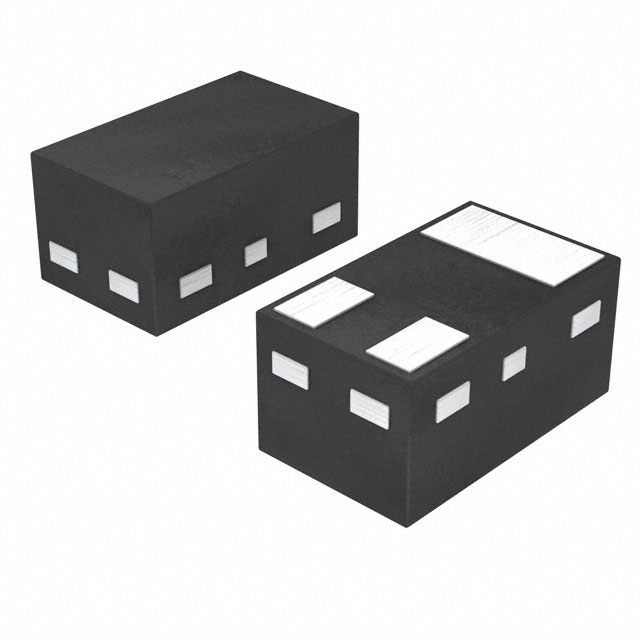
The PDTC123YMB,315 is a pre-biased NPN bipolar junction transistor (BJT) manufactured by Nexperia USA Inc. in a 3-pin DFN surface mount package. This component integrates internal biasing resistors, eliminating the need for external base resistor networks in switching and amplification applications. The device operates at 50 V collector-emitter breakdown voltage with a maximum collector current of 100 mA and 250 mW power dissipation. The part maintains Active product status with full AEC-Q100 automotive qualification and ROHS3 compliance. Substitute parts are identified when equivalent electrical performance, package compatibility, and regulatory compliance can be maintained across different manufacturers while accommodating application-specific parameter tolerances.
Substiute Parts
Key Parameters
| Parameter | Value | Unit |
|---|---|---|
| Transistor Type | NPN - Pre-Biased | — |
| Current - Collector (Ic) Max | 100 | mA |
| Voltage - Collector Emitter Breakdown (Max) | 50 | V |
| Resistor - Base (R1) | 2.2 | kOhms |
| Resistor - Emitter Base (R2) | 10 | kOhms |
| Frequency - Transition | 230 | MHz |
| Power - Max | 250 | mW |
| Package / Case | 3-XFDFN (DFN1006B-3) | — |
| Grade | Automotive | — |
| Qualification | AEC-Q100 | — |
| RoHS Status | ROHS3 Compliant | — |
| Moisture Sensitivity Level (MSL) | 1 (Unlimited) | — |
Substitute Part Grouping Explanation
Substitution of the PDTC123YMB,315 is determined by strict equivalence across the following critical parameters:
Mandatory Equivalence Criteria:
- Transistor type classification: NPN - Pre-Biased
- Maximum collector current: 100 mA
- Collector-emitter breakdown voltage: 50 V
- Base resistor (R1): 2.2 kOhms
- Maximum power dissipation: 250 mW
- Surface mount package compatibility: DFN1006 footprint family
- Product status: Active
- Regulatory compliance: ROHS3, REACH Unaffected, AEC-Q100 automotive grade
Allowable Parameter Variations: Substitute parts may differ in the following parameters while maintaining functional equivalence:
- Emitter-base resistor (R2): Variation permitted within design tolerance
- DC current gain (hFE): Variation permitted based on operating point specification
- Vce saturation: Variation permitted within switching performance envelope
- Collector cutoff current: Variation permitted within leakage specification
- Transition frequency: Variation permitted above minimum switching requirement
- Supplier device package designation: Variation permitted within DFN1006 family
The DDTC123JLP-7 manufactured by Diodes Incorporated qualifies as a substitute part based on equivalence across all mandatory criteria, with documented variations in R2 (47 kOhms vs. 10 kOhms), hFE characteristics, and transition frequency that remain within acceptable application parameters for pre-biased switching transistor functionality.
Parameter Comparison
| Parameter | PDTC123YMB,315 (Nexperia) | DDTC123JLP-7 (Diodes Inc.) | Unit |
|---|---|---|---|
| Transistor Type | NPN - Pre-Biased | NPN - Pre-Biased | — |
| Current - Collector (Ic) Max | 100 | 100 | mA |
| Voltage - Collector Emitter Breakdown (Max) | 50 | 50 | V |
| Resistor - Base (R1) | 2.2 | 2.2 | kOhms |
| Resistor - Emitter Base (R2) | 10 | 47 | kOhms |
| DC Current Gain (hFE) Min @ Ic, Vce | 35 @ 5mA, 5V | 180 @ 50mA, 5V | — |
| Vce Saturation (Max) @ Ib, Ic | 150mV @ 500µA, 10mA | 200mV @ 5mA, 50mA | — |
| Current - Collector Cutoff (Max) | 1 | 500 | µA / nA |
| Frequency - Transition | 230 | 250 | MHz |
| Power - Max | 250 | 250 | mW |
| Package / Case | 3-XFDFN (DFN1006B-3) | 3-UFDFN (X1-DFN1006-3) | — |
| Mounting Type | Surface Mount | Surface Mount | — |
| RoHS Status | ROHS3 Compliant | ROHS3 Compliant | — |
| Moisture Sensitivity Level (MSL) | 1 (Unlimited) | 1 (Unlimited) | — |
| REACH Status | REACH Unaffected | REACH Unaffected | — |
| Grade | Automotive | Not specified in data | — |
| Qualification | AEC-Q100 | Not specified in data | — |
Engineering Selection Recommendations
PDTC123YMB,315 (Primary Selection)
The PDTC123YMB,315 is the primary component specification. This part maintains Active product status with full automotive-grade qualification (AEC-Q100) and is manufactured by Nexperia USA Inc., a tier-one semiconductor supplier. The device carries 10,267 units in current inventory. This part is suitable for all applications requiring pre-biased NPN switching transistors in automotive and industrial environments where AEC-Q100 certification is mandatory.
DDTC123JLP-7 (Substitute Selection)
The DDTC123JLP-7 manufactured by Diodes Incorporated qualifies as a functional substitute based on electrical equivalence across core switching parameters and package compatibility. This part maintains Active product status with ROHS3 compliance and REACH Unaffected status. The device carries 17,200 units in current inventory, providing superior availability. The DDTC123JLP-7 is suitable for applications where:
- Pre-biased NPN switching functionality is required
- DFN1006 surface mount package compatibility is maintained
- Operating voltage and current specifications remain within 50 V / 100 mA envelope
- ROHS3 and REACH compliance requirements are satisfied
Compliance and Regulatory Considerations
Both parts maintain ROHS3 compliance and REACH Unaffected status. The PDTC123YMB,315 carries explicit AEC-Q100 automotive qualification. Applications requiring automotive-grade certification should specify the PDTC123YMB,315. The DDTC123JLP-7 does not carry documented AEC-Q100 qualification in the provided data and should be evaluated against specific automotive qualification requirements before selection.
Frequently Asked Questions (FAQ)
Q: Can the DDTC123JLP-7 directly replace the PDTC123YMB,315 in existing designs?
A: The DDTC123JLP-7 provides electrical equivalence across core switching parameters (100 mA collector current, 50 V breakdown voltage, 250 mW power dissipation) and maintains DFN1006 package compatibility. However, the emitter-base resistor differs (47 kOhms vs. 10 kOhms), resulting in different DC current gain characteristics. Direct substitution requires circuit-level evaluation to confirm that the higher hFE of the DDTC123JLP-7 (180 @ 50mA, 5V vs. 35 @ 5mA, 5V) does not affect switching behavior or bias point stability in the target application. Automotive applications requiring AEC-Q100 certification must retain the PDTC123YMB,315.
Q: What is the significance of the R2 (emitter-base resistor) difference between these parts?
A: The PDTC123YMB,315 specifies R2 at 10 kOhms, while the DDTC123JLP-7 specifies R2 at 47 kOhms. This difference directly affects the DC current gain and biasing characteristics of the pre-biased transistor. The higher R2 value in the DDTC123JLP-7 results in higher current gain (hFE = 180 vs. 35 at their respective test points). Applications sensitive to bias point variation or requiring specific gain characteristics must account for this parameter difference during circuit validation.
Q: Are both parts suitable for automotive applications?
A: The PDTC123YMB,315 carries explicit AEC-Q100 automotive qualification and automotive-grade designation. The DDTC123JLP-7 does not carry documented AEC-Q100 qualification in the provided data. Automotive applications requiring AEC-Q100 certification must use the PDTC123YMB,315. The DDTC123JLP-7 is suitable for industrial and consumer applications where automotive qualification is not required.
Q: What are the package compatibility considerations?
A: Both parts use DFN1006 surface mount packages. The PDTC123YMB,315 uses the DFN1006B-3 variant (3-XFDFN), while the DDTC123JLP-7 uses the X1-DFN1006-3 variant (3-UFDFN). Both packages maintain identical 3-pin DFN1006 footprint compatibility for PCB layout purposes. Supplier device package designations differ, but physical footprint and pin configuration remain equivalent.
Q: What inventory considerations apply to these parts?
A: The PDTC123YMB,315 maintains 10,267 units in current inventory. The DDTC123JLP-7 maintains 17,200 units in current inventory, providing 67% greater availability. For applications with extended lead time requirements or high-volume procurement, the DDTC123JLP-7 offers superior inventory position, subject to electrical equivalence validation.
Q: How do the transition frequency specifications compare?
A: The PDTC123YMB,315 specifies 230 MHz transition frequency, while the DDTC123JLP-7 specifies 250 MHz. Both frequencies exceed typical switching requirements for pre-biased transistor applications. The higher transition frequency of the DDTC123JLP-7 provides additional switching speed margin and does not create compatibility issues in applications designed for the PDTC123YMB,315.
Q: What is the significance of the collector cutoff current difference?
A: The PDTC123YMB,315 specifies maximum collector cutoff current at 1 µA, while the DDTC123JLP-7 specifies 500 nA. The DDTC123JLP-7 exhibits lower leakage current, which may provide improved performance in low-power standby or precision switching applications. This difference does not create compatibility issues for standard switching applications.
Alternative Parts

SJ6012L2TP
Littelfuse Inc.
6 Alternative Parts

JMK107BBJ476MA-RE
Taiyo Yuden
10 Alternative Parts

GMK107BBJ475MA-T
Taiyo Yuden
5 Alternative Parts
SJ6020N2ARP
Littelfuse Inc.
3 Alternative Parts
SJ6025R2ATP
Littelfuse Inc.
4 Alternative Parts

2474-05L
API Delevan Inc.
1 Alternative Parts

4590R-684K
API Delevan Inc.
1 Alternative Parts

CM6560R-334
API Delevan Inc.
1 Alternative Parts

CM6460-104
API Delevan Inc.
1 Alternative Parts

5526-12
API Delevan Inc.
1 Alternative Parts