


Request Quote
(Ships tomorrow)
PCM69AU-K Equivalent & Substitute Parts
Part Overview
The PCM69AU-K is an 18-bit audio digital-to-analog converter (DAC) manufactured by Texas Instruments, designed for audio applications requiring PCM data interface support. This component operates with a 5V supply and is housed in a 20-SOIC surface mount package. The product is classified as obsolete, making identification of suitable substitute components essential for ongoing system support and new design implementations.
Substiute Parts
Key Parameters
| Parameter | PCM69AU-K |
|---|---|
| Manufacturer | Texas Instruments |
| Category | Data Acquisition |
| Type | DAC, Audio |
| Resolution (Bits) | 18 b |
| Number of Channels | 2 |
| Data Interface | PCM |
| Voltage Supply | 5V |
| Operating Temperature | -25°C ~ 85°C |
| Mounting Type | Surface Mount |
| Package / Case | 20-SOIC (0.295", 7.50mm Width) |
| Product Status | Obsolete |
| RoHS Status | ROHS3 Compliant |
Substitute Part Grouping Explanation
Substitution of the PCM69AU-K is determined by the following critical parameters:
- Functional Category: Both components must be audio DACs with dual-channel output capability
- Resolution Compatibility: The substitute must support at least 18-bit resolution; higher resolution (24-bit) is acceptable for backward compatibility
- Data Interface: The substitute must support digital audio data protocols compatible with system requirements
- Supply Voltage: The substitute must operate within the system's available voltage rails
- Operating Temperature Range: The substitute must maintain the specified temperature operating window
- Mounting Technology: Surface mount packages are required for PCB integration
- Compliance Standards: RoHS3 compliance and REACH unaffected status must be maintained
The PCM1793DB qualifies as a substitute based on these parameters: it maintains dual-channel audio DAC functionality, exceeds resolution requirements (24-bit vs. 18-bit), supports multiple supply voltages including 5V operation, maintains the temperature range, uses surface mount technology, and meets all compliance requirements.
Parameter Comparison
| Parameter | PCM69AU-K | PCM1793DB | Notes |
|---|---|---|---|
| Manufacturer | Texas Instruments | Texas Instruments | Same manufacturer |
| Type | DAC, Audio | DAC, Audio | Identical functional category |
| Number of Channels | 2 | 2 | Identical channel count |
| Resolution (Bits) | 18 b | 24 b | Substitute offers higher resolution |
| Data Interface | PCM | I2S | Different digital interface protocols |
| Voltage Supply | 5V | 3V ~ 3.6V, 5V | Substitute supports broader voltage range including 5V |
| Operating Temperature | -25°C ~ 85°C | -25°C ~ 85°C | Identical temperature range |
| Mounting Type | Surface Mount | Surface Mount | Identical mounting technology |
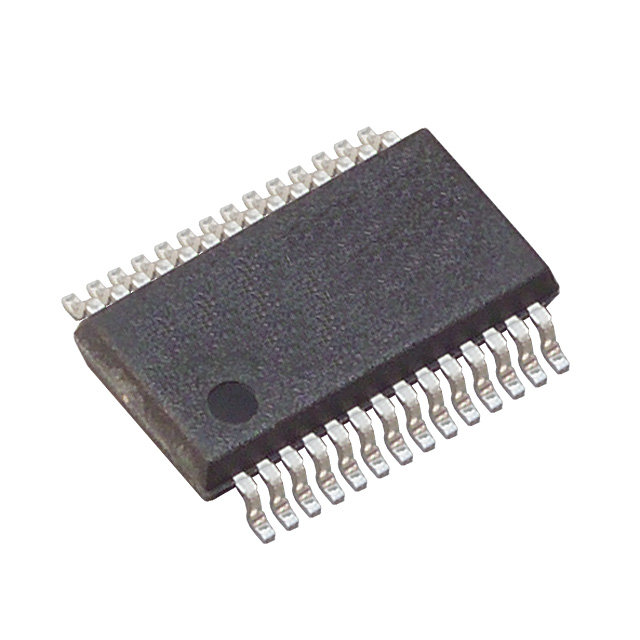
| Package / Case | 20-SOIC (0.295", 7.50mm Width) | 28-SSOP (0.209", 5.30mm Width) | Different package footprints |
| Product Status | Obsolete | Active | Substitute is actively manufactured |
| RoHS Status | ROHS3 Compliant | ROHS3 Compliant | Both meet RoHS3 requirements |
Engineering Selection Recommendations
The PCM1793DB is the manufacturer-recommended substitute for the obsolete PCM69AU-K. Selection of this substitute is supported by the following factors:
Product Status: The PCM1793DB maintains active production status, ensuring long-term availability and supply chain continuity compared to the obsolete PCM69AU-K.
Compliance Alignment: Both components maintain ROHS3 compliance and REACH unaffected status, ensuring regulatory requirements are met in replacement applications.
Functional Upgrade: The PCM1793DB provides enhanced resolution (24-bit versus 18-bit), delivering improved audio fidelity while maintaining backward compatibility with dual-channel audio DAC requirements.
Voltage Compatibility: The PCM1793DB supports 5V operation within its specified voltage range (3V ~ 3.6V, 5V), matching the original component's supply requirements.
Temperature Range: Identical operating temperature specifications (-25°C ~ 85°C) ensure thermal performance equivalence across environmental conditions.
Design Considerations: PCB layout modifications are required due to package footprint differences (20-SOIC to 28-SSOP). Digital interface protocol differences (PCM to I2S) require firmware or signal conditioning evaluation to confirm system compatibility.
Frequently Asked Questions (FAQ)
Q: Can the PCM1793DB directly replace the PCM69AU-K without PCB modifications?
A: No. The PCM1793DB uses a 28-SSOP package while the PCM69AU-K uses a 20-SOIC package. PCB layout redesign is required to accommodate the different footprint dimensions and pin configuration.
Q: What is the impact of the different data interface protocols (PCM versus I2S)?
A: The PCM69AU-K uses PCM (Pulse Code Modulation) interface while the PCM1793DB uses I2S (Integrated Interchip Sound) interface. System compatibility depends on whether the host processor or audio controller can generate I2S signals. Signal protocol conversion may be necessary if the system is designed exclusively for PCM input.
Q: Does the higher resolution of the PCM1793DB (24-bit versus 18-bit) create compatibility issues?
A: No. Higher resolution is a functional enhancement that does not create backward compatibility problems. Systems designed for 18-bit audio will operate correctly with the 24-bit substitute; the additional resolution bits simply remain unused if the source material is 18-bit.
Q: Are there inventory or lead time advantages to using the PCM1793DB?
A: Yes. The PCM1793DB is actively manufactured with 2220 units in stock, compared to the obsolete PCM69AU-K with 954 units remaining. Active production status ensures ongoing availability for future orders.
Q: What supply voltage should be used with the PCM1793DB in a 5V system?
A: The PCM1793DB operates within the 3V ~ 3.6V and 5V supply ranges. For systems designed around 5V operation, the 5V supply specification applies directly without modification.
Q: Are there any compliance or certification differences between these components?
A: No. Both components maintain identical RoHS3 compliance and REACH unaffected status, ensuring regulatory equivalence in applications subject to these standards.
Alternative Parts

SJ6012L2TP
Littelfuse Inc.
6 Alternative Parts

JMK107BBJ476MA-RE
Taiyo Yuden
10 Alternative Parts

GMK107BBJ475MA-T
Taiyo Yuden
5 Alternative Parts
SJ6020N2ARP
Littelfuse Inc.
3 Alternative Parts
SJ6025R2ATP
Littelfuse Inc.
4 Alternative Parts

2474-05L
API Delevan Inc.
1 Alternative Parts

4590R-684K
API Delevan Inc.
1 Alternative Parts

CM6560R-334
API Delevan Inc.
1 Alternative Parts

CM6460-104
API Delevan Inc.
1 Alternative Parts

5526-12
API Delevan Inc.
1 Alternative Parts