


Request Quote
(Ships tomorrow)
PCM1702U/2K Equivalent & Substitute Parts
Part Overview
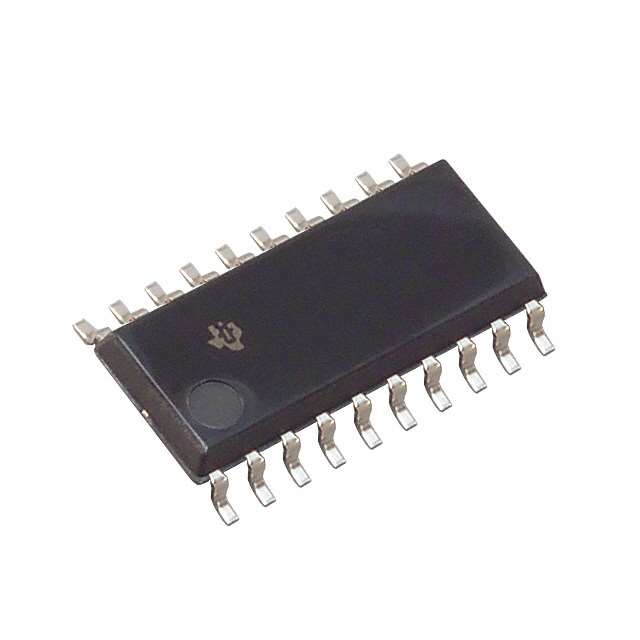
The PCM1702U/2K is a 20-bit audio digital-to-analog converter (DAC) manufactured by Texas Instruments, designed for audio applications with a 44.1 kHz sampling rate and dual-channel output. The device operates on dual ±5V supply and is housed in a 20-SOIC surface mount package.
This part is classified as obsolete, making it necessary to identify functionally compatible alternatives for new designs or production continuity. Substitute parts must maintain compatibility with the dual ±5V supply requirement and serial data interface while accommodating potential upgrades in resolution and sampling rate capabilities.
Substiute Parts
Key Parameters
| Parameter | PCM1702U/2K |
|---|---|
| Manufacturer | Texas Instruments |
| Product Type | DAC, Audio |
| Number of Channels | 2 |
| Resolution (Bits) | 20 b |
| Sampling Rate (Per Second) | 44.1k |
| Data Interface | Serial |
| Voltage Supply Source | Dual ± |
| Voltage - Supply | ±5V |
| Operating Temperature | -25°C ~ 85°C |
| Mounting Type | Surface Mount |
| Package / Case | 20-SOIC (0.209", 5.30mm Width) |
| Product Status | Obsolete |
| RoHS Status | ROHS3 Compliant |
| MSL Rating | 3 (168 Hours) |
Substitute Part Grouping Explanation
Substitution of the PCM1702U/2K is determined by the following critical parameters:
Primary Compatibility Criteria:
- Dual-channel audio DAC architecture
- Serial data interface capability
- Operating temperature range: -25°C ~ 85°C
- Surface mount technology
- RoHS3 compliance
- REACH unaffected status
Allowable Parameter Variations:
- Resolution upgrade from 20-bit to 32-bit
- Sampling rate increase from 44.1 kHz to 200 kHz
- Supply voltage modification from ±5V to 3V ~ 3.6V and 5V (dual supply support)
- Data interface expansion from Serial to DSD and PCM support
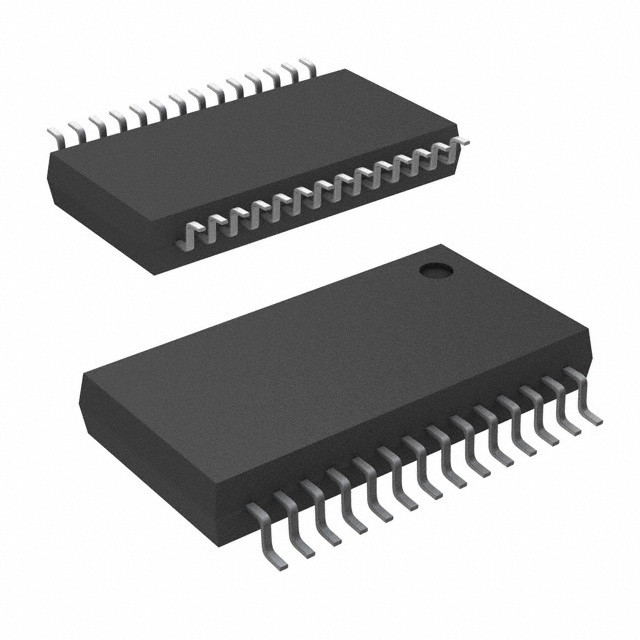
- Package change from 20-SOIC to 28-SSOP (same width specification)
- Product status transition from Obsolete to Active
The PCM1795DBR qualifies as a direct substitute based on these allowable variations while maintaining core functional compatibility.
Parameter Comparison
| Parameter | PCM1702U/2K | PCM1795DBR |
|---|---|---|
| Manufacturer | Texas Instruments | Texas Instruments |
| Product Type | DAC, Audio | DAC, Audio |
| Number of Channels | 2 | 2 |
| Resolution (Bits) | 20 b | 32 b |
| Sampling Rate (Per Second) | 44.1k | 200k |
| Data Interface | Serial | DSD, PCM |
| Voltage Supply Source | Dual ± | Analog and Digital |
| Voltage - Supply | ±5V | 3V ~ 3.6V, 5V |
| Operating Temperature | -25°C ~ 85°C | -25°C ~ 85°C |
| Mounting Type | Surface Mount | Surface Mount |
| Package / Case | 20-SOIC (0.209", 5.30mm Width) | 28-SSOP (0.209", 5.30mm Width) |
| Product Status | Obsolete | Active |
| RoHS Status | ROHS3 Compliant | ROHS3 Compliant |
| MSL Rating | 3 (168 Hours) | 1 (Unlimited) |
Engineering Selection Recommendations
The PCM1795DBR is the designated manufacturer-recommended substitute for the PCM1702U/2K. Selection of this alternative is supported by the following factors:
Product Status: The PCM1702U/2K is obsolete, while the PCM1795DBR maintains active production status, ensuring long-term availability and supply chain continuity.
Regulatory Compliance: Both parts maintain ROHS3 compliance and REACH unaffected status, satisfying current environmental and regulatory requirements.
Certifications: Both devices carry identical ECCN (EAR99) and HTSUS (8542.39.0001) classifications, maintaining export and tariff consistency.
Performance Upgrade Path: The PCM1795DBR provides enhanced specifications (32-bit resolution, 200 kHz sampling rate, DSD/PCM support) while maintaining backward compatibility with the original operating temperature range and dual-supply architecture.
Moisture Sensitivity: The PCM1795DBR features improved MSL rating (1 vs. 3), reducing handling and storage constraints during manufacturing.
Package Consideration: The transition from 20-SOIC to 28-SSOP requires PCB layout modification. Both packages maintain identical width (0.209", 5.30mm), but pin count and spacing differ, necessitating schematic and layout redesign.
Frequently Asked Questions (FAQ)
Q: Can the PCM1795DBR directly replace the PCM1702U/2K without circuit modifications?
A: No. While functionally compatible as an audio DAC, the PCM1795DBR uses a 28-SSOP package versus the 20-SOIC package of the original part. PCB layout and schematic redesign are required. Additionally, the supply voltage range differs (3V ~ 3.6V, 5V vs. ±5V), requiring power supply circuit evaluation.
Q: What are the key differences in data interface capability?
A: The PCM1702U/2K supports serial data interface only. The PCM1795DBR expands this to support DSD and PCM formats, providing greater flexibility for audio source compatibility. Existing serial implementations remain compatible with the substitute.
Q: Is the operating temperature range identical?
A: Yes. Both parts operate across -25°C ~ 85°C, maintaining thermal compatibility for equivalent environmental applications.
Q: What is the significance of the resolution upgrade from 20-bit to 32-bit?
A: The 32-bit resolution of the PCM1795DBR provides enhanced dynamic range and signal-to-noise ratio compared to the 20-bit original. This represents a performance upgrade suitable for higher-fidelity audio applications.
Q: How does the sampling rate increase from 44.1 kHz to 200 kHz affect compatibility?
A: The higher sampling rate capability of the PCM1795DBR supports extended audio bandwidth and professional audio formats. Existing 44.1 kHz implementations remain fully compatible, as the substitute can operate at lower sampling rates.
Q: Are there supply voltage compatibility concerns?
A: The PCM1702U/2K requires ±5V dual supply. The PCM1795DBR accepts 3V ~ 3.6V and 5V supplies with separate analog and digital supply pins. Power supply circuit redesign is necessary to accommodate the different voltage requirements and supply architecture.
Q: What is the impact of the MSL rating change?
A: The PCM1795DBR has MSL 1 (unlimited moisture exposure) versus MSL 3 (168 hours) for the original part. This reduces moisture sensitivity constraints during component storage, handling, and manufacturing processes.
Alternative Parts

SJ6012L2TP
Littelfuse Inc.
6 Alternative Parts

JMK107BBJ476MA-RE
Taiyo Yuden
10 Alternative Parts

GMK107BBJ475MA-T
Taiyo Yuden
5 Alternative Parts
SJ6020N2ARP
Littelfuse Inc.
3 Alternative Parts
SJ6025R2ATP
Littelfuse Inc.
4 Alternative Parts

2474-05L
API Delevan Inc.
1 Alternative Parts

4590R-684K
API Delevan Inc.
1 Alternative Parts

CM6560R-334
API Delevan Inc.
1 Alternative Parts

CM6460-104
API Delevan Inc.
1 Alternative Parts

5526-12
API Delevan Inc.
1 Alternative Parts