




Request Quote
(Ships tomorrow)
PBLS1503Y,115 Pre-Biased Bipolar Transistor Equivalent & Substitute Parts
Part Overview
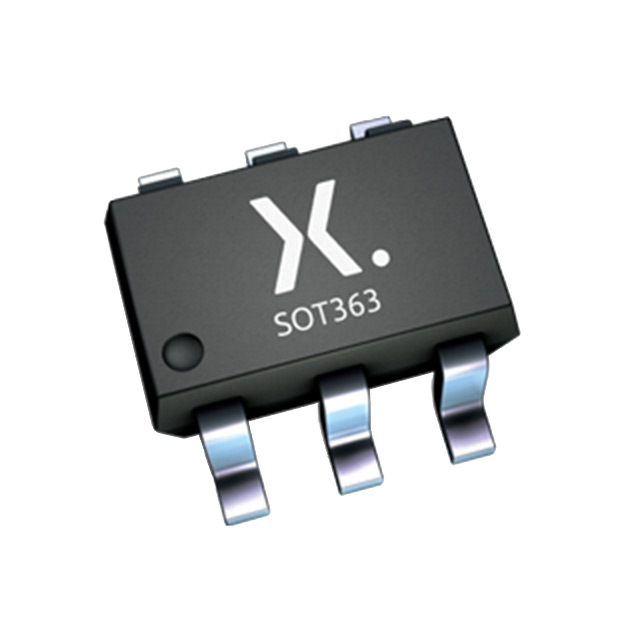
The PBLS1503Y,115 is an active pre-biased bipolar transistor (BJT) manufactured by Nexperia USA Inc. in a 6-TSSOP surface mount package. This dual-transistor configuration integrates one NPN pre-biased transistor and one PNP pre-biased transistor with integrated base and emitter-base resistors, designed for applications requiring compact switching and amplification circuits. The part is RoHS3 compliant with unlimited moisture sensitivity level (MSL 1) and is currently in active production status with 790 pieces in stock.
Equivalent and substitute parts are identified based on matching electrical performance parameters, package compatibility, and functional equivalence in pre-biased BJT applications. Substitution becomes necessary when the primary part is unavailable, when alternative sourcing is required for supply chain optimization, or when design flexibility across multiple manufacturers is needed.
Substiute Parts
Key Parameters
| Parameter | Value | Unit |
|---|---|---|
| Transistor Type | 1 NPN Pre-Biased, 1 PNP | Configuration |
| Current - Collector (Ic) Max | 100mA, 500mA | mA |
| Voltage - Collector Emitter Breakdown (Max) | 50V, 15V | V |
| Resistor - Base (R1) | 10kOhms | Ohms |
| Resistor - Emitter Base (R2) | 10kOhms | Ohms |
| DC Current Gain (hFE) Min @ Ic, Vce | 30 @ 5mA, 5V / 150 @ 100mA, 2V | Unitless |
| Vce Saturation (Max) @ Ib, Ic | 150mV @ 500µA, 10mA / 250mV @ 50mA, 500mA | mV |
| Current - Collector Cutoff (Max) | 1µA, 100nA | µA, nA |
| Frequency - Transition | 280MHz | MHz |
| Power - Max | 300mW | mW |
| Package / Case | 6-TSSOP, SC-88, SOT-363 | Form Factor |
| Mounting Type | Surface Mount | Technology |
| RoHS Status | ROHS3 Compliant | Compliance |
| Moisture Sensitivity Level (MSL) | 1 (Unlimited) | Classification |
Substitute Part Grouping Explanation
Substitution eligibility for the PBLS1503Y,115 is determined by the following critical parameters:
Primary Matching Criteria:
- Transistor configuration: 1 NPN pre-biased and 1 PNP pre-biased dual transistor
- Collector current rating: minimum 100mA capability
- Collector-emitter breakdown voltage: minimum 50V
- Integrated base resistor (R1): 10kOhms
- Integrated emitter-base resistor (R2): 10kOhms
- Package compatibility: 6-TSSOP, SC-88, or SOT-363 surface mount
- Transition frequency: minimum 250MHz
- RoHS3 compliance and MSL 1 rating
Substitution Logic: Parts meeting all primary matching criteria are classified as direct substitutes. The PBLS1503Y,115 specifies dual pre-biased transistor functionality with 10kOhm integrated resistors on both base and emitter-base paths. Substitute parts must maintain this exact resistor configuration and dual-transistor topology. Variations in power dissipation (300mW vs. 150mW or 200mW) are acceptable when the application does not require the full power rating of the primary part. Transition frequency reductions from 280MHz to 250MHz are acceptable for most switching applications. Differences in collector cutoff current specifications do not preclude substitution when the primary specification is met.
Parameter Comparison
| Parameter | PBLS1503Y,115 (Nexperia) | DCX114EU-7-F (Diodes Inc.) | UMD3NTR (Rohm) | UMD5NTR (Rohm) |
|---|---|---|---|---|
| Manufacturer | Nexperia USA Inc. | Diodes Incorporated | Rohm Semiconductor | Rohm Semiconductor |
| Transistor Type | 1 NPN Pre-Biased, 1 PNP | 1 NPN, 1 PNP - Pre-Biased (Dual) | 1 NPN, 1 PNP - Pre-Biased (Dual) | 1 NPN, 1 PNP - Pre-Biased (Dual) |
| Current - Collector (Ic) Max | 100mA, 500mA | 100mA | 100mA | 100mA |
| Voltage - Collector Emitter Breakdown (Max) | 50V, 15V | 50V | 50V | 50V |
| Resistor - Base (R1) | 10kOhms | 10kOhms | 10kOhms | 47kOhms, 4.7kOhms |
| Resistor - Emitter Base (R2) | 10kOhms | 10kOhms | 10kOhms | 47kOhms, 10kOhms |
| DC Current Gain (hFE) Min @ Ic, Vce | 30 @ 5mA, 5V / 150 @ 100mA, 2V | 30 @ 5mA, 5V | 30 @ 5mA, 5V | 68 @ 5mA, 5V / 30 @ 10mA, 5V |
| Vce Saturation (Max) @ Ib, Ic | 150mV @ 500µA, 10mA / 250mV @ 50mA, 500mA | 300mV @ 500µA, 10mA | 300mV @ 500µA, 10mA | 300mV @ 500µA, 10mA |
| Current - Collector Cutoff (Max) | 1µA, 100nA | 500nA | 500nA | 500nA |
| Frequency - Transition | 280MHz | 250MHz | 250MHz | 250MHz |
| Power - Max | 300mW | 200mW | 150mW | 150mW, 120mW |
| Package / Case | 6-TSSOP, SC-88, SOT-363 | 6-TSSOP, SC-88, SOT-363 | 6-TSSOP, SC-88, SOT-363 | 6-TSSOP, SC-88, SOT-363 |
| Supplier Device Package | 6-TSSOP | SOT-363 | UMT6 | UMT6 |
| RoHS Status | ROHS3 Compliant | ROHS3 Compliant | ROHS3 Compliant | ROHS3 Compliant |
| Moisture Sensitivity Level (MSL) | 1 (Unlimited) | 1 (Unlimited) | 1 (Unlimited) | 1 (Unlimited) |
| Packaging Type | Tape & Reel (TR) | Tape & Reel (TR) | Cut Tape (CT) & Digi-Reel® | Cut Tape (CT) & Digi-Reel® |
| Product Status | Active | Active | Active | Active |
Engineering Selection Recommendations
DCX114EU-7-F (Diodes Incorporated): This part qualifies as a direct substitute for the PBLS1503Y,115 in applications where the maximum collector current requirement does not exceed 100mA and power dissipation does not exceed 200mW. The DCX114EU-7-F maintains identical base and emitter-base resistor values (10kOhms each), matching voltage and current gain specifications at the 5mA, 5V test point. The part is RoHS3 compliant with MSL 1 rating. The primary design consideration is the reduced power rating (200mW vs. 300mW) and transition frequency (250MHz vs. 280MHz). This part is available in SOT-363 package format with 35,300 pieces in stock.
UMD3NTR (Rohm Semiconductor): This part qualifies as a direct substitute for applications requiring 100mA maximum collector current and 150mW power dissipation. The UMD3NTR maintains the critical 10kOhm base and emitter-base resistor configuration and meets all voltage and current gain specifications at the 5mA, 5V test point. RoHS3 compliance and MSL 1 rating are confirmed. The transition frequency is 250MHz. This part is supplied in UMT6 package format with 56,200 pieces in stock.
UMD5NTR (Rohm Semiconductor): This part does not qualify as a direct substitute for the PBLS1503Y,115 due to non-matching integrated resistor values. The UMD5NTR specifies base resistor (R1) values of 47kOhms or 4.7kOhms and emitter-base resistor (R2) values of 47kOhms or 10kOhms, which differ from the required 10kOhms on both resistors in the primary part. Although the UMD5NTR meets voltage, current, and frequency specifications, the resistor mismatch creates different biasing characteristics and switching behavior that preclude direct substitution.
All three substitute candidates are active products with RoHS3 compliance and unlimited moisture sensitivity rating, matching the regulatory and environmental requirements of the primary part.
Frequently Asked Questions (FAQ)
Q: Can the DCX114EU-7-F replace the PBLS1503Y,115 in all applications?
A: The DCX114EU-7-F is a direct substitute when the application does not require the full 500mA collector current capability or 300mW power dissipation of the PBLS1503Y,115. Both parts share identical 10kOhm base and emitter-base resistor values and meet the same voltage and current gain specifications at the 5mA, 5V test point. The DCX114EU-7-F is rated for 100mA maximum collector current and 200mW power dissipation. If your circuit operates within these limits, substitution is valid.
Q: What is the significance of the integrated resistor values in pre-biased transistors?
A: The integrated base resistor (R1) and emitter-base resistor (R2) determine the biasing network and switching characteristics of the pre-biased transistor. The PBLS1503Y,115 specifies 10kOhms for both resistors. Substitute parts must maintain these exact values to ensure equivalent circuit behavior, switching speed, and bias point stability. Variations in resistor values alter the transistor's turn-on and turn-off characteristics and are not interchangeable.
Q: Why does the UMD5NTR not qualify as a substitute despite meeting voltage and current specifications?
A: The UMD5NTR integrates different resistor values (47kOhms or 4.7kOhms for R1, and 47kOhms or 10kOhms for R2) compared to the required 10kOhms on both resistors in the PBLS1503Y,115. These resistor differences create different biasing networks and switching behavior. Although the transistor die may be electrically similar, the integrated resistor network is a fundamental part of the component's function, and mismatches preclude direct substitution.
Q: Are there package compatibility considerations between the PBLS1503Y,115 and its substitutes?
A: The PBLS1503Y,115 is supplied in 6-TSSOP package format. The DCX114EU-7-F is supplied in SOT-363 format, and the UMD3NTR and UMD5NTR are supplied in UMT6 format. All three package types are electrically and mechanically equivalent 6-pin surface mount packages with identical pin configurations and footprints. PCB layout and assembly processes are compatible across all three package designations.
Q: What is the impact of the 280MHz vs. 250MHz transition frequency difference?
A: The PBLS1503Y,115 specifies a transition frequency of 280MHz, while the substitute parts (DCX114EU-7-F, UMD3NTR, UMD5NTR) specify 250MHz. This 30MHz difference represents approximately 11% lower switching speed in the substitute parts. For most switching and amplification applications operating below 100MHz, this difference is not significant. Applications requiring operation near or above 250MHz should evaluate the specific frequency requirements against the substitute part's specification.
Q: Are all substitute parts RoHS3 compliant and MSL 1 rated?
A: Yes. The PBLS1503Y,115, DCX114EU-7-F, UMD3NTR, and UMD5NTR are all RoHS3 compliant and rated MSL 1 (unlimited moisture sensitivity). All parts meet the same regulatory and environmental requirements, ensuring compatibility in applications with RoHS and moisture sensitivity constraints.
Q: What is the difference between Tape & Reel and Cut Tape packaging?
A: Tape & Reel (TR) packaging supplies components on continuous carrier tape wound on reels, suitable for high-volume automated assembly. Cut Tape (CT) and Digi-Reel® packaging supplies components on cut segments of carrier tape, suitable for lower-volume or mixed-component assembly. Both packaging formats contain the same component and are electrically identical. The choice between packaging types depends on assembly equipment and production volume requirements.
Alternative Parts

SJ6012L2TP
Littelfuse Inc.
6 Alternative Parts

JMK107BBJ476MA-RE
Taiyo Yuden
10 Alternative Parts

GMK107BBJ475MA-T
Taiyo Yuden
5 Alternative Parts
SJ6020N2ARP
Littelfuse Inc.
3 Alternative Parts
SJ6025R2ATP
Littelfuse Inc.
4 Alternative Parts

2474-05L
API Delevan Inc.
1 Alternative Parts

4590R-684K
API Delevan Inc.
1 Alternative Parts

CM6560R-334
API Delevan Inc.
1 Alternative Parts

CM6460-104
API Delevan Inc.
1 Alternative Parts

5526-12
API Delevan Inc.
1 Alternative Parts