


Request Quote
(Ships tomorrow)
OPA660AP Equivalent & Substitute Parts
Part Overview
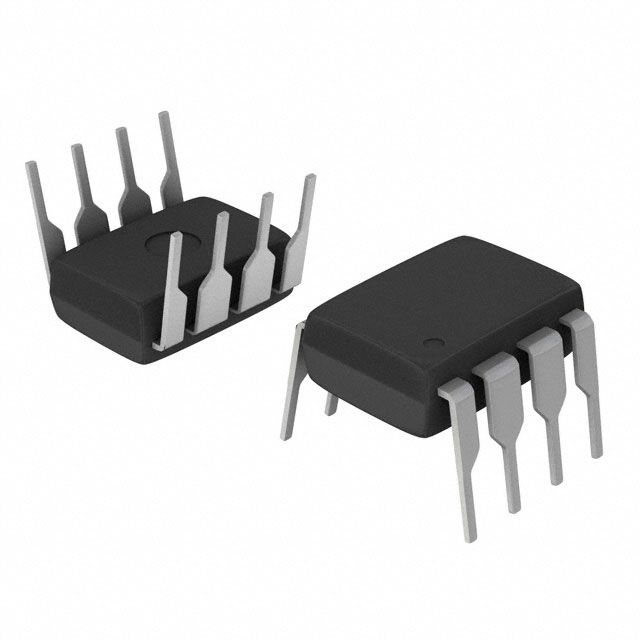
The OPA660AP is a transconductance amplifier manufactured by Texas Instruments, housed in an 8-PDIP through-hole package. This device features a single amplifier circuit with a slew rate of 3000V/µs and -3dB bandwidth of 850 MHz, designed for high-speed signal conditioning applications. The OPA660AP is classified as obsolete, making identification of functionally equivalent alternatives essential for ongoing system support, design updates, and procurement continuity. Substitute parts must maintain core transconductance amplifier functionality while accommodating modern packaging and supply chain availability.
Substiute Parts
Key Parameters
| Parameter | OPA660AP | Unit |
|---|---|---|
| Amplifier Type | Transconductance | — |
| Number of Circuits | 1 | — |
| Slew Rate | 3000 | V/µs |
| -3dB Bandwidth | 850 | MHz |
| Current - Input Bias | 2.1 | µA |
| Voltage - Input Offset | 10 | mV |
| Current - Supply | 26 | mA |
| Current - Output / Channel | 15 | mA |
| Voltage - Supply Span (Min) | 9 | V |
| Voltage - Supply Span (Max) | 11 | V |
| Operating Temperature | -25°C ~ 85°C | — |
| Mounting Type | Through Hole | — |
| Package / Case | 8-DIP (0.300", 7.62mm) | — |
| Product Status | Obsolete | — |
| RoHS Status | RoHS non-compliant | — |
Substitute Part Grouping Explanation
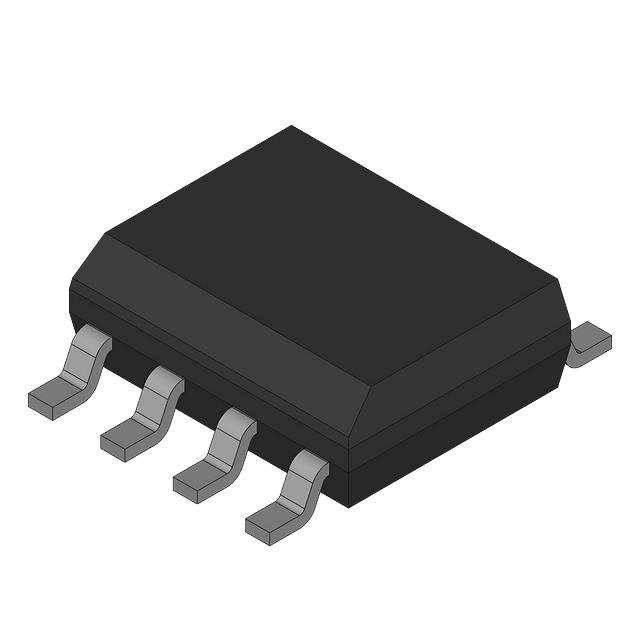
Substitution of the OPA660AP is determined by functional equivalence in transconductance amplifier topology combined with compatibility in electrical performance parameters. The primary substitute identified is the OPA860ID, manufactured by Burr Brown, which maintains the single-circuit transconductance amplifier architecture while offering enhanced electrical characteristics.
The substitution logic is based on the following critical parameters:
- Amplifier Type: Both devices are transconductance amplifiers with single circuit configuration
- Slew Rate: OPA860ID (3500V/µs) exceeds OPA660AP (3000V/µs), ensuring compatibility for high-speed applications
- Bandwidth Performance: OPA860ID provides 470 MHz gain-bandwidth product, supporting the 850 MHz bandwidth requirement of the original design
- Output Current Capability: Both devices deliver 15 mA per channel, maintaining output drive specifications
- Supply Voltage Range: OPA860ID operates across 4.5V to 12V, encompassing the OPA660AP supply span of 9V to 11V
- Input Characteristics: OPA860ID demonstrates superior input bias current (1 µA vs. 2.1 µA) and input offset voltage (3 mV vs. 10 mV)
The OPA860ID is classified as active product status, ensuring long-term availability and manufacturing support. The primary trade-off involves package transition from through-hole 8-DIP to surface-mount 8-SOIC, requiring PCB layout modification.
Parameter Comparison
| Parameter | OPA660AP | OPA860ID | Unit | Notes |
|---|---|---|---|---|
| Amplifier Type | Transconductance | Transconductance | — | Functional equivalence maintained |
| Number of Circuits | 1 | 1 | — | Single circuit configuration |
| Slew Rate | 3000 | 3500 | V/µs | OPA860ID exceeds specification |
| Current - Input Bias | 2.1 | 1 | µA | OPA860ID demonstrates lower bias current |
| Voltage - Input Offset | 10 | 3 | mV | OPA860ID provides improved offset specification |
| Current - Supply | 26 | 11.2 | mA | OPA860ID reduces power consumption |
| Current - Output / Channel | 15 | 15 | mA | Output drive capability equivalent |
| Voltage - Supply Span (Min) | 9 | 4.5 | V | OPA860ID supports lower supply voltages |
| Voltage - Supply Span (Max) | 11 | 12 | V | OPA860ID supports higher supply voltages |
| Operating Temperature | -25°C ~ 85°C | -40°C ~ 85°C | — | OPA860ID extends lower temperature range |
| Mounting Type | Through Hole | Surface Mount | — | Package transition required |
| Package / Case | 8-DIP (0.300", 7.62mm) | 8-SOIC (0.154", 3.90mm) | — | Different form factors |
| Product Status | Obsolete | Active | — | OPA860ID ensures supply continuity |
Engineering Selection Recommendations
Product Status Consideration: The OPA660AP is classified as obsolete, while the OPA860ID maintains active product status. This distinction is critical for long-term system support and component procurement. Active product status ensures continued manufacturing, technical documentation availability, and supply chain reliability.
Compliance and Certification: The OPA660AP is RoHS non-compliant. The OPA860ID specifications do not indicate RoHS status in the provided data; however, active product status typically correlates with modern compliance frameworks. Both devices carry ECCN classification EAR99 and HTSUS code 8542.33.0001, indicating equivalent export control and tariff treatment.
Electrical Performance: The OPA860ID demonstrates superior or equivalent performance across all measured electrical parameters. The device provides higher slew rate (3500V/µs vs. 3000V/µs), lower input bias current, reduced input offset voltage, and lower supply current consumption. These characteristics indicate improved signal fidelity and reduced power dissipation in equivalent applications.
Supply Voltage Flexibility: The OPA860ID operates across a wider supply voltage range (4.5V to 12V) compared to the OPA660AP (9V to 11V). This expanded range accommodates diverse power supply architectures and reduces design constraints in multi-voltage systems.
Temperature Operating Range: The OPA860ID extends the lower operating temperature limit to -40°C, providing enhanced performance in extended-temperature applications compared to the OPA660AP minimum of -25°C.
Package Transition: Substitution requires transition from through-hole 8-DIP to surface-mount 8-SOIC packaging. This change necessitates PCB layout redesign, including footprint modification, trace routing adjustments, and potential requalification of assembly processes. The 8-SOIC package offers reduced board area and improved high-frequency performance characteristics typical of surface-mount technology.
Frequently Asked Questions (FAQ)
Q: Can the OPA860ID directly replace the OPA660AP without circuit modifications?
A: Electrical substitution is feasible due to functional equivalence in transconductance amplifier topology and superior electrical specifications. However, physical substitution requires PCB redesign due to package differences (8-DIP through-hole vs. 8-SOIC surface-mount). Pin-to-pin functional compatibility exists, but board-level implementation changes are mandatory.
Q: What are the key performance advantages of the OPA860ID over the OPA660AP?
A: The OPA860ID provides higher slew rate (3500V/µs vs. 3000V/µs), lower input bias current (1 µA vs. 2.1 µA), reduced input offset voltage (3 mV vs. 10 mV), and significantly lower supply current consumption (11.2 mA vs. 26 mA). These improvements result in enhanced signal fidelity, reduced power dissipation, and improved noise performance in equivalent circuit topologies.
Q: Is the OPA860ID suitable for applications requiring the full 850 MHz bandwidth of the OPA660AP?
A: The OPA860ID specifies 470 MHz gain-bandwidth product. While this differs from the OPA660AP -3dB bandwidth specification of 850 MHz, the gain-bandwidth product metric indicates sufficient bandwidth for transconductance amplifier applications. Application-specific verification is required to confirm bandwidth adequacy for particular signal conditioning requirements.
Q: What supply voltage considerations apply when substituting the OPA860ID?
A: The OPA860ID operates across 4.5V to 12V, which encompasses the OPA660AP supply range of 9V to 11V. Existing 9V to 11V supply designs require no modification. Designs utilizing the expanded 4.5V to 12V range of the OPA860ID may require circuit topology adjustments to optimize performance across the full voltage range.
Q: How does the extended temperature range of the OPA860ID affect system design?
A: The OPA860ID operates from -40°C to 85°C, compared to the OPA660AP range of -25°C to 85°C. This extended lower temperature limit enables deployment in cold-environment applications without additional thermal management or component derating. Existing designs operating within -25°C to 85°C experience no adverse effects.
Q: What are the implications of transitioning from through-hole to surface-mount packaging?
A: The package transition from 8-DIP to 8-SOIC requires PCB layout redesign, including footprint modification, trace routing adjustments, and assembly process changes. Surface-mount technology typically offers improved high-frequency performance, reduced board area, and enhanced thermal characteristics. Design validation and assembly process requalification are necessary before production implementation.
Q: Are there compliance or regulatory differences between the OPA660AP and OPA860ID?
A: Both devices carry identical ECCN (EAR99) and HTSUS (8542.33.0001) classifications. The OPA660AP is RoHS non-compliant; OPA860ID RoHS status is not specified in available data. Active product status of the OPA860ID typically indicates compliance with current regulatory frameworks. Specific compliance requirements should be verified against applicable standards for your application and region.
Q: What inventory considerations apply to the OPA860ID substitution?
A: The OPA860ID maintains active product status with 1484 units in stock, ensuring supply continuity. The OPA660AP, classified as obsolete with 2062 units available, represents limited remaining inventory. For new designs or system updates, the OPA860ID is the recommended selection to ensure long-term component availability and manufacturing support.
Alternative Parts

SJ6012L2TP
Littelfuse Inc.
6 Alternative Parts

JMK107BBJ476MA-RE
Taiyo Yuden
10 Alternative Parts

GMK107BBJ475MA-T
Taiyo Yuden
5 Alternative Parts
SJ6020N2ARP
Littelfuse Inc.
3 Alternative Parts
SJ6025R2ATP
Littelfuse Inc.
4 Alternative Parts

2474-05L
API Delevan Inc.
1 Alternative Parts

4590R-684K
API Delevan Inc.
1 Alternative Parts

CM6560R-334
API Delevan Inc.
1 Alternative Parts

CM6460-104
API Delevan Inc.
1 Alternative Parts

5526-12
API Delevan Inc.
1 Alternative Parts