


Request Quote
(Ships tomorrow)
OPA4820IDG4 Equivalent & Substitute Parts
Part Overview
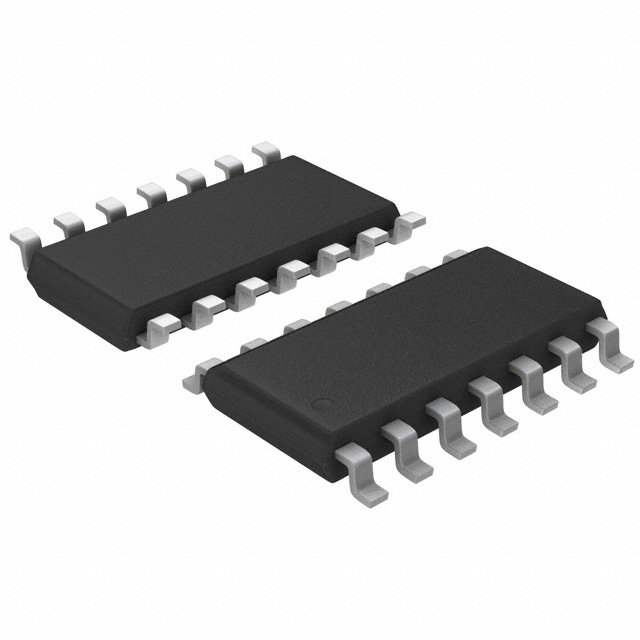
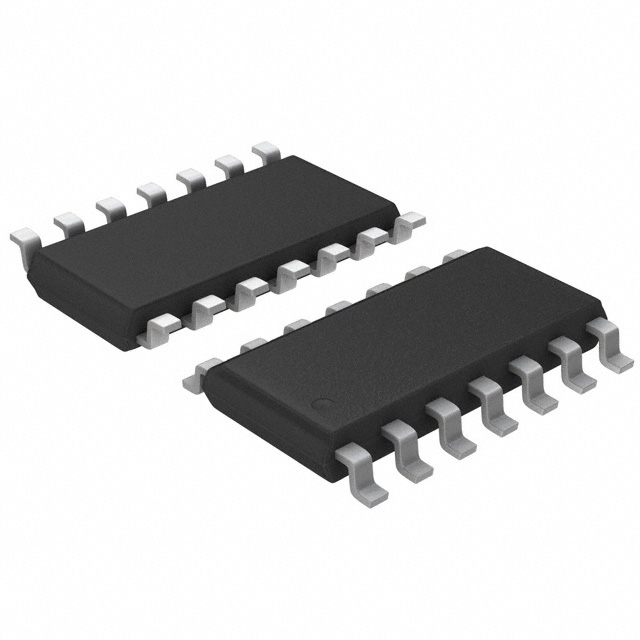
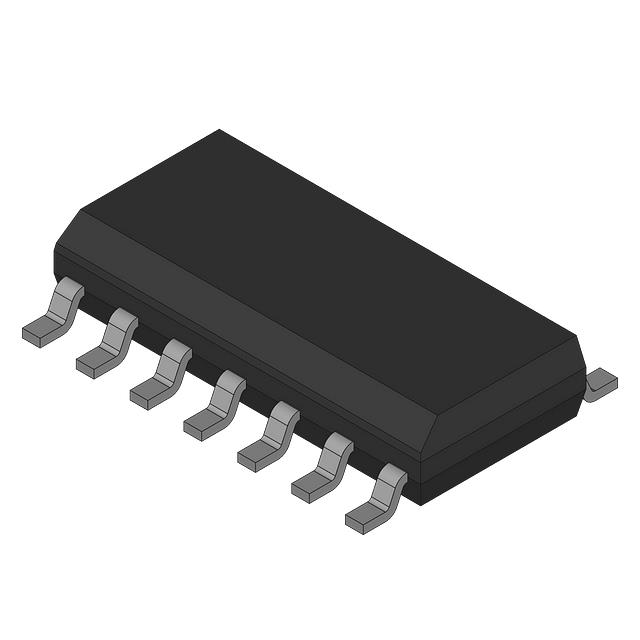
The OPA4820IDG4 is a voltage feedback operational amplifier featuring four independent circuits in a 14-SOIC surface mount package. This device is designed for applications requiring high-speed signal processing with differential output capability. The OPA4820IDG4 is classified as obsolete product status, making identification of equivalent and substitute parts essential for design continuity and procurement planning. Active alternatives with compatible electrical and mechanical specifications are available to support ongoing production and maintenance requirements.
Substiute Parts
Key Parameters
| Parameter | Value | Unit |
|---|---|---|
| Amplifier Type | Voltage Feedback | — |
| Number of Circuits | 4 | — |
| Output Type | Differential | — |
| Slew Rate | 240 | V/µs |
| Gain Bandwidth Product | 250 | MHz |
| -3dB Bandwidth | 650 | MHz |
| Current - Input Bias | 9 | µA |
| Voltage - Input Offset | 250 | µV |
| Current - Supply | 22.6 | mA |
| Current - Output / Channel | 85 | mA |
| Voltage - Supply Span (Min) | 4 | V |
| Voltage - Supply Span (Max) | 12.6 | V |
| Operating Temperature | -40 to 85 | °C |
| Package / Case | 14-SOIC (0.154", 3.90mm Width) | — |
| Mounting Type | Surface Mount | — |
| RoHS Status | ROHS3 Compliant | — |
| Moisture Sensitivity Level (MSL) | 2 (1 Year) | — |
Substitute Part Grouping Explanation
Substitution eligibility for the OPA4820IDG4 is determined by the following critical parameters:
Primary Substitution Criteria:
- Package compatibility: 14-SOIC surface mount form factor
- Number of circuits: 4 independent amplifier circuits
- Operating temperature range: -40°C to 85°C
- Supply voltage span: Minimum 4V to maximum 12.6V
- Regulatory compliance: RoHS3 and REACH status
Secondary Performance Parameters:
- Slew rate: 240 V/µs
- Gain bandwidth product: 250 MHz
- -3dB bandwidth: 650 MHz
- Output drive capability: 85 mA per channel
- Input bias current: 9 µA
- Input offset voltage: 250 µV
The OPA4820ID qualifies as a direct equivalent substitute, maintaining identical electrical specifications and package configuration while offering active product status. The LT1724IS#PBF represents a functional alternative with different amplifier topology (general purpose versus voltage feedback) and modified electrical characteristics, suitable for applications where performance parameters can accommodate the specified variations.
Parameter Comparison
| Parameter | OPA4820IDG4 (Main) | OPA4820ID (Substitute) | LT1724IS#PBF (Substitute) |
|---|---|---|---|
| Manufacturer | Texas Instruments | Texas Instruments | Linear Technology |
| Product Status | Obsolete | Active | Active |
| Amplifier Type | Voltage Feedback | Voltage Feedback | General Purpose |
| Number of Circuits | 4 | 4 | 4 |
| Output Type | Differential | Differential | — |
| Slew Rate (V/µs) | 240 | 240 | 70 |
| Gain Bandwidth Product (MHz) | 250 | 250 | 200 |
| -3dB Bandwidth (MHz) | 650 | 650 | — |
| Current - Input Bias (µA) | 9 | 9 | 0.04 (nA) |
| Voltage - Input Offset (µV) | 250 | 250 | 100 |
| Current - Supply (mA) | 22.6 | 22.6 | 3.7 (x4 Channels) |
| Current - Output / Channel (mA) | 85 | 85 | 50 |
| Voltage - Supply Span (Min/Max) | 4 / 12.6 V | 4 / 12.6 V | 5 / 10 V |
| Operating Temperature | -40 to 85°C | -40 to 85°C | -40 to 85°C |
| Package / Case | 14-SOIC | 14-SOIC | 14-SOIC |
| Mounting Type | Surface Mount | Surface Mount | Surface Mount |
| RoHS Status | ROHS3 Compliant | ROHS3 Compliant | — |
| Moisture Sensitivity Level | 2 (1 Year) | 2 (1 Year) | — |
Engineering Selection Recommendations
OPA4820ID Selection: The OPA4820ID is the primary recommended substitute for the obsolete OPA4820IDG4. This part maintains identical electrical specifications, package configuration, and regulatory compliance status. The OPA4820ID carries active product status from Texas Instruments, ensuring long-term availability and supply chain stability. Both parts are ROHS3 compliant with equivalent moisture sensitivity ratings. Selection of OPA4820ID provides direct functional replacement without circuit redesign or performance compromise.
LT1724IS#PBF Selection: The LT1724IS#PBF serves as a functional alternative for applications where performance parameter variations are acceptable. This device differs in amplifier topology (general purpose versus voltage feedback), resulting in reduced slew rate (70 V/µs versus 240 V/µs), lower gain bandwidth product (200 MHz versus 250 MHz), and reduced output current capability (50 mA versus 85 mA per channel). The LT1724IS#PBF offers superior input bias current characteristics (40 nA versus 9 µA) and lower supply current consumption (3.7 mA total versus 22.6 mA). Supply voltage span is narrower (5V to 10V versus 4V to 12.6V). Selection of LT1724IS#PBF requires circuit evaluation to confirm compatibility with application bandwidth and output drive requirements.
Frequently Asked Questions (FAQ)
Q: Can OPA4820ID be used as a direct replacement for OPA4820IDG4?
A: Yes. The OPA4820ID provides direct functional equivalence with identical electrical specifications, package configuration, and operating temperature range. The primary difference is product status: OPA4820IDG4 is obsolete while OPA4820ID is active. No circuit modifications are required.
Q: What are the key differences between OPA4820ID and LT1724IS#PBF?
A: The OPA4820ID maintains voltage feedback topology with 240 V/µs slew rate and 250 MHz gain bandwidth product. The LT1724IS#PBF uses general purpose amplifier topology with 70 V/µs slew rate and 200 MHz gain bandwidth product. Output current per channel is 85 mA (OPA4820ID) versus 50 mA (LT1724IS#PBF). Input bias current is 9 µA (OPA4820ID) versus 40 nA (LT1724IS#PBF). Supply voltage range differs: 4-12.6V (OPA4820ID) versus 5-10V (LT1724IS#PBF).
Q: Are all substitute parts available in the same package?
A: Yes. All listed parts use 14-SOIC surface mount packaging with 0.154" (3.90mm) width. Pin configuration and PCB footprint compatibility are maintained across all substitutes.
Q: What is the impact of lower slew rate in LT1724IS#PBF?
A: Lower slew rate (70 V/µs versus 240 V/µs) limits the maximum rate of output voltage change. Applications requiring high-speed transient response or high-frequency signal processing may experience performance degradation. Slew rate limitation affects settling time and distortion characteristics in high-frequency circuits.
Q: Does LT1724IS#PBF meet the same regulatory requirements?
A: Regulatory compliance information for LT1724IS#PBF is not provided in the available specifications. Both OPA4820IDG4 and OPA4820ID are ROHS3 compliant with REACH unaffected status. Regulatory verification is required before LT1724IS#PBF selection in applications with specific compliance mandates.
Q: What is the significance of the different supply voltage ranges?
A: OPA4820ID operates across 4V to 12.6V supply span, while LT1724IS#PBF operates across 5V to 10V. Applications using supply voltages below 5V or above 10V cannot use LT1724IS#PBF. OPA4820ID provides broader supply voltage compatibility.
Q: How does input bias current affect circuit design?
A: OPA4820ID specifies 9 µA input bias current while LT1724IS#PBF specifies 40 nA. Higher input bias current in OPA4820ID may require input impedance compensation in high-impedance signal paths. LT1724IS#PBF offers superior performance in applications sensitive to input bias current effects.
Q: Are there inventory considerations for part selection?
A: OPA4820IDG4 has 917 units in stock (obsolete status). OPA4820ID has 1101 units available (active status). LT1724IS#PBF has 2000 units in stock. Long-term availability is assured only for active products (OPA4820ID and LT1724IS#PBF).
Alternative Parts

SJ6012L2TP
Littelfuse Inc.
6 Alternative Parts

JMK107BBJ476MA-RE
Taiyo Yuden
10 Alternative Parts

GMK107BBJ475MA-T
Taiyo Yuden
5 Alternative Parts
SJ6020N2ARP
Littelfuse Inc.
3 Alternative Parts
SJ6025R2ATP
Littelfuse Inc.
4 Alternative Parts

2474-05L
API Delevan Inc.
1 Alternative Parts

4590R-684K
API Delevan Inc.
1 Alternative Parts

CM6560R-334
API Delevan Inc.
1 Alternative Parts

CM6460-104
API Delevan Inc.
1 Alternative Parts

5526-12
API Delevan Inc.
1 Alternative Parts