



Request Quote
(Ships tomorrow)
OPA2234U/2K5 Equivalent & Substitute Parts
Part Overview
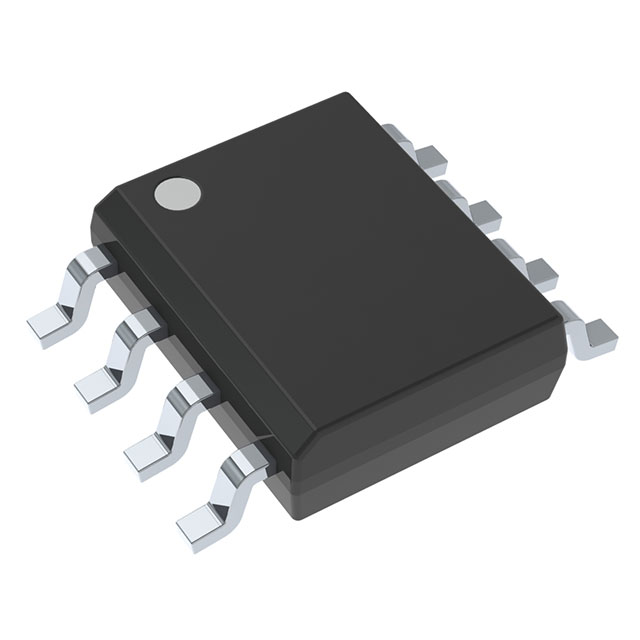
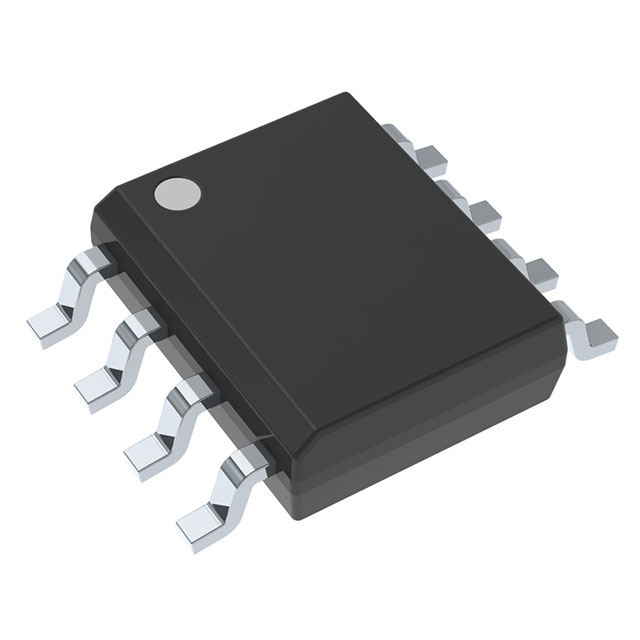
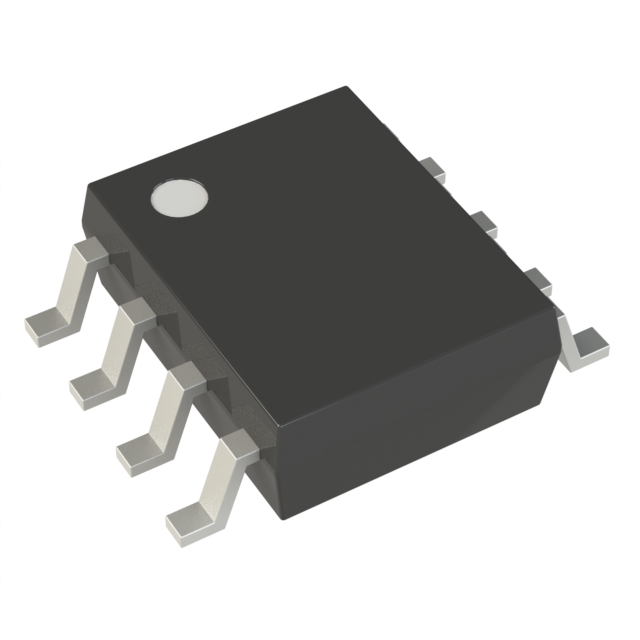
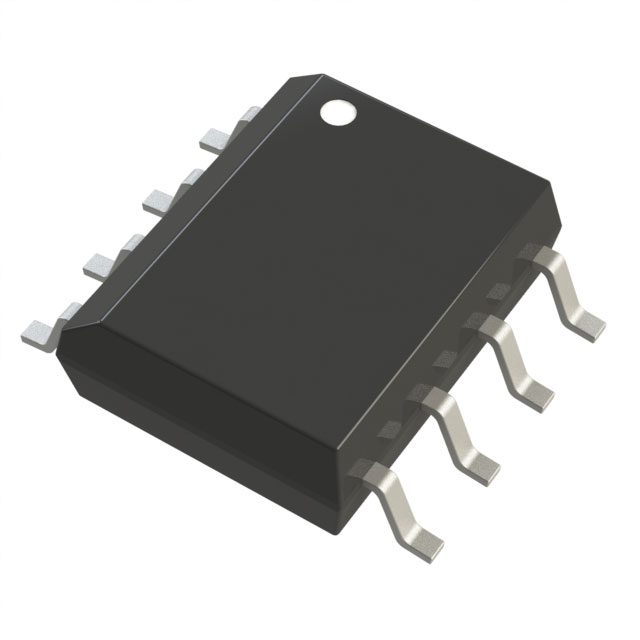
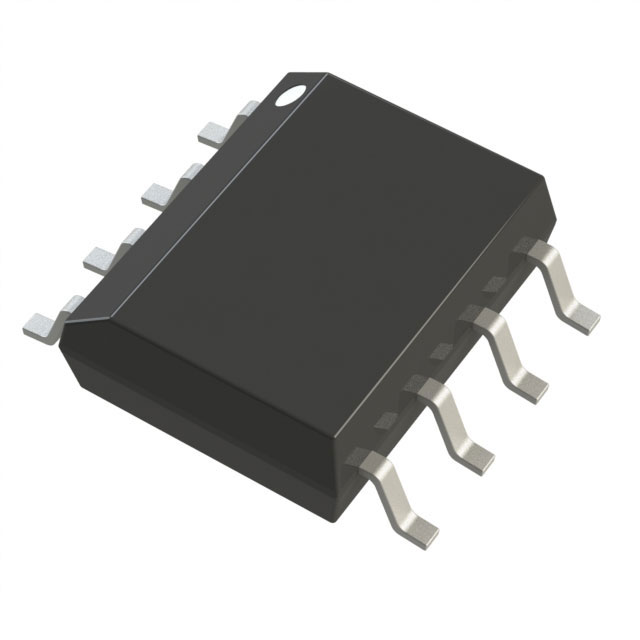
The OPA2234U/2K5 is a general-purpose operational amplifier manufactured by Texas Instruments, configured as a dual-channel (2 circuit) device in an 8-SOIC surface-mount package. This part is classified as obsolete, indicating it has reached end-of-life status and is no longer recommended for new designs. The OPA2234U/2K5 remains in inventory (2900 pcs) as new original stock, but alternative active components are available to support ongoing production requirements and new design initiatives.
Substitute parts are necessary to ensure design continuity, maintain supply chain reliability, and leverage improvements in active product lines that offer enhanced performance characteristics while maintaining functional compatibility.
Substiute Parts
Key Parameters
| Parameter | OPA2234U/2K5 | Unit |
|---|---|---|
| Amplifier Type | General Purpose | — |
| Number of Circuits | 2 | — |
| Slew Rate | 0.2 | V/µs |
| Gain Bandwidth Product | 350 | kHz |
| Current - Input Bias | 12 | nA |
| Voltage - Input Offset | 70 | µV |
| Current - Supply (x2 Channels) | 275 | µA |
| Current - Output / Channel | 22 | mA |
| Voltage - Supply Span (Min) | 2.7 | V |
| Voltage - Supply Span (Max) | 36 | V |
| Operating Temperature | -40 to 125 | °C |
| Package / Case | 8-SOIC (0.154", 3.90mm Width) | — |
| Mounting Type | Surface Mount | — |
| Product Status | Obsolete | — |
| RoHS Status | ROHS3 Compliant | — |
Substitute Part Grouping Explanation
Substitution logic for the OPA2234U/2K5 is based on the following critical parameters that define functional compatibility:
Primary Compatibility Criteria:
- Dual-channel configuration (2 circuits)
- 8-SOIC surface-mount package (0.154", 3.90mm width)
- Supply voltage range compatibility (minimum 2.7 V to 3 V; maximum 30 V to 36 V)
- Operating temperature range (-40°C to 125°C or broader)
- General-purpose amplifier classification
- ROHS3 compliance and surface-mount technology
Secondary Performance Parameters:
- Slew rate (0.2 V/µs baseline; higher values acceptable)
- Gain bandwidth product (350 kHz baseline; higher values acceptable)
- Input bias current (12 nA baseline; lower values acceptable)
- Input offset voltage (70 µV baseline; lower values acceptable)
- Supply current and output current ratings
Substitute parts are grouped into two categories:
Category 1: Direct Functional Equivalents — Parts that maintain general-purpose amplifier characteristics with compatible electrical and mechanical specifications, allowing pin-for-pin or circuit-level substitution.
Category 2: Enhanced Performance Alternatives — Parts that exceed baseline performance specifications (lower offset voltage, higher bandwidth, improved input bias characteristics) while maintaining package compatibility and supply voltage ranges.
Parameter Comparison
| Parameter | OPA2234U/2K5 | OPA2187IDR | LM158DT | LM258ADT | LM258DT | LM2904AYDT | LM2904DT | LM2904YDT | LM358ADT | LM358DT | LT1078IS8 | Unit |
|---|---|---|---|---|---|---|---|---|---|---|---|---|
| Amplifier Type | General Purpose | Zero-Drift | General Purpose | General Purpose | General Purpose | General Purpose | General Purpose | General Purpose | General Purpose | General Purpose | General Purpose | — |
| Number of Circuits | 2 | 2 | 2 | 2 | 2 | 2 | 2 | 2 | 2 | 2 | 2 | — |
| Slew Rate | 0.2 | 0.2 | 0.6 | 0.6 | 0.6 | 0.6 | 0.3 | 0.6 | 0.6 | 0.3 | 0.1 | V/µs |
| Gain Bandwidth Product | 350 | 550 | 1.1 | 1.1 | 1.1 | 1.1 | 700 | 700 | 1.1 | 800 | 200 | kHz |
| Current - Input Bias | 12 | 0.1 | 20 | 20 | 20 | 20 | 20 | 20 | 20 | 20 | 6 | nA |
| Voltage - Input Offset | 70 | 1 | 5 | 1 | 5 | 1 | 1 | 2 | 1 | 1 | 70 | µV |
| Current - Supply (x2 Channels) | 275 | 100 | 700 | 700 | 700 | 700 | 600 | 700 | 700 | 600 | 47 | µA |
| Current - Output / Channel | 22 | 30 | 40 | 40 | 40 | 40 | 30 | 30 | 40 | 30 | — | mA |
| Voltage - Supply Span (Min) | 2.7 | 4.5 | 3 | 3 | 3 | 3 | 3 | 3 | 3 | 3 | 2.2 | V |
| Voltage - Supply Span (Max) | 36 | 36 | 30 | 30 | 30 | 30 | 32 | 30 | 30 | 32 | 30 | V |
| Operating Temperature | -40 to 125 | -40 to 125 | -55 to 125 | -40 to 105 | -40 to 105 | -40 to 125 | -40 to 125 | -40 to 125 | 0 to 70 | -40 to 85 | -40 to 85 | °C |
| Package / Case | 8-SOIC | 8-SOIC | 8-SOIC | 8-SOIC | 8-SOIC | 8-SOIC | 8-SOIC | 8-SOIC | 8-SOIC | 8-SOIC | 8-SOIC | — |
| Mounting Type | Surface Mount | Surface Mount | Surface Mount | Surface Mount | Surface Mount | Surface Mount | Surface Mount | Surface Mount | Surface Mount | Surface Mount | Surface Mount | — |
| Product Status | Obsolete | Active | Active | Active | Active | Active | Not For New Designs | Active | Active | Obsolete | Active | — |
| RoHS Status | ROHS3 Compliant | ROHS3 Compliant | ROHS3 Compliant | ROHS3 Compliant | ROHS3 Compliant | ROHS3 Compliant | ROHS3 Compliant | ROHS3 Compliant | ROHS3 Compliant | ROHS3 Compliant | ROHS3 Compliant | — |
Engineering Selection Recommendations
For Active Production and New Designs:
The OPA2187IDR is the primary recommended substitute for new design initiatives. This part is manufactured by Texas Instruments (original OPA2234U/2K5 manufacturer), maintains active product status, and offers enhanced performance characteristics including zero-drift architecture, significantly lower input offset voltage (1 µV vs. 70 µV), and improved input bias current (100 pA vs. 12 nA). The OPA2187IDR operates within the same supply voltage range (4.5 V to 36 V) and temperature range (-40°C to 125°C), with identical 8-SOIC packaging. Higher gain bandwidth product (550 kHz) and output current capability (30 mA) provide performance headroom for signal conditioning applications.
For Existing Production Continuity:
The LM258ADT, LM258DT, LM2904AYDT, and LM2904YDT are active general-purpose alternatives suitable for direct substitution in existing designs. These parts maintain 8-SOIC packaging, dual-channel configuration, and ROHS3 compliance. The LM258ADT and LM258DT offer 1.1 MHz gain bandwidth product with improved input offset voltage (1 mV to 5 mV). The LM2904AYDT and LM2904YDT provide automotive-grade qualification (AEC-Q100) with 700 kHz gain bandwidth product. All four parts operate across -40°C to 125°C (or -40°C to 105°C for LM258 variants) and support supply voltages from 3 V to 30 V.
For Low-Power Applications:
The LT1078IS8 (Analog Devices Inc.) is suitable for applications requiring minimal supply current consumption (47 µA total for dual channels vs. 275 µA for OPA2234U/2K5). This part maintains the same input offset voltage specification (70 µV) and operates across -40°C to 85°C with 8-SOIC packaging. Lower slew rate (0.1 V/µs) and gain bandwidth product (200 kHz) indicate suitability for precision, low-frequency signal conditioning rather than high-speed applications.
Parts to Avoid for New Designs:
LM358DT (Rohm Semiconductor) is classified as obsolete and should not be selected for new design initiatives, despite high inventory availability (505,400 pcs). LM2904DT (Rohm Semiconductor) is marked "Not For New Designs" and represents legacy inventory. Both parts are suitable only for sustaining existing production where design changes are not feasible.
Frequently Asked Questions (FAQ)
Q1: Can the OPA2187IDR directly replace the OPA2234U/2K5 in existing PCB designs?
A: Yes, the OPA2187IDR is a direct pin-compatible substitute in 8-SOIC packaging. However, the minimum supply voltage requirement increases from 2.7 V to 4.5 V. Verify that your power supply design provides at least 4.5 V to all supply pins. The OPA2187IDR's zero-drift architecture and superior offset voltage specification (1 µV vs. 70 µV) may require circuit-level validation in precision applications to confirm improved performance does not introduce unexpected behavior due to reduced offset drift over temperature.
Q2: What is the key difference between the LM258ADT and LM2904AYDT?
A: Both parts are dual-channel general-purpose amplifiers in 8-SOIC packaging with identical supply voltage ranges (3 V to 30 V) and operating temperature ranges (-40°C to 125°C or -40°C to 105°C). The LM2904AYDT includes automotive-grade qualification (AEC-Q100) and is manufactured by STMicroelectronics with explicit automotive certification. The LM258ADT is also automotive-qualified but offers slightly different input offset voltage specification (1 mV vs. 1 mV for LM2904AYDT). Select LM2904AYDT for automotive applications requiring formal AEC-Q100 traceability; select LM258ADT for general industrial applications.
Q3: Why does the OPA2234U/2K5 have a lower minimum supply voltage (2.7 V) compared to most substitutes (3 V)?
A: The OPA2234U/2K5 is designed for ultra-low-voltage operation, supporting battery-powered and energy-harvesting applications. Most substitute parts (LM258, LM2904 series) require minimum 3 V supply. If your application operates below 3 V, the LT1078IS8 (minimum 2.2 V) is the only substitute that maintains sub-3V capability. For applications requiring 2.7 V operation, the OPA2234U/2K5 remains the only viable option among listed substitutes.
Q4: Is the LT1078IS8 suitable for high-speed signal conditioning?
A: No. The LT1078IS8 is optimized for low-power, precision applications. Its slew rate (0.1 V/µs) and gain bandwidth product (200 kHz) are significantly lower than the OPA2234U/2K5 (0.2 V/µs, 350 kHz) and most other substitutes (0.6 V/µs, 700 kHz to 1.1 MHz). The LT1078IS8 is suitable for DC precision measurement, sensor signal conditioning, and low-frequency filtering where bandwidth requirements do not exceed 200 kHz. For applications requiring faster signal response or higher bandwidth, select LM258 or LM2904 series alternatives.
Q5: Can I use LM358DT or LM2904DT for new production designs?
A: No. LM358DT is classified as obsolete; LM2904DT is marked "Not For New Designs." Both parts represent legacy inventory and should be reserved only for sustaining existing production where design changes are not feasible. For all new design initiatives, select from active product status parts: OPA2187IDR, LM158DT, LM258ADT, LM258DT, LM2904AYDT, LM2904YDT, LM358ADT, or LT1078IS8.
Q6: What is the significance of "Zero-Drift" architecture in the OPA2187IDR?
A: Zero-drift amplifiers employ internal chopper-stabilization or auto-zeroing techniques to minimize input offset voltage drift over temperature and time. The OPA2187IDR achieves 1 µV input offset voltage (vs. 70 µV for OPA2234U/2K5) with significantly reduced temperature drift. This architecture is beneficial for precision instrumentation, medical diagnostics, and data acquisition systems where offset voltage stability is critical. Zero-drift amplifiers typically consume slightly more supply current and may introduce low-frequency noise; verify compatibility with your application's noise and power budget requirements.
Q7: Are all substitute parts ROHS3 compliant?
A: Yes. All listed substitute parts carry ROHS3 compliance certification, matching the OPA2234U/2K5 environmental compliance status. All parts are also REACH-unaffected and carry EAR99 export classification. No additional compliance verification is required for substitution.
Q8: What is the difference between 8-SOIC and 8-SOP packaging?
A: 8-SOIC (Small Outline Integrated Circuit) and 8-SOP (Small Outline Package) are functionally equivalent surface-mount packages with identical pin pitch (1.27 mm) and body width (3.90 mm). Both are compatible with standard PCB assembly equipment. The LM2904DT and LM358DT are specified as 8-SOP-J or 8-SOP variants but are mechanically and electrically compatible with 8-SOIC footprints. No PCB redesign is required for substitution between these package designations.
Alternative Parts

SJ6012L2TP
Littelfuse Inc.
6 Alternative Parts

JMK107BBJ476MA-RE
Taiyo Yuden
10 Alternative Parts

GMK107BBJ475MA-T
Taiyo Yuden
5 Alternative Parts
SJ6020N2ARP
Littelfuse Inc.
3 Alternative Parts
SJ6025R2ATP
Littelfuse Inc.
4 Alternative Parts

2474-05L
API Delevan Inc.
1 Alternative Parts

4590R-684K
API Delevan Inc.
1 Alternative Parts

CM6560R-334
API Delevan Inc.
1 Alternative Parts

CM6460-104
API Delevan Inc.
1 Alternative Parts

5526-12
API Delevan Inc.
1 Alternative Parts