




Request Quote
(Ships tomorrow)
OPA209AIDBVR Equivalent & Substitute Parts
Part Overview
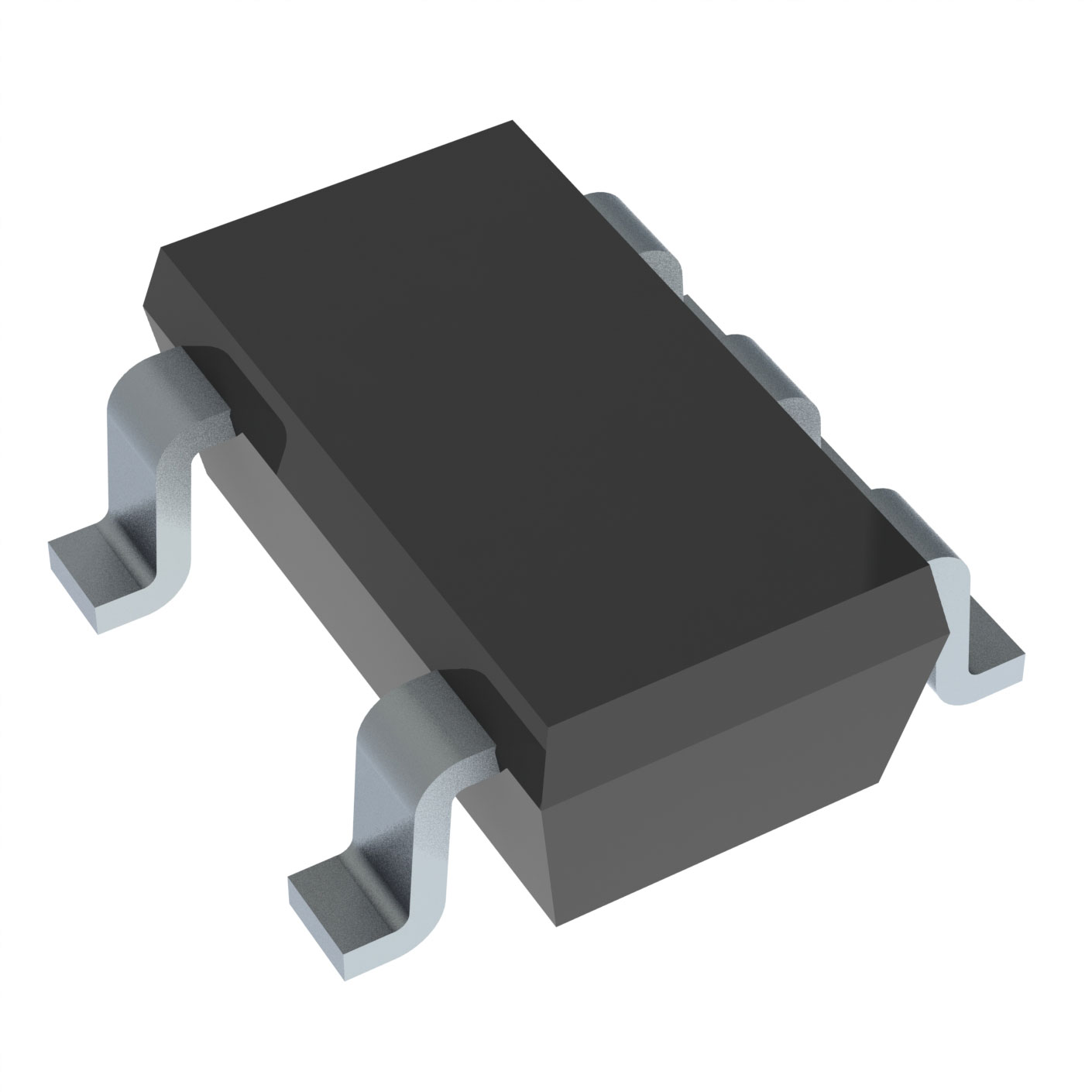
The OPA209AIDBVR is a general purpose operational amplifier manufactured by Texas Instruments, housed in a SOT-23-5 surface mount package. This rail-to-rail output amplifier is designed for applications requiring low input bias current and moderate bandwidth performance. The device is actively produced and RoHS3 compliant, making it suitable for modern electronic designs across industrial, consumer, and automotive segments.
Substitute parts are identified when component availability is limited, supply chain disruptions occur, or design flexibility permits equivalent performance characteristics. The following parts maintain functional compatibility based on shared electrical specifications and package compatibility.
Substiute Parts
Key Parameters
| Parameter | Value | Unit |
|---|---|---|
| Amplifier Type | General Purpose | — |
| Number of Circuits | 1 | — |
| Output Type | Rail-to-Rail | — |
| Package / Case | SC-74A, SOT-753 | — |
| Supplier Device Package | SOT-23-5 | — |
| Mounting Type | Surface Mount | — |
| Operating Temperature Range | -40 to 125 | °C |
| RoHS Status | ROHS3 Compliant | — |
| Product Status | Active | — |
Substitute Part Grouping Explanation
Substitution eligibility for the OPA209AIDBVR is determined by the following criteria:
Primary Compatibility Requirements:
- Amplifier Type: General Purpose
- Number of Circuits: 1
- Output Type: Rail-to-Rail
- Package / Case: SOT-23-5 compatible (SC-74A, SOT-753, or TSOT-23-5)
- Mounting Type: Surface Mount
- RoHS Compliance: ROHS3 Compliant
- Product Status: Active
Secondary Electrical Parameters:
- Voltage Supply Span overlap within specified ranges
- Operating temperature range coverage
- Input bias current and offset voltage within acceptable tolerances for general purpose applications
- Output current capability sufficient for intended load
The identified substitute parts meet all primary compatibility requirements. Electrical parameter variations are documented in the comparison table below to enable application-specific selection.
Parameter Comparison
| Parameter | OPA209AIDBVR (Main) | ADA4084-1ARJZ-R7 | LT1880CS5#TRMPBF | Unit |
|---|---|---|---|---|
| Manufacturer | Texas Instruments | Analog Devices Inc. | Analog Devices Inc. | — |
| Amplifier Type | General Purpose | General Purpose | General Purpose | — |
| Number of Circuits | 1 | 1 | 1 | — |
| Output Type | Rail-to-Rail | Rail-to-Rail | Rail-to-Rail | — |
| Slew Rate | 6.4 | 4.6 | 0.55 | V/µs |
| Gain Bandwidth Product | 18 | 15.9 | 1.1 | MHz |
| Current - Input Bias | 1 | 140 | 0.15 | nA / pA |
| Voltage - Input Offset | 35 | 40 | 40 | µV |
| Current - Supply | 2.2 | 0.625 | 1.5 | mA |
| Current - Output / Channel | 65 | 30 | 25 | mA |
| Voltage - Supply Span (Min) | 4.5 | 3 | 2.7 | V |
| Voltage - Supply Span (Max) | 36 | 30 | 36 | V |
| Operating Temperature | -40 to 125 | -40 to 125 | 0 to 70 | °C |
| Package / Case | SC-74A, SOT-753 | SC-74A, SOT-753 | SOT-23-5 Thin, TSOT-23-5 | — |
| Supplier Device Package | SOT-23-5 | SOT-23-5 | TSOT-23-5 | — |
| RoHS Status | ROHS3 Compliant | ROHS3 Compliant | ROHS3 Compliant | — |
| Moisture Sensitivity Level | 2 (1 Year) | 1 (Unlimited) | 1 (Unlimited) | — |
| Product Status | Active | Active | Active | — |
Engineering Selection Recommendations
ADA4084-1ARJZ-R7 (Analog Devices Inc.)
This substitute maintains the closest electrical performance alignment with the OPA209AIDBVR. Both devices support the full -40°C to 125°C operating temperature range and share identical package specifications (SC-74A, SOT-753, SOT-23-5). The ADA4084-1ARJZ-R7 exhibits lower supply current (0.625 mA vs. 2.2 mA) and reduced output current capability (30 mA vs. 65 mA), with marginally lower slew rate (4.6 V/µs vs. 6.4 V/µs) and gain bandwidth product (15.9 MHz vs. 18 MHz). Both devices are RoHS3 compliant and actively produced. The ADA4084-1ARJZ-R7 features superior moisture sensitivity rating (MSL 1, Unlimited vs. MSL 2, 1 Year), providing extended shelf life and handling flexibility.
LT1880CS5#TRMPBF (Analog Devices Inc.)
This substitute is suitable for applications where lower supply current consumption is prioritized and operating temperature range does not exceed 70°C. The LT1880CS5#TRMPBF operates at 1.5 mA supply current and features the lowest input bias current (150 pA) among the three options. However, this device exhibits significantly reduced bandwidth performance (1.1 MHz gain bandwidth product vs. 18 MHz) and lower slew rate (0.55 V/µs vs. 6.4 V/µs), making it unsuitable for high-frequency or fast-transient applications. The device is packaged in TSOT-23-5 (thin variant) and supports supply voltages from 2.7 V to 36 V. Operating temperature is limited to 0°C to 70°C, restricting use in extended temperature environments. RoHS3 compliance and MSL 1 rating are maintained.
Selection Criteria Summary:
- For direct replacement with minimal performance deviation: ADA4084-1ARJZ-R7
- For low-power, low-frequency applications with restricted temperature range: LT1880CS5#TRMPBF
- For full temperature range and high-frequency performance: OPA209AIDBVR (primary part)
Frequently Asked Questions (FAQ)
Q: Can the ADA4084-1ARJZ-R7 be used as a direct drop-in replacement for the OPA209AIDBVR?
A: The ADA4084-1ARJZ-R7 is electrically compatible for most general purpose amplifier applications. Both devices share identical package specifications (SOT-23-5), operating temperature range (-40°C to 125°C), and rail-to-rail output architecture. The primary differences are reduced output current capability (30 mA vs. 65 mA) and slightly lower bandwidth (15.9 MHz vs. 18 MHz). Applications requiring the full 65 mA output current or maximum 18 MHz bandwidth should retain the OPA209AIDBVR.
Q: Is the LT1880CS5#TRMPBF suitable for industrial temperature applications?
A: No. The LT1880CS5#TRMPBF operates only within the 0°C to 70°C temperature range, which does not cover the extended industrial temperature specification of -40°C to 125°C supported by the OPA209AIDBVR and ADA4084-1ARJZ-R7. Use of the LT1880CS5#TRMPBF is restricted to commercial temperature environments.
Q: What is the significance of the TSOT-23-5 package variant used in the LT1880CS5#TRMPBF?
A: TSOT-23-5 is a thin variant of the standard SOT-23-5 package, reducing overall component height. While both packages are mechanically compatible with standard SOT-23-5 PCB footprints, the thinner profile may affect thermal performance in high-power dissipation scenarios. Verify thermal design margins when substituting with the LT1880CS5#TRMPBF.
Q: How do input bias current differences affect circuit design?
A: The OPA209AIDBVR specifies 1 nA input bias current, the ADA4084-1ARJZ-R7 specifies 140 nA, and the LT1880CS5#TRMPBF specifies 150 pA. Higher input bias current increases offset voltage errors in high-impedance circuits. For applications with source impedances exceeding 1 MΩ, the LT1880CS5#TRMPBF offers superior performance. For standard impedance levels below 100 kΩ, all three devices are functionally equivalent.
Q: Are all three devices RoHS3 compliant?
A: Yes. The OPA209AIDBVR, ADA4084-1ARJZ-R7, and LT1880CS5#TRMPBF are all RoHS3 compliant and REACH unaffected, meeting current environmental and regulatory requirements for electronic component manufacturing and distribution.
Q: What is the impact of supply current differences on power budget?
A: The OPA209AIDBVR draws 2.2 mA, the ADA4084-1ARJZ-R7 draws 0.625 mA, and the LT1880CS5#TRMPBF draws 1.5 mA. In battery-powered or energy-constrained applications, the ADA4084-1ARJZ-R7 provides approximately 72% lower quiescent current consumption. However, this advantage is offset by reduced output current capability (30 mA vs. 65 mA).
Alternative Parts

SJ6012L2TP
Littelfuse Inc.
6 Alternative Parts

JMK107BBJ476MA-RE
Taiyo Yuden
10 Alternative Parts

GMK107BBJ475MA-T
Taiyo Yuden
5 Alternative Parts
SJ6020N2ARP
Littelfuse Inc.
3 Alternative Parts
SJ6025R2ATP
Littelfuse Inc.
4 Alternative Parts

2474-05L
API Delevan Inc.
1 Alternative Parts

4590R-684K
API Delevan Inc.
1 Alternative Parts

CM6560R-334
API Delevan Inc.
1 Alternative Parts

CM6460-104
API Delevan Inc.
1 Alternative Parts

5526-12
API Delevan Inc.
1 Alternative Parts