



Request Quote
(Ships tomorrow)
OPA128LM Equivalent & Substitute Parts
Part Overview
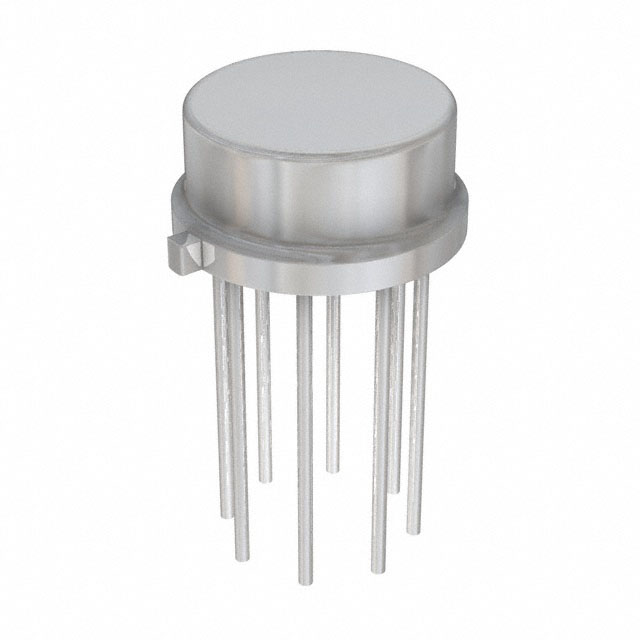
The OPA128LM is a general-purpose operational amplifier manufactured by Texas Instruments in a TO-99-8 metal can package. This device is classified as obsolete, making equivalent and substitute parts necessary for ongoing system support and new design implementations. The OPA128LM features JFET input technology with low input bias current and is suitable for applications requiring precision amplification in the 0°C to 70°C operating range.
Substiute Parts
Key Parameters
| Parameter | Value | Unit |
|---|---|---|
| Manufacturer Part Number | OPA128LM | — |
| Manufacturer | Texas Instruments | — |
| Category | Linear, Amplifiers | — |
| Amplifier Type | General Purpose | — |
| Number of Circuits | 1 | — |
| Slew Rate | 3 | V/µs |
| Gain Bandwidth Product | 1 | MHz |
| Current - Input Bias | 0.04 | pA |
| Voltage - Input Offset | 140 | µV |
| Current - Supply | 900 | µA |
| Current - Output / Channel | 10 | mA |
| Voltage - Supply Span (Min) | 10 | V |
| Voltage - Supply Span (Max) | 36 | V |
| Operating Temperature | 0 to 70 | °C |
| Mounting Type | Through Hole | — |
| Package / Case | TO-99-8 Metal Can | — |
| Product Status | Obsolete | — |
| RoHS Status | ROHS3 Compliant | — |
Substitute Part Grouping Explanation
Substitution of the OPA128LM requires alignment across the following critical parameters:
Functional Compatibility Criteria:
- Amplifier Type (General Purpose or J-FET)
- Number of Circuits (1 circuit)
- Gain Bandwidth Product (1 MHz minimum)
- Input Bias Current (low pA range)
- Supply Voltage Range (minimum 10V, maximum 36V)
Physical Compatibility Criteria:
- Mounting Type (Through Hole or Surface Mount with board redesign)
- Package Type (TO-99-8 or alternative with pin compatibility assessment)
Regulatory & Environmental Criteria:
- RoHS3 Compliance
- Operating Temperature Range (minimum 0°C, maximum 70°C or broader)
The substitute parts identified below meet these criteria with varying degrees of direct pin compatibility and performance enhancement.
Parameter Comparison
| Parameter | OPA128LM | OPA145ID | AD549SH/883B | Unit |
|---|---|---|---|---|
| Manufacturer | Texas Instruments | Texas Instruments | Analog Devices Inc. | — |
| Amplifier Type | General Purpose | J-FET | General Purpose | — |
| Number of Circuits | 1 | 1 | 1 | — |
| Slew Rate | 3 | 20 | 3 | V/µs |
| Gain Bandwidth Product | 1 | 5.5 | 1 | MHz |
| Current - Input Bias | 0.04 | 2 | 0.075 | pA |
| Voltage - Input Offset | 140 | 40 | 300 | µV |
| Current - Supply | 900 | 445 | 600 | µA |
| Current - Output / Channel | 10 | 20 | 20 | mA |
| Voltage - Supply Span (Min) | 10 | 4.5 | 10 | V |
| Voltage - Supply Span (Max) | 36 | 36 | 36 | V |
| Operating Temperature | 0 to 70 | -40 to 125 | -55 to 125 | °C |
| Mounting Type | Through Hole | Surface Mount | Through Hole | — |
| Package / Case | TO-99-8 Metal Can | 8-SOIC | TO-99-8 Metal Can | — |
| Product Status | Obsolete | Active | Active | — |
| RoHS Status | ROHS3 Compliant | ROHS3 Compliant | ROHS3 Compliant | — |
Engineering Selection Recommendations
OPA145ID Substitution:
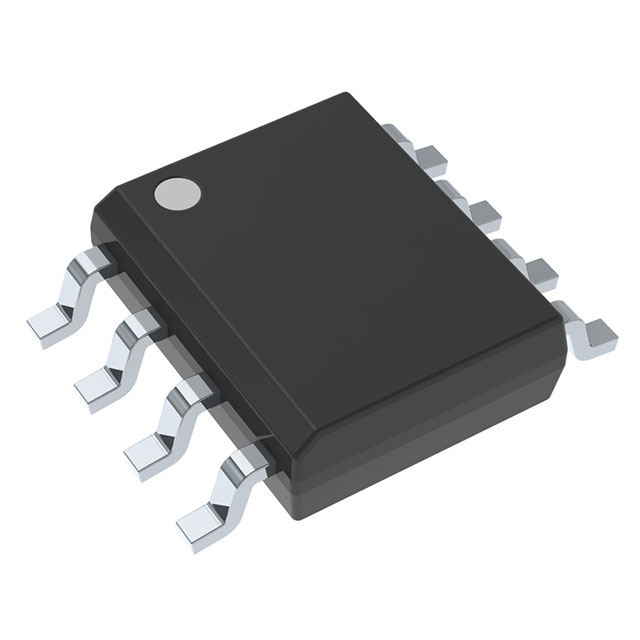
The OPA145ID is an active product from Texas Instruments with enhanced performance specifications. It provides superior slew rate (20 V/µs versus 3 V/µs) and higher gain bandwidth product (5.5 MHz versus 1 MHz). The OPA145ID operates across an extended temperature range (-40°C to 125°C) and features rail-to-rail output capability. However, the OPA145ID uses 8-SOIC surface mount packaging, requiring PCB redesign for through-hole applications. The lower minimum supply voltage (4.5 V) provides additional design flexibility. This substitute is suitable for applications where performance enhancement and extended operating temperature are acceptable trade-offs against package conversion requirements.
AD549SH/883B Substitution:
The AD549SH/883B is an active military-grade product from Analog Devices Inc. with MIL-STD-883 qualification. It maintains the same TO-99-8 metal can package as the OPA128LM, eliminating mounting compatibility concerns. The AD549SH/883B matches the slew rate and gain bandwidth product of the OPA128LM while providing extended operating temperature range (-55°C to 125°C). Input offset voltage is higher (300 µV versus 140 µV), and input bias current is slightly elevated (0.075 pA versus 0.04 pA). This substitute is optimal for through-hole applications requiring package compatibility and military-grade reliability without PCB redesign.
Both substitutes maintain ROHS3 compliance and operate within the 10 V to 36 V supply range of the original OPA128LM.
Frequently Asked Questions (FAQ)
Q: Can the OPA145ID directly replace the OPA128LM in existing PCB designs?
A: No. The OPA145ID uses 8-SOIC surface mount packaging while the OPA128LM uses TO-99-8 through-hole packaging. Direct socket replacement is not possible without PCB redesign and component rework.
Q: Is the AD549SH/883B a pin-compatible replacement for the OPA128LM?
A: Both devices use TO-99-8 metal can packaging with 8 pins. Pin compatibility must be verified against specific application schematics, as package type alone does not guarantee functional equivalence.
Q: What are the key performance differences between OPA145ID and the original OPA128LM?
A: The OPA145ID provides higher slew rate (20 V/µs versus 3 V/µs), higher gain bandwidth product (5.5 MHz versus 1 MHz), lower input offset voltage (40 µV versus 140 µV), and extended operating temperature range (-40°C to 125°C versus 0°C to 70°C). These enhancements may require circuit re-optimization.
Q: Why is the OPA128LM classified as obsolete?
A: The OPA128LM is an older design. Texas Instruments has transitioned to newer amplifier architectures such as the OPA145ID, which offer improved performance and extended operating ranges.
Q: Does the AD549SH/883B meet the same compliance standards as the OPA128LM?
A: Yes. Both devices are ROHS3 compliant and REACH unaffected. The AD549SH/883B includes additional MIL-STD-883 military qualification.
Q: What is the impact of the OPA145ID's lower minimum supply voltage (4.5 V versus 10 V)?
A: The OPA145ID can operate at lower supply voltages, providing design flexibility for battery-powered or low-voltage applications. Existing designs operating at 10 V or higher are unaffected.
Q: Are there package-specific considerations when selecting between OPA145ID and AD549SH/883B?
A: Yes. The AD549SH/883B maintains through-hole mounting, suitable for existing PCB layouts. The OPA145ID requires surface mount assembly, necessitating PCB redesign. Component sourcing and assembly capabilities should be evaluated accordingly.
Alternative Parts

SJ6012L2TP
Littelfuse Inc.
6 Alternative Parts

JMK107BBJ476MA-RE
Taiyo Yuden
10 Alternative Parts

GMK107BBJ475MA-T
Taiyo Yuden
5 Alternative Parts
SJ6020N2ARP
Littelfuse Inc.
3 Alternative Parts
SJ6025R2ATP
Littelfuse Inc.
4 Alternative Parts

2474-05L
API Delevan Inc.
1 Alternative Parts

4590R-684K
API Delevan Inc.
1 Alternative Parts

CM6560R-334
API Delevan Inc.
1 Alternative Parts

CM6460-104
API Delevan Inc.
1 Alternative Parts

5526-12
API Delevan Inc.
1 Alternative Parts