



Request Quote
(Ships tomorrow)
OP520DA Equivalent & Substitute Parts
Part Overview
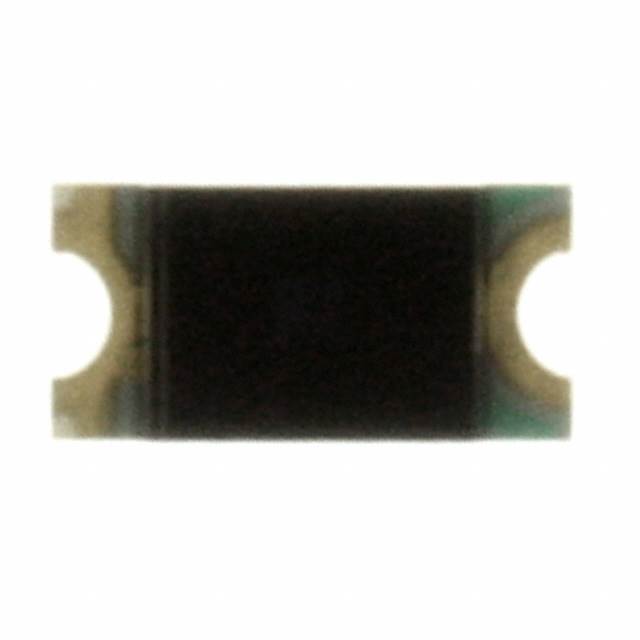
The OP520DA is a phototransistor optical sensor manufactured by TT Electronics/Optek Technology, designed for 935nm infrared detection in a 1206 (3216 Metric) surface mount package with top view orientation. This component is classified as obsolete, making identification of functionally equivalent alternatives essential for ongoing production and maintenance applications. The OP520DA delivers a maximum collector current of 30 mA with a 35V collector-emitter breakdown voltage and operates across the industrial temperature range of -25°C to 85°C.
Substiute Parts
Key Parameters
| Parameter | OP520DA |
|---|---|
| Manufacturer | TT Electronics/Optek Technology |
| Category | Optical Sensors (Phototransistor) |
| Wavelength | 935nm |
| Package / Case | 1206 (3216 Metric) |
| Mounting Type | Surface Mount |
| Orientation | Top View |
| Voltage - Collector Emitter Breakdown (Max) | 35 V |
| Current - Collector (Ic) (Max) | 30 mA |
| Current - Dark (Id) (Max) | 200 nA |
| Power - Max | 100 mW |
| Operating Temperature | -25°C ~ 85°C |
| Product Status | Obsolete |
| RoHS Status | ROHS3 Compliant |
| Moisture Sensitivity Level (MSL) | 2A (4 Weeks) |
Substitute Part Grouping Explanation
Substitution of the OP520DA is determined by the following critical parameters:
Primary Compatibility Criteria:
- Package type: 1206 (3216 Metric) surface mount
- Orientation: Top View
- Mounting type: Surface Mount
- Operating temperature range: -25°C ~ 85°C minimum
- Wavelength sensitivity: Near-infrared region (930-950nm acceptable)
- Regulatory compliance: ROHS3 and REACH requirements
Secondary Compatibility Criteria:
- Collector-emitter breakdown voltage ≥ 30V
- Maximum collector current ≥ 20mA
- Dark current ≤ 200nA
- Power dissipation ≥ 75mW
The PT15-21C/TR8 from Everlight Electronics Co Ltd qualifies as a direct substitute based on matching package geometry, mounting configuration, orientation, temperature range, and regulatory compliance. The wavelength shift from 935nm to 940nm remains within the near-infrared detection spectrum for typical phototransistor applications. Electrical parameters remain within acceptable operational margins for most circuit designs utilizing the OP520DA.
Parameter Comparison
| Parameter | OP520DA | PT15-21C/TR8 | Compatibility Notes |
|---|---|---|---|
| Manufacturer | TT Electronics/Optek Technology | Everlight Electronics Co Ltd | Different manufacturer |
| Product Status | Obsolete | Active | Substitute is in active production |
| Wavelength | 935nm | 940nm | 5nm variance within near-infrared spectrum |
| Package / Case | 1206 (3216 Metric) | 1206 (3216 Metric) | Identical package |
| Mounting Type | Surface Mount | Surface Mount | Identical mounting |
| Orientation | Top View | Top View | Identical orientation |
| Voltage - Collector Emitter Breakdown (Max) | 35 V | 30 V | PT15-21C/TR8 rated 5V lower |
| Current - Collector (Ic) (Max) | 30 mA | 20 mA | PT15-21C/TR8 rated 10mA lower |
| Current - Dark (Id) (Max) | 200 nA | 100 nA | PT15-21C/TR8 has lower dark current |
| Power - Max | 100 mW | 75 mW | PT15-21C/TR8 rated 25mW lower |
| Operating Temperature | -25°C ~ 85°C | -25°C ~ 85°C (TA) | Identical temperature range |
| RoHS Status | ROHS3 Compliant | ROHS3 Compliant | Both compliant |
| Moisture Sensitivity Level (MSL) | 2A (4 Weeks) | 3 (168 Hours) | Different MSL ratings |
| Packaging | Bulk | Tape & Reel (TR) | Different packaging format |
Engineering Selection Recommendations
The PT15-21C/TR8 is the manufacturer-recommended substitute for the obsolete OP520DA. Both components maintain ROHS3 compliance and REACH unaffected status, satisfying regulatory requirements for new designs and production continuity.
The PT15-21C/TR8 operates within the same temperature envelope (-25°C to 85°C) and maintains identical package geometry and surface mount orientation, enabling direct PCB layout compatibility without redesign.
Electrical parameter derating must be evaluated in application-specific circuits. The PT15-21C/TR8 exhibits lower maximum ratings across collector current (20mA vs. 30mA), collector-emitter breakdown voltage (30V vs. 35V), and power dissipation (75mW vs. 100mW). Designs operating near the OP520DA's maximum specifications require circuit analysis to confirm the substitute remains within safe operating margins.
The wavelength shift from 935nm to 940nm represents a 0.5% variance and remains within the near-infrared detection band for standard phototransistor applications. Spectral sensitivity curves should be reviewed for wavelength-critical applications.
The PT15-21C/TR8 is supplied in Tape & Reel packaging, suitable for automated assembly processes. Moisture sensitivity level differs (MSL 3 vs. MSL 2A), requiring appropriate storage and handling protocols during component preparation.
Frequently Asked Questions (FAQ)
Q: Can the PT15-21C/TR8 be used as a direct drop-in replacement for the OP520DA?
A: The PT15-21C/TR8 is mechanically and electrically compatible for most applications. Both components share identical 1206 (3216 Metric) package geometry, surface mount configuration, and top view orientation. PCB layout modifications are not required. However, circuits operating at the OP520DA's maximum electrical ratings (30mA collector current, 35V breakdown voltage, 100mW power) must be re-evaluated, as the PT15-21C/TR8 has lower maximum ratings.
Q: What is the significance of the 935nm to 940nm wavelength difference?
A: The 5nm wavelength shift represents a 0.5% variance within the near-infrared spectrum. For most phototransistor applications utilizing standard infrared LEDs or ambient light filtering, this difference is negligible. Applications with wavelength-specific requirements (such as narrow-band optical filtering or specialized spectral sensing) should verify compatibility through spectral response data.
Q: Are there packaging considerations when switching from OP520DA to PT15-21C/TR8?
A: The OP520DA is supplied in bulk packaging, while the PT15-21C/TR8 is supplied in Tape & Reel (TR) format. Tape & Reel packaging is standard for automated pick-and-place assembly and offers improved handling efficiency. Manual assembly processes may require reel-to-tray conversion. Moisture sensitivity levels differ (MSL 2A for OP520DA vs. MSL 3 for PT15-21C/TR8), requiring adherence to respective storage and bake-out procedures.
Q: What compliance certifications apply to both components?
A: Both the OP520DA and PT15-21C/TR8 are ROHS3 compliant and REACH unaffected. Both carry EAR99 export classification and identical HTSUS codes (8541.49.7080), ensuring regulatory consistency for procurement and supply chain documentation.
Q: How do the electrical parameter differences affect circuit design?
A: The PT15-21C/TR8 operates with lower maximum ratings: 20mA collector current (vs. 30mA), 30V breakdown voltage (vs. 35V), and 75mW power dissipation (vs. 100mW). Designs must ensure operating points remain below these limits. Dark current is lower in the PT15-21C/TR8 (100nA vs. 200nA), which may improve signal-to-noise performance in low-light applications. Circuit simulation or prototype testing is appropriate for applications with marginal design headroom.
Q: Is the PT15-21C/TR8 available in sufficient quantities for production?
A: The PT15-21C/TR8 maintains active production status with substantial inventory availability (50,989 pieces in stock), ensuring supply continuity compared to the obsolete OP520DA status.
Alternative Parts

SJ6012L2TP
Littelfuse Inc.
6 Alternative Parts

JMK107BBJ476MA-RE
Taiyo Yuden
10 Alternative Parts

GMK107BBJ475MA-T
Taiyo Yuden
5 Alternative Parts
SJ6020N2ARP
Littelfuse Inc.
3 Alternative Parts
SJ6025R2ATP
Littelfuse Inc.
4 Alternative Parts

2474-05L
API Delevan Inc.
1 Alternative Parts

4590R-684K
API Delevan Inc.
1 Alternative Parts

CM6560R-334
API Delevan Inc.
1 Alternative Parts

CM6460-104
API Delevan Inc.
1 Alternative Parts

5526-12
API Delevan Inc.
1 Alternative Parts