




Request Quote
(Ships tomorrow)
OP470GS Equivalent & Substitute Parts
Part Overview
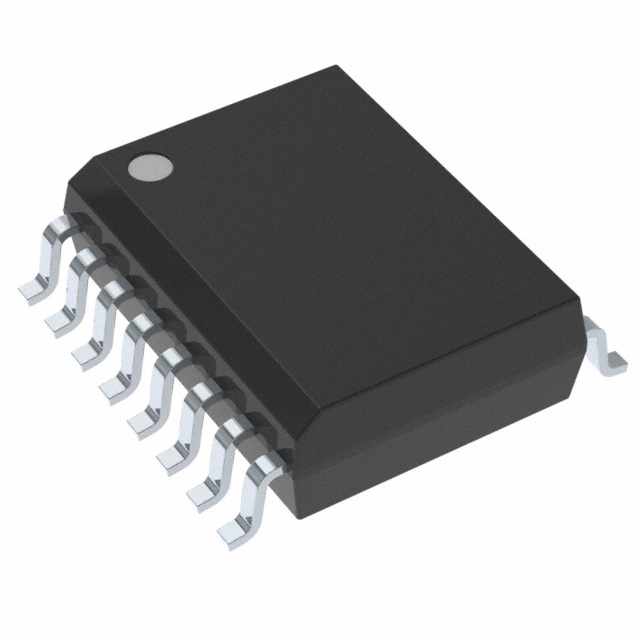
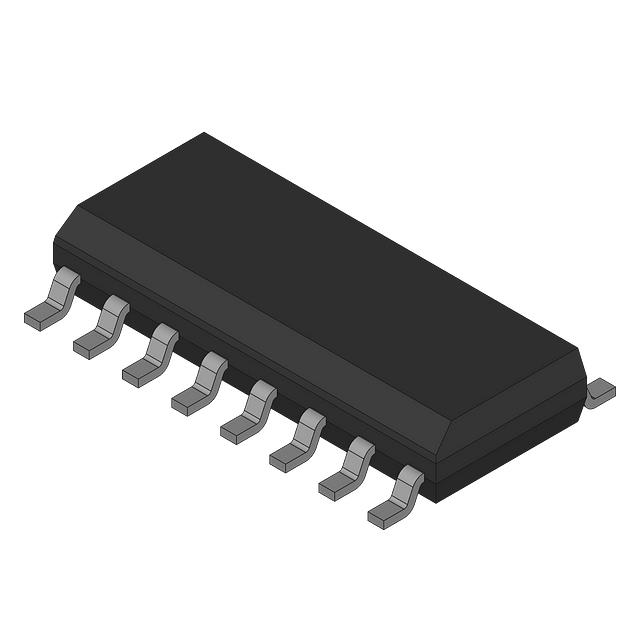
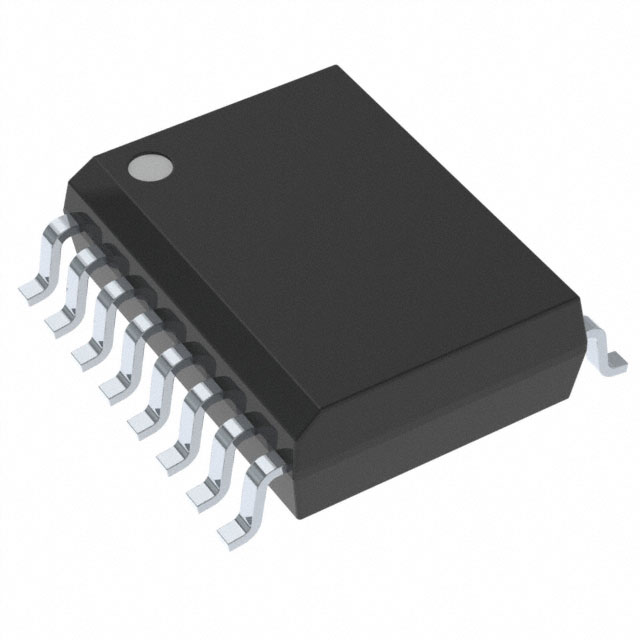
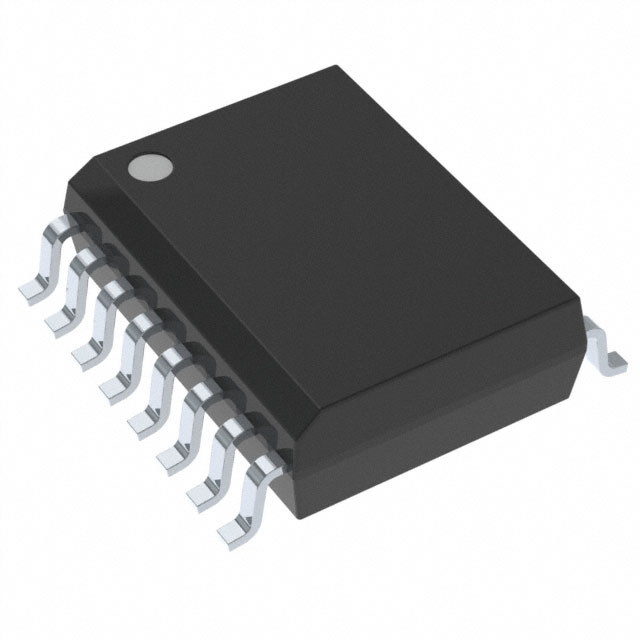
The OP470GS is a general purpose operational amplifier integrated circuit manufactured by Analog Devices Inc., configured as a 4-circuit device in a 16-SOIC surface mount package. This part is classified as obsolete, though 9,911 units remain in stock as new original inventory. The OP470GS operates across a wide supply voltage range of 9V to 36V and maintains performance across the industrial temperature range of -40°C to 85°C. Due to its obsolete status, identifying equivalent and substitute parts is necessary for design continuity, long-term availability assurance, and procurement planning in applications where the OP470GS is currently deployed.
Substiute Parts
Key Parameters
| Parameter | OP470GS Value |
|---|---|
| Amplifier Type | General Purpose |
| Number of Circuits | 4 |
| Slew Rate | 3 V/µs |
| Gain Bandwidth Product | 6 MHz |
| Current - Input Bias | 15 nA |
| Voltage - Input Offset | 400 µV |
| Current - Supply | 9 mA |
| Voltage - Supply Span (Min) | 9 V |
| Voltage - Supply Span (Max) | 36 V |
| Operating Temperature | -40°C to 85°C |
| Mounting Type | Surface Mount |
| Package / Case | 16-SOIC (0.295", 7.50mm Width) |
| Moisture Sensitivity Level (MSL) | 1 (Unlimited) |
Substitute Part Grouping Explanation
Substitute parts for the OP470GS are categorized based on electrical and mechanical compatibility within the following criteria:
Direct Substitutes (Identical Electrical Specifications): Parts that maintain identical amplifier type (general purpose), circuit count (4), slew rate (3 V/µs), gain bandwidth product (6 MHz), input bias current (15 nA), input offset voltage (400 µV), supply current (9 mA), supply voltage range (9V to 36V minimum, 36V maximum), operating temperature range (-40°C to 85°C), and package configuration (16-SOIC surface mount).
Functional Alternatives (Different Amplifier Type or Performance Characteristics): Parts that share the same package, circuit count, and mounting type but differ in amplifier type (J-FET versus general purpose) or performance parameters such as slew rate, gain bandwidth product, input bias current, or supply current. These alternatives are suitable when the application can accommodate different electrical characteristics within the specified operating envelope.
Extended Temperature Range Alternatives: Parts that maintain compatible electrical specifications but operate across different temperature ranges, applicable when the design environment differs from the original -40°C to 85°C specification.
Parameter Comparison
| Part Number | Manufacturer | Amplifier Type | Slew Rate (V/µs) | Gain Bandwidth (MHz) | Input Bias (nA/pA) | Input Offset (µV) | Supply Current (mA) | Supply Voltage Min (V) | Supply Voltage Max (V) | Operating Temp (°C) | Product Status | Package |
|---|---|---|---|---|---|---|---|---|---|---|---|---|
| OP470GS | Analog Devices | General Purpose | 3 | 6 | 15 nA | 400 | 9 | 9 | 36 | -40 to 85 | Obsolete | 16-SOIC |
| OP470GSZ | Analog Devices | General Purpose | 3 | 6 | 15 nA | 400 | 9 | 9 | 36 | -40 to 85 | Active | 16-SOIC |
| LT1058ISW | Analog Devices | J-FET | 13 | 5 | 10 pA | 350 | 1.7 | 20 | 36 | -40 to 85 | Active | 16-SOIC |
| LT1058ISW#PBF | Analog Devices | J-FET | 13 | 5 | 10 pA | 350 | 1.7 | 20 | 36 | -40 to 85 | Active | 16-SOIC |
| LT1058ISW#TRPBF | Analog Devices | J-FET | 13 | 5 | 10 pA | 350 | 1.7 | 20 | 36 | -40 to 85 | Active | 16-SOIC |
| LT1058SW#PBF | Analog Devices | J-FET | 13 | 5 | 10 pA | 350 | 1.7 | 20 | 36 | 0 to 70 | Active | 16-SOIC |
| LT1058SW#TRPBF | Analog Devices | J-FET | 13 | 5 | 10 pA | 350 | 1.7 | 20 | 36 | 0 to 70 | Active | 16-SOIC |
| LT1125MPSW#PBF | Analog Devices | General Purpose | 4.5 | 12.5 | 8 nA | 30 | 2.3 | 8 | 44 | -55 to 125 | Active | 16-SOIC |
| LT1125MPSW#TRPBF | Analog Devices | General Purpose | 4.5 | 12.5 | 8 nA | 30 | 2.3 | 8 | 44 | -55 to 125 | Active | 16-SOIC |
| OPA4131UA | Burr Brown | J-FET | 10 | 4 | 5 pA | 200 | 1.5 | 9 | 36 | -40 to 85 | Active | 16-SOIC |
| OPA4131UA/1K | Texas Instruments | J-FET | 10 | 4 | 5 pA | 200 | 1.5 | 9 | 36 | -40 to 85 | Active | 16-SOIC |
Engineering Selection Recommendations
Primary Direct Substitute: The OP470GSZ is the recommended direct substitute for the OP470GS. Both parts are manufactured by Analog Devices Inc. and maintain identical electrical specifications across all measured parameters. The OP470GSZ differs only in product status (active versus obsolete) and packaging format (tube versus unspecified). With 16,596 units in active inventory and RoHS3 compliance certification, the OP470GSZ provides assured long-term availability and regulatory compliance for new designs or production continuity.
General Purpose Amplifier Alternative: The LT1125MPSW#PBF and LT1125MPSW#TRPBF represent active general purpose amplifier alternatives within the Analog Devices portfolio. These parts maintain the same amplifier type classification and 4-circuit configuration in 16-SOIC packaging. The LT1125 series offers enhanced performance characteristics including higher slew rate (4.5 V/µs versus 3 V/µs), higher gain bandwidth product (12.5 MHz versus 6 MHz), lower input offset voltage (30 µV versus 400 µV), and extended operating temperature range (-55°C to 125°C versus -40°C to 85°C). These parts are suitable for applications requiring improved performance margins or extended temperature operation. Both variants carry RoHS3 compliance and REACH unaffected status.
J-FET Amplifier Alternatives: The LT1058 series (LT1058ISW, LT1058ISW#PBF, LT1058ISW#TRPBF, LT1058SW#PBF, LT1058SW#TRPBF) and OPA4131 variants (OPA4131UA, OPA4131UA/1K) represent J-FET input amplifier alternatives. These parts share the 16-SOIC package and 4-circuit configuration but employ J-FET input stages, resulting in significantly lower input bias current (10 pA to 5 pA versus 15 nA) and improved input offset voltage characteristics (350 µV to 200 µV versus 400 µV). The LT1058 series maintains the -40°C to 85°C operating range (with SW variants limited to 0°C to 70°C), while OPA4131 variants operate across -40°C to 85°C. All LT1058 variants carry RoHS3 compliance and REACH unaffected status. The OPA4131UA/1K variant includes RoHS3 compliance with MSL-3 moisture sensitivity rating.
Compliance and Regulatory Considerations: All recommended active substitutes carry RoHS3 compliance certification. The OP470GSZ, LT1125 series, and LT1058 series all maintain REACH unaffected status. The OPA4131UA/1K carries MSL-3 moisture sensitivity classification (168 hours), compared to MSL-1 (unlimited) for other alternatives, requiring appropriate handling protocols during storage and assembly.
Frequently Asked Questions (FAQ)
Q: Can the OP470GSZ be used as a direct replacement for the OP470GS? A: Yes. The OP470GSZ maintains identical electrical specifications including slew rate, gain bandwidth product, input bias current, input offset voltage, supply current, and operating temperature range. The primary differences are product status (active versus obsolete) and packaging format. Mechanical compatibility and pinout are identical for 16-SOIC surface mount applications.
Q: What are the key differences between the OP470GS and the LT1058 series? A: The OP470GS is a general purpose amplifier with 15 nA input bias current, while the LT1058 series employs J-FET input stages with 10 pA input bias current. The LT1058 offers higher slew rate (13 V/µs versus 3 V/µs) and lower input offset voltage (350 µV versus 400 µV). However, the LT1058 requires a minimum supply voltage of 20V, compared to 9V for the OP470GS. The LT1058 is suitable for applications prioritizing low input bias current and high slew rate performance.
Q: Are the LT1058SW#PBF and LT1058ISW#PBF interchangeable? A: Both parts share identical electrical specifications and 16-SOIC packaging. The primary difference is operating temperature range: LT1058ISW#PBF operates across -40°C to 85°C, while LT1058SW#PBF operates across 0°C to 70°C. Selection depends on the required operating temperature envelope for the application.
Q: What is the significance of the #PBF and #TRPBF suffixes? A: The #PBF suffix indicates tube packaging, while #TRPBF indicates tape and reel (TR) packaging. Both packaging formats contain identical die and electrical specifications. Selection depends on assembly process requirements and inventory management preferences.
Q: Can the LT1125MPSW series replace the OP470GS in all applications? A: The LT1125MPSW series maintains general purpose amplifier classification and 4-circuit 16-SOIC configuration, making it mechanically and functionally compatible. However, the LT1125 offers enhanced performance with higher slew rate, higher gain bandwidth product, and lower input offset voltage. The extended operating temperature range (-55°C to 125°C) and lower minimum supply voltage (8V versus 9V) provide additional design flexibility. Verification of performance improvements is not required for substitution, as the LT1125 specifications exceed OP470GS requirements across all measured parameters.
Q: What is the moisture sensitivity level (MSL) and why does it matter? A: MSL indicates the maximum time a component can be exposed to ambient conditions (typically 30°C, 85% relative humidity) before soldering. MSL-1 (unlimited) allows indefinite storage without special handling. MSL-3 (168 hours) requires controlled storage and handling protocols. The OP470GSZ, LT1058 series, and LT1125 series carry MSL-1 rating. The OPA4131UA/1K carries MSL-3 rating, requiring appropriate moisture control during storage and assembly operations.
Q: Are all substitute parts RoHS3 compliant? A: All active substitute parts listed (OP470GSZ, LT1058 series, LT1125 series, OPA4131UA/1K) carry RoHS3 compliance certification. The original OP470GS does not specify RoHS status due to its obsolete classification. RoHS3 compliance ensures restriction of hazardous substances in accordance with current regulatory requirements.
Q: What supply voltage range must be considered when selecting a substitute? A: The OP470GS operates across 9V to 36V supply range. The LT1125 series extends the minimum to 8V and maximum to 44V, providing broader compatibility. The LT1058 series requires a minimum of 20V, restricting use in lower voltage applications. The OPA4131 variants maintain the 9V to 36V range. Application supply voltage requirements must be verified against substitute part specifications.
Q: Can the OPA4131UA variants be used in place of the OP470GS? A: The OPA4131UA and OPA4131UA/1K are mechanically and functionally compatible in 16-SOIC surface mount applications. Both maintain the 9V to 36V supply range and -40°C to 85°C operating temperature. As J-FET input amplifiers, they offer superior input bias current (5 pA versus 15 nA) and input offset voltage (200 µV versus 400 µV) characteristics. The OPA4131UA/1K includes RoHS3 compliance and tape & reel packaging. Selection depends on whether the improved input characteristics provide design benefits for the specific application.
Alternative Parts

SJ6012L2TP
Littelfuse Inc.
6 Alternative Parts

JMK107BBJ476MA-RE
Taiyo Yuden
10 Alternative Parts

GMK107BBJ475MA-T
Taiyo Yuden
5 Alternative Parts
SJ6020N2ARP
Littelfuse Inc.
3 Alternative Parts
SJ6025R2ATP
Littelfuse Inc.
4 Alternative Parts

2474-05L
API Delevan Inc.
1 Alternative Parts

4590R-684K
API Delevan Inc.
1 Alternative Parts

CM6560R-334
API Delevan Inc.
1 Alternative Parts

CM6460-104
API Delevan Inc.
1 Alternative Parts

5526-12
API Delevan Inc.
1 Alternative Parts