


Request Quote
(Ships tomorrow)
OP42FJ Equivalent & Substitute Parts
Part Overview
The OP42FJ is a J-FET input operational amplifier manufactured by Analog Devices Inc., housed in a TO-99-8 metal can package. This single-circuit amplifier is designed for applications requiring low input bias current and high input impedance characteristics inherent to J-FET technology. The device is classified as Active product status with full RoHS3 compliance and unlimited moisture sensitivity rating. Substitute parts are identified when original stock is unavailable, when alternative packaging formats are required for manufacturing processes, or when design specifications permit operation within relaxed electrical parameters.
Substiute Parts
Key Parameters
| Parameter | Value | Unit |
|---|---|---|
| Amplifier Type | J-FET | — |
| Number of Circuits | 1 | — |
| Slew Rate | 50 | V/µs |
| Gain Bandwidth Product | 10 | MHz |
| Current - Input Bias | 130 | pA |
| Voltage - Input Offset | 400 | µV |
| Current - Supply | 5.1 | mA |
| Current - Output / Channel | 33 | mA |
| Voltage - Supply Span (Min) | 16 | V |
| Voltage - Supply Span (Max) | 40 | V |
| Operating Temperature | -25 to 85 | °C |
| Mounting Type | Through Hole | — |
| Package / Case | TO-99-8 Metal Can | — |
| RoHS Status | ROHS3 Compliant | — |
| Product Status | Active | — |
Substitute Part Grouping Explanation
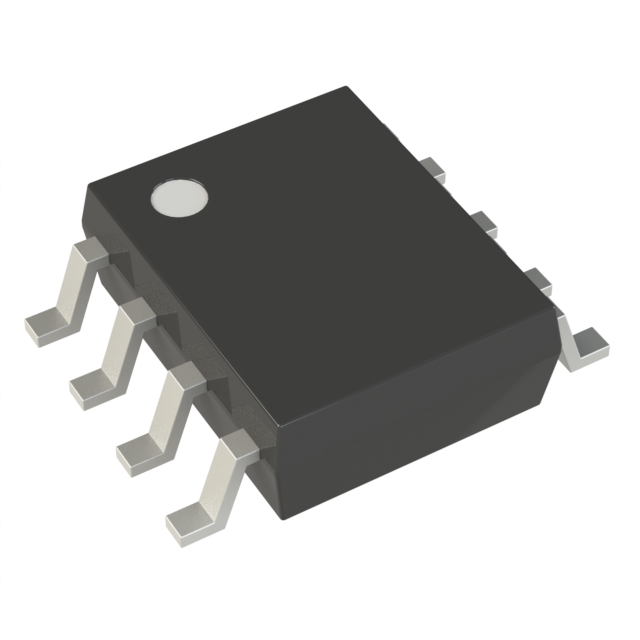
Substitution of the OP42FJ is determined by electrical parameter compatibility within defined tolerance bands and mechanical compatibility with circuit board assembly processes. The primary substitute identified is the TS512BIYDT from STMicroelectronics.
Substitution Logic:
The TS512BIYDT operates as a functional substitute when the following conditions are met:
- Supply Voltage Compatibility: The OP42FJ operates across 16 V to 40 V supply span. The TS512BIYDT operates across 3 V to 30 V supply span. Designs operating within the overlapping range of 16 V to 30 V are compatible.
- Input Bias Current: The OP42FJ specifies 130 pA input bias current. The TS512BIYDT specifies 50 nA input bias current. Applications tolerant of higher input bias current can accept this substitute.
- Slew Rate: The OP42FJ provides 50 V/µs slew rate. The TS512BIYDT provides 1.5 V/µs slew rate. Designs not requiring high-speed transient response can operate with the reduced slew rate.
- Gain Bandwidth Product: The OP42FJ provides 10 MHz bandwidth. The TS512BIYDT provides 3 MHz bandwidth. Designs operating below 3 MHz signal frequencies are compatible.
- Output Current: The OP42FJ provides 33 mA output current per channel. The TS512BIYDT provides 23 mA output current per channel. Designs requiring less than 23 mA output current are compatible.
- Packaging and Assembly: The OP42FJ uses through-hole TO-99-8 mounting. The TS512BIYDT uses surface-mount 8-SOIC packaging. Assembly process capability determines packaging suitability.
- Compliance and Certification: Both devices are RoHS3 compliant, REACH unaffected, and carry EAR99 classification.
Parameter Comparison
| Parameter | OP42FJ (Analog Devices) | TS512BIYDT (STMicroelectronics) | Unit |
|---|---|---|---|
| Category | Linear, Amplifiers | Linear, Amplifiers | — |
| Amplifier Type | J-FET | General Purpose | — |
| Number of Circuits | 1 | 2 | — |
| Slew Rate | 50 | 1.5 | V/µs |
| Gain Bandwidth Product | 10 | 3 | MHz |
| Current - Input Bias | 130 | 50 | pA / nA |
| Voltage - Input Offset | 400 | 500 | µV |
| Current - Output / Channel | 33 | 23 | mA |
| Voltage - Supply Span (Min) | 16 | 3 | V |
| Voltage - Supply Span (Max) | 40 | 30 | V |
| Operating Temperature | -25 to 85 | -40 to 125 | °C |
| Mounting Type | Through Hole | Surface Mount | — |
| Package / Case | TO-99-8 Metal Can | 8-SOIC (0.154", 3.90mm Width) | — |
| RoHS Status | ROHS3 Compliant | ROHS3 Compliant | — |
| Product Status | Active | Active | — |
| REACH Status | REACH Unaffected | REACH Unaffected | — |
| ECCN | EAR99 | EAR99 | — |
Engineering Selection Recommendations
OP42FJ Selection Criteria:
The OP42FJ is the primary choice for applications requiring J-FET input characteristics with high input impedance and low input bias current (130 pA). This device is suitable for designs operating within the 16 V to 40 V supply range, requiring slew rates of 50 V/µs or higher, and bandwidth requirements up to 10 MHz. Through-hole TO-99-8 packaging is appropriate for legacy circuit board designs and applications requiring manual assembly or rework capability. Active product status ensures continued availability and manufacturing support.
TS512BIYDT Selection Criteria:
The TS512BIYDT is selected when supply voltage operation is constrained to the 16 V to 30 V range, when slew rate requirements do not exceed 1.5 V/µs, and when bandwidth requirements do not exceed 3 MHz. This substitute is appropriate for designs utilizing surface-mount assembly processes and automated manufacturing workflows. The TS512BIYDT provides dual-circuit configuration, allowing single-package implementation of two amplifier stages. Automotive-grade qualification (AEC-Q100) and extended operating temperature range (-40°C to 125°C) support automotive and industrial applications. Active product status and full RoHS3 compliance ensure regulatory compliance and supply chain continuity.
Compliance Alignment:
Both devices maintain identical RoHS3 compliance status, REACH unaffected classification, and EAR99 export control designation. Selection between these parts is determined by electrical parameter requirements and packaging assembly methodology rather than regulatory or compliance considerations.
Frequently Asked Questions (FAQ)
Q: Can the TS512BIYDT directly replace the OP42FJ in existing circuit designs?
A: Direct replacement requires design review of three critical parameters: (1) supply voltage operation must remain within the 16 V to 30 V overlap range, (2) signal bandwidth must not exceed 3 MHz, and (3) output current requirements must not exceed 23 mA per channel. Additionally, circuit board layout must accommodate the 8-SOIC surface-mount package format instead of the through-hole TO-99-8 package. If these conditions are satisfied, functional substitution is possible.
Q: What is the primary difference between J-FET and General Purpose amplifier types?
A: The OP42FJ uses J-FET input architecture, which provides extremely low input bias current (130 pA) and high input impedance suitable for high-impedance signal sources and precision measurement applications. The TS512BIYDT uses general-purpose architecture with higher input bias current (50 nA) but lower cost and broader application flexibility. Selection depends on whether the application requires the low-bias-current characteristics of J-FET technology.
Q: How does the slew rate difference affect circuit performance?
A: The OP42FJ provides 50 V/µs slew rate, enabling faster output voltage transitions. The TS512BIYDT provides 1.5 V/µs slew rate, limiting the maximum rate of output voltage change. For applications processing high-frequency signals or requiring rapid transient response, the reduced slew rate of the TS512BIYDT may introduce signal distortion or limit bandwidth utilization. Low-frequency applications and precision DC measurement circuits are unaffected by this difference.
Q: What packaging considerations apply to substitution?
A: The OP42FJ uses through-hole TO-99-8 metal can packaging, suitable for manual assembly, rework, and legacy circuit board designs. The TS512BIYDT uses surface-mount 8-SOIC packaging, requiring automated pick-and-place assembly and reflow soldering processes. Circuit board layout, assembly equipment capability, and manufacturing process flow determine packaging suitability. Substitution is not possible if assembly infrastructure does not support the required package format.
Q: Are both devices suitable for automotive applications?
A: The TS512BIYDT carries AEC-Q100 automotive qualification and extended operating temperature range (-40°C to 125°C), making it suitable for automotive-grade applications. The OP42FJ is classified as Active product status with standard operating temperature range (-25°C to 85°C) and does not carry automotive qualification. Automotive applications requiring AEC-Q100 qualification must use the TS512BIYDT or identify alternative qualified devices.
Q: What is the significance of the dual-circuit configuration in the TS512BIYDT?
A: The TS512BIYDT integrates two independent amplifier circuits within a single 8-SOIC package, whereas the OP42FJ provides one circuit per TO-99-8 package. For designs requiring two amplifier stages, the TS512BIYDT reduces component count, circuit board area, and assembly cost. However, both circuits share common power supply pins, requiring careful power supply decoupling and layout design to prevent cross-coupling between channels.
Q: How do input offset voltage specifications compare?
A: The OP42FJ specifies 400 µV input offset voltage, while the TS512BIYDT specifies 500 µV input offset voltage. This 100 µV difference is negligible for most applications but becomes significant in precision instrumentation requiring offset voltage trimming or in designs with very small input signal levels. Applications with input signals below 1 mV may require offset nulling circuitry regardless of which device is selected.
Q: What supply voltage range is compatible with both devices?
A: The OP42FJ operates across 16 V to 40 V supply span. The TS512BIYDT operates across 3 V to 30 V supply span. The overlapping compatible range is 16 V to 30 V. Designs operating above 30 V supply voltage cannot use the TS512BIYDT. Designs operating below 16 V supply voltage cannot use the OP42FJ. Supply voltage requirements determine which device is suitable for a given application.
Alternative Parts

SJ6012L2TP
Littelfuse Inc.
6 Alternative Parts

JMK107BBJ476MA-RE
Taiyo Yuden
10 Alternative Parts

GMK107BBJ475MA-T
Taiyo Yuden
5 Alternative Parts
SJ6020N2ARP
Littelfuse Inc.
3 Alternative Parts
SJ6025R2ATP
Littelfuse Inc.
4 Alternative Parts

2474-05L
API Delevan Inc.
1 Alternative Parts

4590R-684K
API Delevan Inc.
1 Alternative Parts

CM6560R-334
API Delevan Inc.
1 Alternative Parts

CM6460-104
API Delevan Inc.
1 Alternative Parts

5526-12
API Delevan Inc.
1 Alternative Parts