



Request Quote
(Ships tomorrow)
OP37CJ8 Equivalent & Substitute Parts
Part Overview
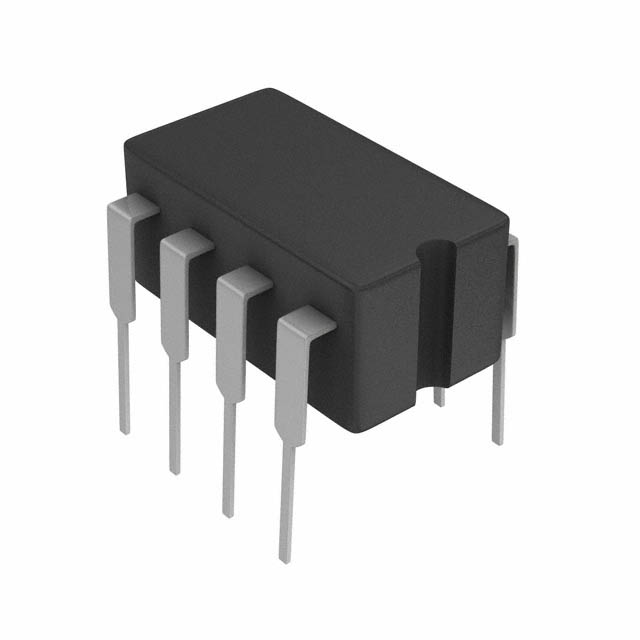
The OP37CJ8 is a general-purpose operational amplifier manufactured by Analog Devices Inc., housed in an 8-CERDIP through-hole package. This device is classified as obsolete, indicating it is no longer in active production. The OP37CJ8 delivers superior performance characteristics including a slew rate of 17V/µs and gain bandwidth product of 63 MHz, making it suitable for applications requiring higher-speed amplification compared to legacy general-purpose designs. Due to its obsolete status, identifying equivalent substitute parts is necessary for design continuity, system maintenance, and component procurement.
Substiute Parts
Key Parameters
| Parameter | OP37CJ8 |
|---|---|
| Manufacturer | Analog Devices Inc. |
| Category | Linear, Amplifiers |
| Amplifier Type | General Purpose |
| Number of Circuits | 1 |
| Slew Rate | 17 V/µs |
| Gain Bandwidth Product | 63 MHz |
| Current - Input Bias | 15 nA |
| Voltage - Input Offset | 30 µV |
| Voltage - Supply Span (Min) | 8 V |
| Voltage - Supply Span (Max) | 36 V |
| Operating Temperature | -55°C ~ 125°C |
| Mounting Type | Through Hole |
| Package / Case | 8-CDIP (0.300", 7.62mm) |
| Product Status | Obsolete |
| Moisture Sensitivity Level (MSL) | 1 (Unlimited) |
Substitute Part Grouping Explanation
Substitution of the OP37CJ8 is determined by compatibility across the following critical parameters:
Functional Compatibility:
- Amplifier type classification (General Purpose)
- Number of circuits (1 circuit)
- Package form factor (8-CDIP through-hole configuration with 0.300" / 7.62mm spacing)
Electrical Operating Range:
- Supply voltage span compatibility (minimum and maximum voltage ratings)
- Operating temperature range (-55°C ~ 125°C)
Performance Characteristics:
- Slew rate and gain bandwidth product determine suitability for specific application speeds
- Input bias current and input offset voltage affect signal fidelity and precision requirements
The LM741J qualifies as a substitute based on matching package type, through-hole mounting, single-circuit configuration, and overlapping operating temperature and supply voltage ranges. However, performance characteristics differ significantly, requiring application-level evaluation.
Parameter Comparison
| Parameter | OP37CJ8 | LM741J | Notes |
|---|---|---|---|
| Manufacturer | Analog Devices Inc. | Texas Instruments | Different manufacturers |
| Amplifier Type | General Purpose | General Purpose | Functionally equivalent classification |
| Number of Circuits | 1 | 1 | Single circuit configuration |
| Slew Rate | 17 V/µs | 0.5 V/µs | OP37CJ8 provides 34x faster slew rate |
| Gain Bandwidth Product | 63 MHz | 1.5 MHz | OP37CJ8 provides 42x higher bandwidth |
| Current - Input Bias | 15 nA | 80 nA | OP37CJ8 has lower input bias current |
| Voltage - Input Offset | 30 µV | 1 mV | OP37CJ8 has lower input offset voltage |
| Voltage - Supply Span (Min) | 8 V | 10 V | OP37CJ8 operates at lower minimum voltage |
| Voltage - Supply Span (Max) | 36 V | 44 V | LM741J supports higher maximum voltage |
| Operating Temperature | -55°C ~ 125°C | -55°C ~ 125°C | Identical temperature range |
| Mounting Type | Through Hole | Through Hole | Same mounting technology |
| Package / Case | 8-CDIP (0.300", 7.62mm) | 8-CDIP (0.300", 7.62mm) | Physically compatible packages |
| Product Status | Obsolete | Active | LM741J remains in active production |
| Moisture Sensitivity Level (MSL) | 1 (Unlimited) | 1 (Unlimited) | Equivalent moisture handling |
Engineering Selection Recommendations
LM741J Substitution Criteria:
The LM741J is available as an active product from Texas Instruments, addressing the obsolescence status of the OP37CJ8. Both devices share identical operating temperature ranges (-55°C ~ 125°C), through-hole mounting configuration, and 8-CDIP package form factor with 0.300" / 7.62mm spacing.
Compatibility Constraints:
The LM741J operates within a supply voltage range of 10V to 44V, compared to the OP37CJ8 range of 8V to 36V. Applications requiring operation below 10V supply voltage cannot use the LM741J as a direct substitute.
Performance Trade-offs:
The LM741J exhibits significantly reduced performance specifications: slew rate of 0.5V/µs versus 17V/µs, and gain bandwidth product of 1.5 MHz versus 63 MHz. Input bias current is higher at 80 nA compared to 15 nA, and input offset voltage is higher at 1 mV compared to 30 µV. These differences require circuit-level analysis to determine suitability for precision and high-frequency applications.
Compliance Status:
The LM741J carries RoHS3 compliance and REACH Unaffected status, providing regulatory alignment for modern manufacturing and distribution requirements.
Frequently Asked Questions (FAQ)
Q: Can the LM741J be used as a direct pin-for-pin replacement for the OP37CJ8?
A: Yes, the LM741J is a pin-compatible substitute in terms of physical package configuration. Both devices use the 8-CDIP through-hole package with identical 0.300" / 7.62mm spacing. However, electrical performance differences require application-specific evaluation before implementation.
Q: What are the key performance differences between OP37CJ8 and LM741J?
A: The OP37CJ8 provides superior performance across multiple parameters: 34 times faster slew rate (17V/µs vs. 0.5V/µs), 42 times higher gain bandwidth product (63 MHz vs. 1.5 MHz), lower input bias current (15 nA vs. 80 nA), and lower input offset voltage (30 µV vs. 1 mV). Applications requiring high-speed amplification or precision signal conditioning may not tolerate these performance reductions.
Q: Are there supply voltage compatibility issues when substituting the LM741J for the OP37CJ8?
A: The LM741J requires a minimum supply voltage of 10V, while the OP37CJ8 operates at 8V minimum. Designs operating at 8V or 9V supply voltage cannot use the LM741J. The maximum supply voltage for LM741J is 44V compared to 36V for the OP37CJ8, providing additional headroom in higher-voltage applications.
Q: What is the operating temperature range for both devices?
A: Both the OP37CJ8 and LM741J operate across the identical temperature range of -55°C to 125°C, ensuring thermal compatibility across industrial and extended-temperature applications.
Q: How do input bias current and input offset voltage differences affect circuit design?
A: The OP37CJ8 exhibits lower input bias current (15 nA) and input offset voltage (30 µV) compared to the LM741J (80 nA and 1 mV respectively). High-impedance input circuits and precision instrumentation applications may require the superior input characteristics of the OP37CJ8. Low-impedance applications may tolerate the LM741J specifications.
Q: Is the LM741J still available for procurement?
A: Yes, the LM741J is classified as an active product with current manufacturing status. The OP37CJ8 is obsolete and no longer produced. Procurement of the LM741J provides access to an actively manufactured component with established supply chains.
Q: What compliance certifications apply to the LM741J?
A: The LM741J is RoHS3 compliant and REACH Unaffected, meeting current regulatory requirements for electronic component manufacturing and distribution in regulated markets.
Alternative Parts

SJ6012L2TP
Littelfuse Inc.
6 Alternative Parts

JMK107BBJ476MA-RE
Taiyo Yuden
10 Alternative Parts

GMK107BBJ475MA-T
Taiyo Yuden
5 Alternative Parts
SJ6020N2ARP
Littelfuse Inc.
3 Alternative Parts
SJ6025R2ATP
Littelfuse Inc.
4 Alternative Parts

2474-05L
API Delevan Inc.
1 Alternative Parts

4590R-684K
API Delevan Inc.
1 Alternative Parts

CM6560R-334
API Delevan Inc.
1 Alternative Parts

CM6460-104
API Delevan Inc.
1 Alternative Parts

5526-12
API Delevan Inc.
1 Alternative Parts