




Request Quote
(Ships tomorrow)
OP297FS Equivalent & Substitute Parts
Part Overview
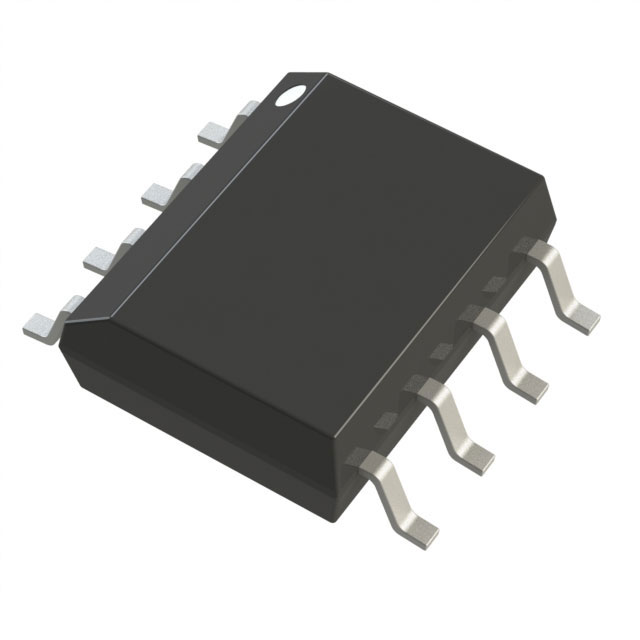
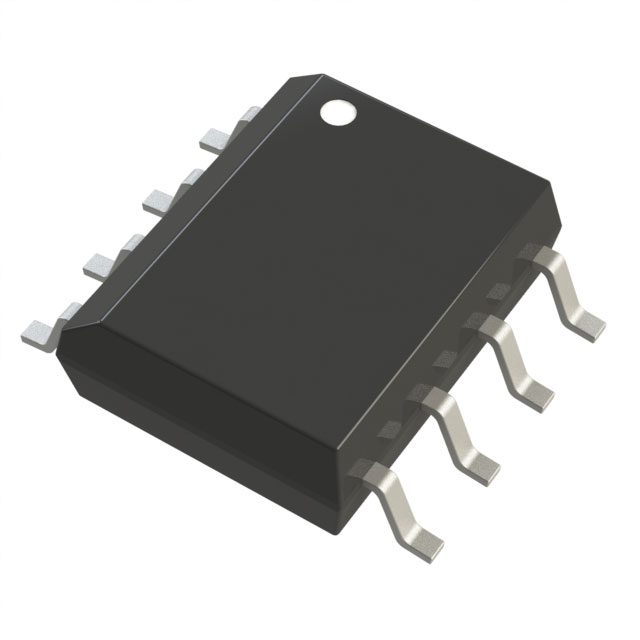
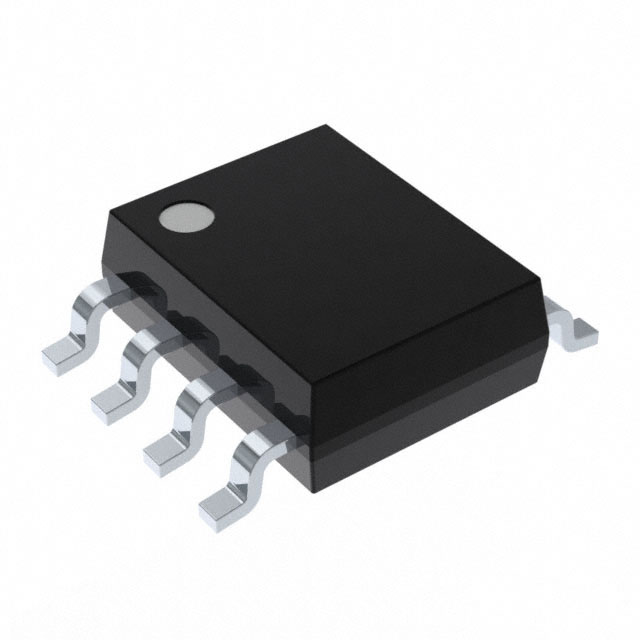
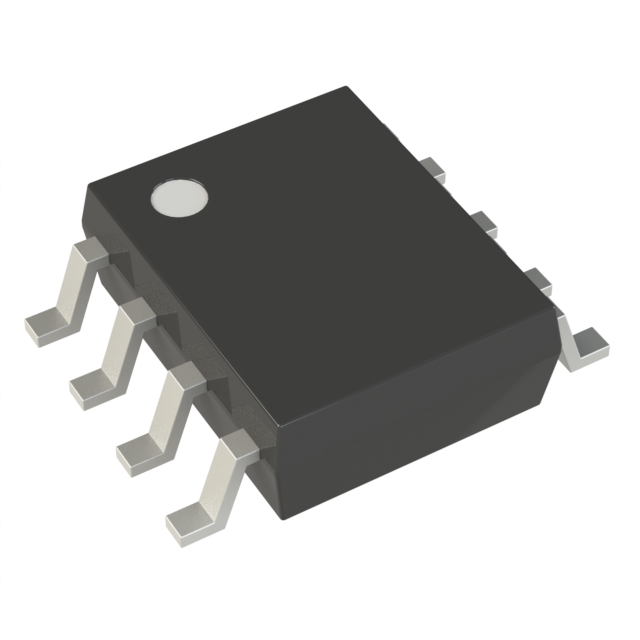
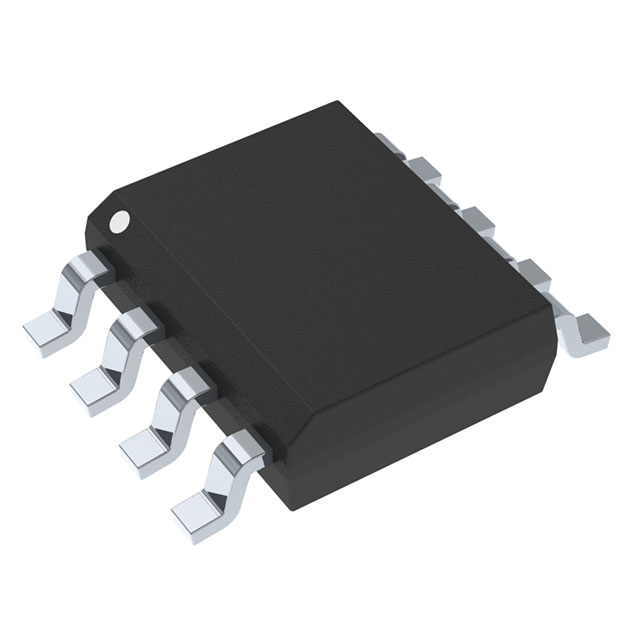
The OP297FS is a general-purpose operational amplifier manufactured by Analog Devices Inc., configured as a dual-channel (2 circuit) device in an 8-SOIC surface-mount package. This part is classified as obsolete, which necessitates identification of equivalent and substitute components for ongoing design support and procurement continuity. The OP297FS operates across a wide supply voltage range (4V to 40V) and maintains performance across industrial temperature ranges (-40°C to 85°C), making it suitable for general analog signal conditioning and amplification applications.
Substiute Parts
Key Parameters
| Parameter | Value | Unit |
|---|---|---|
| Amplifier Type | General Purpose | — |
| Number of Circuits | 2 | — |
| Slew Rate | 0.15 | V/µs |
| Gain Bandwidth Product | 500 | kHz |
| Current - Input Bias | 35 | pA |
| Voltage - Input Offset | 50 | µV |
| Current - Supply | 525 (x2 Channels) | µA |
| Voltage - Supply Span (Min) | 4 | V |
| Voltage - Supply Span (Max) | 40 | V |
| Operating Temperature | -40 to 85 | °C |
| Package / Case | 8-SOIC (0.154", 3.90mm Width) | — |
| Mounting Type | Surface Mount | — |
| Product Status | Obsolete | — |
| Moisture Sensitivity Level | 1 (Unlimited) | — |
Substitute Part Grouping Explanation
Substitution of the OP297FS is determined by matching critical electrical and mechanical parameters within defined tolerance bands. The primary substitution criteria are:
Direct Equivalents (Identical Electrical Performance): Parts that maintain the same amplifier type (general purpose, dual-channel), package format (8-SOIC), and core electrical specifications (slew rate, gain bandwidth product, supply voltage range, input bias current, and input offset voltage) are classified as direct equivalents. These parts can replace the OP297FS without circuit redesign.
Functional Equivalents (Compatible Electrical Performance): Parts that operate as general-purpose dual-channel amplifiers in 8-SOIC packages but exhibit variations in secondary parameters (slew rate, gain bandwidth product, supply current, or input offset voltage) are classified as functional equivalents. These parts maintain compatibility with the OP297FS application space but may require performance verification in specific circuit topologies.
Limited Compatibility Substitutes (Different Circuit Count or Package): Parts that function as general-purpose amplifiers but differ in circuit count (single-channel versus dual-channel) or package format are identified as limited compatibility substitutes. These require circuit board layout modifications and are suitable only when mechanical constraints permit package changes.
Non-Compatible Parts (Different Amplifier Class): Parts classified under different amplifier types (buffer amplifiers, current feedback amplifiers) are listed for reference but do not constitute functional substitutes for the OP297FS.
Parameter Comparison
| Part Number | Manufacturer | Product Status | Amplifier Type | Number of Circuits | Slew Rate (V/µs) | GBW (kHz) | Input Bias (pA) | Input Offset (µV) | Supply Current (µA) | Supply Min (V) | Supply Max (V) | Temp Range (°C) | Package |
|---|---|---|---|---|---|---|---|---|---|---|---|---|---|
| OP297FS | Analog Devices Inc. | Obsolete | General Purpose | 2 | 0.15 | 500 | 35 | 50 | 525 | 4 | 40 | -40 to 85 | 8-SOIC |
| OP297FSZ | Analog Devices Inc. | Active | General Purpose | 2 | 0.15 | 500 | 35 | 50 | 525 | 4 | 40 | -40 to 85 | 8-SOIC |
| LT1112IS8 | Analog Devices Inc. | Active | General Purpose | 2 | 0.3 | 750 | 80 | 25 | 350 | 2 | 40 | -40 to 85 | 8-SOIC |
| LT1112IS8#PBF | Analog Devices Inc. | Active | General Purpose | 2 | 0.3 | 750 | 80 | 25 | 350 | 2 | 40 | -40 to 85 | 8-SOIC |
| LT1112S8 | Analog Devices Inc. | Active | General Purpose | 2 | 0.27 | 750 | 90 | 45 | 370 | 2 | 40 | -40 to 85 | 8-SOIC |
| MC1458DT | STMicroelectronics | Active | General Purpose | 2 | 0.8 | 1000 | 30000 | 1000 | 2300 | 5 | 30 | 0 to 70 | 8-SOIC |
| MC33202VDR2G | onsemi | Active | General Purpose | 2 | 1 | 2200 | 80 | 8 | 900 | 1.8 | 12 | -55 to 125 | 8-SOIC |
| OPA2277MDTEP | Texas Instruments | Active | General Purpose | 2 | 0.8 | 1000 | 500 | 20 | 790 | 4 | 36 | -55 to 125 | 8-SOIC |
Engineering Selection Recommendations
Direct Replacement (No Circuit Modification Required):
OP297FSZ is the direct equivalent of OP297FS. Both parts share identical electrical specifications and package format. OP297FSZ is manufactured by Analog Devices Inc. and maintains active product status with RoHS3 compliance and REACH unaffected certification. This part is the primary recommendation for direct substitution.
Primary Functional Alternatives (Recommended for New Designs):
LT1112IS8 and LT1112IS8#PBF are active, functionally compatible alternatives manufactured by Analog Devices Inc. These parts operate as dual-channel general-purpose amplifiers in 8-SOIC packages. Both exhibit improved performance characteristics: higher slew rate (0.3V/µs versus 0.15V/µs), higher gain bandwidth product (750 kHz versus 500 kHz), and lower input offset voltage (25 µV versus 50 µV). The LT1112 series supports lower minimum supply voltage (2V versus 4V), expanding application flexibility. Both variants maintain RoHS3 compliance and REACH unaffected status. LT1112IS8#PBF is supplied in tube packaging, while LT1112IS8 packaging is unspecified.
LT1112S8 is an active alternative with similar performance enhancements to the LT1112IS8 series, with marginally higher input bias current (90 pA) and input offset voltage (45 µV). This part maintains the same supply voltage range and temperature operating range as LT1112IS8 variants.
OPA2277MDTEP is an active, dual-channel general-purpose amplifier manufactured by Texas Instruments in 8-SOIC package. This part exhibits higher slew rate (0.8V/µs), higher gain bandwidth product (1 MHz), and extended operating temperature range (-55°C to 125°C). Supply voltage range (4V to 36V) overlaps the OP297FS specification. OPA2277MDTEP maintains RoHS3 compliance and REACH unaffected status. Moisture sensitivity level is MSL 3 (168 hours), compared to MSL 1 for OP297FS.
Secondary Alternatives (Application-Dependent Suitability):
MC33202VDR2G is an active, dual-channel general-purpose amplifier manufactured by onsemi with rail-to-rail output configuration. This part operates across a narrower supply voltage range (1.8V to 12V) compared to OP297FS (4V to 40V), limiting applicability to designs requiring the full 40V maximum supply. MC33202VDR2G exhibits significantly higher slew rate (1V/µs) and gain bandwidth product (2.2 MHz), with extended operating temperature range (-55°C to 125°C). This part is suitable only for applications where the reduced maximum supply voltage does not conflict with circuit requirements.
MC1458DT is an active, dual-channel general-purpose amplifier manufactured by STMicroelectronics. This part exhibits significantly higher input bias current (30 nA versus 35 pA) and input offset voltage (1 mV versus 50 µV), making it unsuitable for precision analog applications. Operating temperature range is restricted to 0°C to 70°C, narrower than OP297FS. Supply voltage range (5V to 30V) does not accommodate the full OP297FS specification. This part is not recommended for direct substitution.
MCP6241RT-E/OT is a single-channel general-purpose amplifier manufactured by Microchip Technology in SOT-23-5 package. This part differs fundamentally from OP297FS in circuit count (1 versus 2) and package format, requiring significant circuit board redesign. This part is not suitable as a direct substitute.
LMH6704MA/NOPB is a buffer amplifier (not general-purpose) manufactured by Texas Instruments. This part is not functionally equivalent to OP297FS and is not suitable for substitution.
MAX4223ESA+T is a current feedback amplifier (not general-purpose) manufactured by Analog Devices Inc./Maxim Integrated. This part is not functionally equivalent to OP297FS and is not suitable for substitution.
Frequently Asked Questions (FAQ)
Q: Can OP297FSZ be used as a direct replacement for OP297FS without any circuit modifications?
A: Yes. OP297FSZ is electrically and mechanically identical to OP297FS. Both parts share the same slew rate (0.15V/µs), gain bandwidth product (500 kHz), input bias current (35 pA), input offset voltage (50 µV), supply voltage range (4V to 40V), and 8-SOIC package format. OP297FSZ is the recommended direct replacement.
Q: What is the primary difference between OP297FS and LT1112IS8?
A: The primary differences are product status and performance characteristics. OP297FS is obsolete, while LT1112IS8 is active. LT1112IS8 exhibits higher slew rate (0.3V/µs versus 0.15V/µs), higher gain bandwidth product (750 kHz versus 500 kHz), lower input offset voltage (25 µV versus 50 µV), and lower supply current (350 µA versus 525 µA). LT1112IS8 also supports lower minimum supply voltage (2V versus 4V). Both parts maintain the same 8-SOIC package and dual-channel configuration.
Q: Can MC33202VDR2G replace OP297FS in all applications?
A: No. MC33202VDR2G operates with a maximum supply voltage of 12V, while OP297FS supports up to 40V. Applications requiring supply voltages above 12V cannot use MC33202VDR2G. Additionally, MC33202VDR2G features rail-to-rail output configuration, which may introduce different output impedance characteristics compared to OP297FS. Verification is required for applications sensitive to output impedance.
Q: Why is MC1458DT not recommended as a substitute for OP297FS?
A: MC1458DT exhibits significantly degraded precision characteristics compared to OP297FS. Input bias current is 30 nA (versus 35 pA), representing a 857× increase. Input offset voltage is 1 mV (versus 50 µV), representing a 20× increase. Operating temperature range is restricted to 0°C to 70°C (versus -40°C to 85°C). Supply voltage range (5V to 30V) does not accommodate the full OP297FS specification. These differences make MC1458DT unsuitable for precision analog applications.
Q: What is the significance of RoHS3 compliance and REACH unaffected status?
A: RoHS3 compliance indicates the part meets Restriction of Hazardous Substances Directive requirements, restricting use of lead, cadmium, mercury, and other hazardous materials. REACH unaffected status indicates the part does not contain substances of very high concern (SVHC) listed under the Registration, Evaluation, Authorization and Restriction of Chemicals (REACH) regulation. These certifications are required for many commercial and industrial applications, particularly in European markets.
Q: Can MCP6241RT-E/OT be used in place of OP297FS?
A: No. MCP6241RT-E/OT is a single-channel amplifier in SOT-23-5 package, while OP297FS is a dual-channel amplifier in 8-SOIC package. Circuit board layout and schematic modifications would be required. Additionally, MCP6241RT-E/OT operates with maximum supply voltage of 5.5V, compared to 40V for OP297FS. This part is not suitable for direct substitution.
Q: What is the difference between LT1112IS8 and LT1112IS8#PBF?
A: Both parts are electrically identical. The primary difference is packaging format. LT1112IS8#PBF is supplied in tube packaging, while LT1112IS8 packaging is unspecified. The "#PBF" designation indicates lead-free (Pb-free) solder ball finish. Both parts maintain identical electrical specifications and 8-SOIC package format.
Q: Does OPA2277MDTEP require any circuit modifications when substituting for OP297FS?
A: OPA2277MDTEP is electrically compatible with OP297FS in most applications. However, the moisture sensitivity level differs: OPA2277MDTEP is MSL 3 (168 hours), while OP297FS is MSL 1 (unlimited). This affects handling and storage requirements. OPA2277MDTEP requires more stringent moisture control during assembly. Additionally, OPA2277MDTEP exhibits higher slew rate (0.8V/µs) and gain bandwidth product (1 MHz), which may affect circuit stability in applications with marginal phase margin. Circuit verification is recommended for applications with tight feedback network tolerances.
Q: What is the operating temperature range difference between OP297FS and MC33202VDR2G?
A: OP297FS operates from -40°C to 85°C, while MC33202VDR2G operates from -55°C to 125°C. MC33202VDR2G supports extended low-temperature operation (-55°C versus -40°C) and extended high-temperature operation (125°C versus 85°C). For applications requiring operation below -40°C or above 85°C, MC33202VDR2G provides broader temperature coverage, provided the supply voltage requirement (maximum 12V) is compatible with the application.
Alternative Parts

SJ6012L2TP
Littelfuse Inc.
6 Alternative Parts

JMK107BBJ476MA-RE
Taiyo Yuden
10 Alternative Parts

GMK107BBJ475MA-T
Taiyo Yuden
5 Alternative Parts
SJ6020N2ARP
Littelfuse Inc.
3 Alternative Parts
SJ6025R2ATP
Littelfuse Inc.
4 Alternative Parts

2474-05L
API Delevan Inc.
1 Alternative Parts

4590R-684K
API Delevan Inc.
1 Alternative Parts

CM6560R-334
API Delevan Inc.
1 Alternative Parts

CM6460-104
API Delevan Inc.
1 Alternative Parts

5526-12
API Delevan Inc.
1 Alternative Parts