




Request Quote
(Ships tomorrow)
OP295GS Equivalent & Substitute Parts
Part Overview
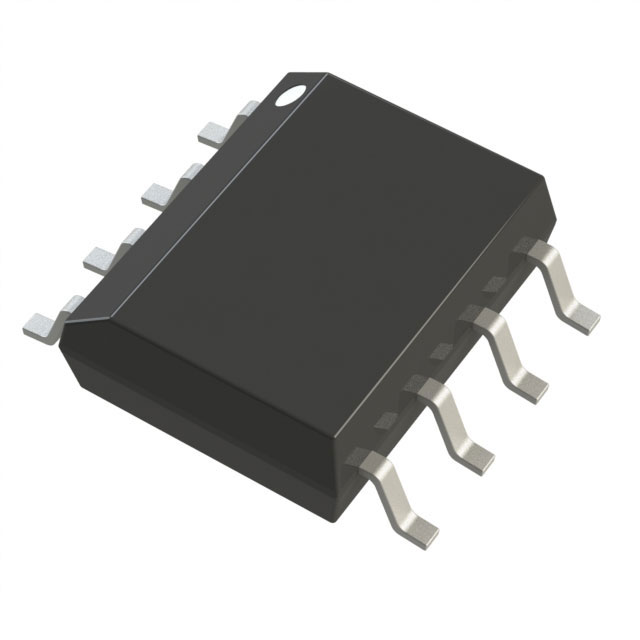
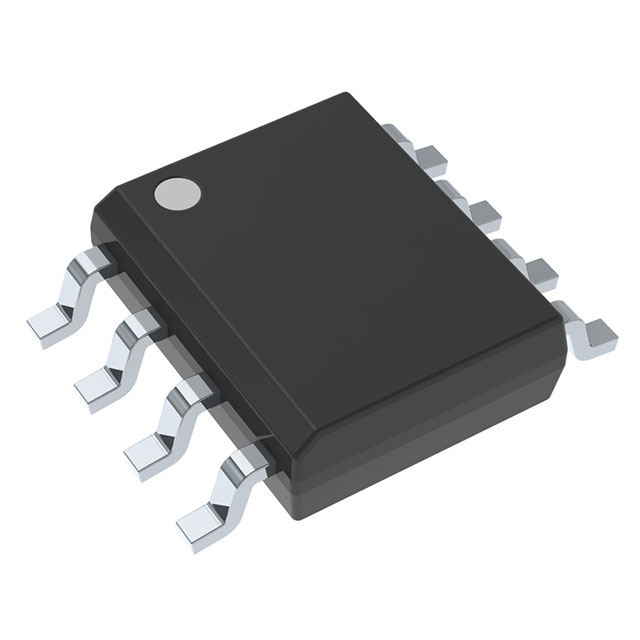
The OP295GS is a general-purpose operational amplifier manufactured by Analog Devices Inc., configured as a dual-channel (2 circuit) rail-to-rail amplifier in an 8-SOIC surface mount package. This device is classified as obsolete, indicating it has reached end-of-life status and is no longer in active production. Identification of equivalent and substitute parts is necessary to maintain design continuity, ensure supply chain availability, and support ongoing production requirements for applications utilizing this amplifier topology.
Substiute Parts
Key Parameters
| Parameter | OP295GS Value |
|---|---|
| Manufacturer | Analog Devices Inc. |
| Amplifier Type | General Purpose |
| Number of Circuits | 2 |
| Output Type | Rail-to-Rail |
| Package / Case | 8-SOIC (0.154", 3.90mm Width) |
| Slew Rate | 0.03 V/µs |
| Gain Bandwidth Product | 75 kHz |
| Current - Input Bias | 7 nA |
| Voltage - Input Offset | 300 µV |
| Current - Output / Channel | 25 mA |
| Voltage - Supply Span (Min) | 3 V |
| Voltage - Supply Span (Max) | 36 V |
| Operating Temperature | -40°C ~ 125°C |
| Mounting Type | Surface Mount |
| Moisture Sensitivity Level (MSL) | 1 (Unlimited) |
Substitute Part Grouping Explanation
Substitution of the OP295GS is determined by the following critical parameters:
Package Compatibility: The 8-SOIC package footprint (0.154", 3.90mm width) is the primary mechanical constraint. Direct substitutes must maintain identical or compatible pinout and physical dimensions to ensure PCB-level compatibility without redesign.
Electrical Performance Envelope: Substitute parts must operate within the defined supply voltage range (3 V to 36 V) and support the operating temperature range (-40°C to 125°C). The dual-channel configuration (2 circuits) and rail-to-rail output capability are functional requirements.
Amplifier Classification: General-purpose amplifiers are substitutable with other general-purpose topologies. Audio-specific amplifiers (such as OPA1662AIDRQ1) represent functional alternatives but introduce different performance characteristics and may require application-level validation.
Performance Characteristics: The OP295GS exhibits low slew rate (0.03 V/µs) and modest gain-bandwidth product (75 kHz), characteristic of micropower or low-speed applications. Substitute parts with significantly higher performance metrics (higher slew rate, higher bandwidth) are technically compatible but represent performance upgrades rather than direct equivalents.
Substitutes are grouped into two categories:
Direct Equivalents: Parts maintaining identical or near-identical electrical specifications and package format (OP295GSZ).
Functional Alternatives: Parts with compatible package, supply range, and dual-channel configuration but differing performance characteristics (OPA2172IDR, OPA2211AIDDAR, OPA2251UA, ADA4096-2ARMZ, OPA1662AIDRQ1, OPA2171AQDRQ1).
Parameter Comparison
| Parameter | OP295GS | OP295GSZ | OPA2172IDR | OPA2211AIDDAR | OPA2251UA | ADA4096-2ARMZ | OPA1662AIDRQ1 | OPA2171AQDRQ1 |
|---|---|---|---|---|---|---|---|---|
| Manufacturer | Analog Devices | Analog Devices | Texas Instruments | Texas Instruments | Texas Instruments | Analog Devices | Texas Instruments | Texas Instruments |
| Product Status | Obsolete | Active | Active | Active | Last Time Buy | Active | Active | Active |
| Amplifier Type | General Purpose | General Purpose | General Purpose | General Purpose | General Purpose | General Purpose | Audio | General Purpose |
| Number of Circuits | 2 | 2 | 2 | 2 | 2 | 2 | 2 | 2 |
| Output Type | Rail-to-Rail | Rail-to-Rail | Rail-to-Rail | Rail-to-Rail | Rail-to-Rail | Rail-to-Rail | Rail-to-Rail | Rail-to-Rail |
| Package / Case | 8-SOIC | 8-SOIC | 8-SOIC | 8-PowerSOIC | 8-SOIC | 8-MSOP | 8-SOIC | 8-SOIC |
| Slew Rate (V/µs) | 0.03 | 0.03 | 10 | 27 | 0.01 | 0.4 | 17 | 1.5 |
| Gain Bandwidth Product (kHz) | 75 | 75 | 10,000 | 80,000 | 35 | 786 | 22,000 | 3,000 |
| Current - Input Bias (nA) | 7 | 7 | 0.008 | 0.06 | 20 | 3 | 0.6 | 0.000008 |
| Voltage - Input Offset (µV) | 300 | 300 | 200 | 30 | 100 | 35 | 500 | 250 |
| Current - Output / Channel (mA) | 25 | 25 | 75 | 45 | 50 | 10 | 50 | 35 |
| Voltage - Supply Span (Min) | 3 V | 3 V | 4.5 V | 4.5 V | 2.7 V | 3 V | 3 V | 2.7 V |
| Voltage - Supply Span (Max) | 36 V | 36 V | 36 V | 36 V | 36 V | 30 V | 36 V | 36 V |
| Operating Temperature | -40°C ~ 125°C | -40°C ~ 125°C | -40°C ~ 125°C | -40°C ~ 125°C | -40°C ~ 85°C | -40°C ~ 125°C | -40°C ~ 85°C | -40°C ~ 125°C |
| RoHS Status | Not specified | ROHS3 Compliant | ROHS3 Compliant | ROHS3 Compliant | ROHS3 Compliant | ROHS3 Compliant | ROHS3 Compliant | ROHS3 Compliant |
| Moisture Sensitivity Level (MSL) | 1 (Unlimited) | 1 (Unlimited) | 2 (1 Year) | 1 (Unlimited) | 3 (168 Hours) | 1 (Unlimited) | 2 (1 Year) | 3 (168 Hours) |
Engineering Selection Recommendations
OP295GSZ is the primary direct substitute for OP295GS. Both parts are manufactured by Analog Devices Inc. and share identical electrical specifications and package format. OP295GSZ is currently in active production status with significantly higher inventory availability (22,088 units) compared to the obsolete OP295GS (2,069 units). OP295GSZ carries ROHS3 compliance and REACH unaffected status, meeting modern regulatory requirements. This part represents a direct replacement requiring no circuit redesign or performance validation.
OPA2172IDR and OPA2172ID (Texas Instruments) are functionally compatible general-purpose amplifiers in 8-SOIC packaging. Both maintain the dual-channel, rail-to-rail configuration and support the full -40°C to 125°C operating range. OPA2172IDR exhibits higher performance metrics (10 V/µs slew rate, 10 MHz bandwidth) compared to OP295GS, representing a performance upgrade suitable for applications requiring faster response characteristics. Minimum supply voltage requirement is 4.5 V (versus 3 V for OP295GS), which may impact low-voltage applications. ROHS3 compliance and active production status support long-term availability.
OPA2211AIDDAR (Texas Instruments) provides significantly enhanced performance with 27 V/µs slew rate and 80 MHz gain-bandwidth product. The 8-PowerSOIC package maintains mechanical compatibility with standard 8-SOIC footprints while providing improved thermal characteristics. This part is suitable for applications requiring higher bandwidth and faster settling time. Minimum supply voltage is 4.5 V. Active production status and ROHS3 compliance ensure regulatory compliance and supply continuity.
OPA2251UA (Texas Instruments) is a micropower general-purpose amplifier with extremely low slew rate (0.01 V/µs) and minimal gain-bandwidth product (35 kHz), closely matching the performance profile of OP295GS. This part is designated Last Time Buy status, indicating limited future availability. Operating temperature range is restricted to -40°C to 85°C, which excludes the upper 40°C of the OP295GS specification. MSL rating of 3 (168 hours) requires controlled moisture exposure during handling.
ADA4096-2ARMZ (Analog Devices Inc.) is a general-purpose amplifier in 8-MSOP package, representing a package format change from the standard 8-SOIC. The 8-MSOP package (0.118", 3.00mm width) is physically smaller and requires PCB redesign. Maximum supply voltage is limited to 30 V (versus 36 V for OP295GS). Higher slew rate (0.4 V/µs) and bandwidth (786 kHz) represent performance enhancements. Active production status and ROHS3 compliance support long-term viability.
OPA1662AIDRQ1 (Texas Instruments) is classified as an audio amplifier rather than general-purpose, introducing application-specific design considerations. The 8-SOIC package maintains mechanical compatibility. Performance characteristics include 17 V/µs slew rate and 22 MHz bandwidth, significantly exceeding OP295GS specifications. This part carries automotive qualification (AEC-Q100) and is suitable for audio and automotive applications. Operating temperature range is limited to -40°C to 85°C.
OPA2171AQDRQ1 (Texas Instruments) is a general-purpose amplifier with automotive qualification (AEC-Q100) in 8-SOIC packaging. The 1.5 V/µs slew rate and 3 MHz bandwidth represent moderate performance enhancement. Minimum supply voltage is 2.7 V, supporting lower-voltage applications. Operating temperature range extends to -40°C to 125°C, matching OP295GS specification. MSL rating of 3 (168 hours) requires controlled moisture handling.
Frequently Asked Questions (FAQ)
Q: Can OP295GSZ be used as a direct replacement for OP295GS without circuit modification?
A: Yes. OP295GSZ is electrically and mechanically identical to OP295GS. Both parts share the same pinout, package footprint (8-SOIC), electrical specifications, and operating characteristics. No circuit redesign is required. OP295GSZ is the recommended substitute due to active production status and regulatory compliance.
Q: What is the primary difference between OP295GS and OPA2172IDR?
A: Both are dual-channel, rail-to-rail general-purpose amplifiers in 8-SOIC packages. OPA2172IDR exhibits significantly higher performance: 10 V/µs slew rate (versus 0.03 V/µs), 10 MHz bandwidth (versus 75 kHz), and 75 mA output current per channel (versus 25 mA). OPA2172IDR requires minimum 4.5 V supply (OP295GS operates at 3 V minimum). OPA2172IDR is suitable for applications requiring faster response and higher output drive capability.
Q: Why is ADA4096-2ARMZ listed as a substitute if the package is different?
A: ADA4096-2ARMZ uses 8-MSOP packaging instead of 8-SOIC. While both are 8-pin surface mount packages, the physical dimensions and pinout differ, requiring PCB redesign. ADA4096-2ARMZ is included as a functional alternative for applications where package redesign is acceptable. The part maintains dual-channel, rail-to-rail operation and general-purpose amplifier classification.
Q: What does "Last Time Buy" status mean for OPA2251UA?
A: Last Time Buy indicates the manufacturer has announced end-of-life for this part. Production will cease after a specified date, and no new orders will be accepted beyond that point. Existing inventory may be available for a limited period. OPA2251UA should not be selected for new designs requiring long-term supply continuity.
Q: Can OPA1662AIDRQ1 replace OP295GS in all applications?
A: OPA1662AIDRQ1 is classified as an audio amplifier, not a general-purpose amplifier. While it maintains 8-SOIC packaging and dual-channel configuration, it is optimized for audio signal processing. The significantly higher performance (17 V/µs slew rate, 22 MHz bandwidth) may introduce noise or stability issues in low-frequency, low-bandwidth applications designed for OP295GS. Operating temperature range is limited to -40°C to 85°C, excluding the upper 40°C of OP295GS specification. Application-level validation is required.
Q: What is the significance of MSL (Moisture Sensitivity Level) ratings?
A: MSL ratings indicate the maximum time a component can be exposed to ambient moisture before soldering. OP295GS and OP295GSZ have MSL 1 (unlimited exposure). OPA2172IDR has MSL 2 (1 year), requiring storage in dry conditions. OPA2251UA and OPA2171AQDRQ1 have MSL 3 (168 hours), requiring controlled humidity storage and rapid soldering after package opening. Higher MSL ratings impose stricter handling and storage requirements.
Q: Is ROHS3 compliance required for OP295GS substitutes?
A: ROHS3 compliance is a regulatory requirement in many markets. All listed substitutes except OP295GS (status not specified) carry ROHS3 compliance certification. For applications subject to ROHS3 regulations, substitutes must maintain this compliance status. OP295GSZ explicitly carries ROHS3 certification, confirming regulatory alignment.
Q: What is the difference between 8-SOIC and 8-PowerSOIC packages?
A: Both are 8-pin surface mount packages with identical pinout and 0.154" (3.90mm) width. The PowerSOIC variant includes an additional thermal pad on the package underside for improved heat dissipation. OPA2211AIDDAR (8-PowerSOIC) provides better thermal performance than standard 8-SOIC packages, beneficial for applications with elevated power dissipation. PCB layout must accommodate the thermal pad for optimal performance.
Q: Can OP295GS operate at 2.7 V supply voltage?
A: No. OP295GS minimum supply voltage is 3 V. OPA2251UA and OPA2171AQDRQ1 support 2.7 V minimum supply, enabling operation in lower-voltage applications. If 2.7 V operation is required, these alternatives must be selected. Verify that other electrical specifications (slew rate, bandwidth, output current) meet application requirements.
Q: What is the impact of higher slew rate in substitute parts?
A: Slew rate determines the maximum rate of output voltage change. OP295GS has 0.03 V/µs slew rate, limiting response speed to low-frequency signals. Substitutes with higher slew rates (OPA2172IDR at 10 V/µs, OPA2211AIDDAR at 27 V/µs) enable faster signal processing and higher bandwidth operation. In applications designed for low-frequency operation, higher slew rate substitutes may introduce noise or instability if circuit compensation is not adjusted. Application-level validation is required when upgrading to higher-performance parts.
Alternative Parts

SJ6012L2TP
Littelfuse Inc.
6 Alternative Parts

JMK107BBJ476MA-RE
Taiyo Yuden
10 Alternative Parts

GMK107BBJ475MA-T
Taiyo Yuden
5 Alternative Parts
SJ6020N2ARP
Littelfuse Inc.
3 Alternative Parts
SJ6025R2ATP
Littelfuse Inc.
4 Alternative Parts

2474-05L
API Delevan Inc.
1 Alternative Parts

4590R-684K
API Delevan Inc.
1 Alternative Parts

CM6560R-334
API Delevan Inc.
1 Alternative Parts

CM6460-104
API Delevan Inc.
1 Alternative Parts

5526-12
API Delevan Inc.
1 Alternative Parts