


Request Quote
(Ships tomorrow)
OP291B Infrared Emitter - Equivalent & Substitute Parts
Part Overview
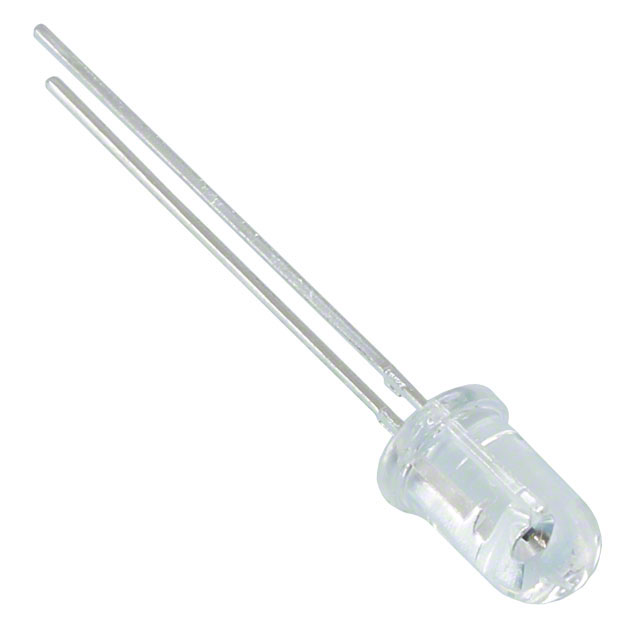
The OP291B is an infrared (IR) emitter manufactured by TT Electronics/Optek Technology, designed for applications requiring 890nm wavelength emission at 150mA forward current. This component features a T 1 3/4 through-hole package with a 50° viewing angle and operates across the -40°C to 100°C temperature range.
The OP291B is classified as obsolete. Locating equivalent or substitute parts is necessary for ongoing production support, design updates, or inventory replenishment where original stock is unavailable or depleted.
Substiute Parts
Key Parameters
| Parameter | Value |
|---|---|
| Manufacturer Part Number | OP291B |
| Manufacturer | TT Electronics/Optek Technology |
| Type | Infrared (IR) Emitter |
| Wavelength | 890nm |
| Current - DC Forward (If) (Max) | 150mA |
| Voltage - Forward (Vf) (Typ) | 2V |
| Viewing Angle | 50° |
| Operating Temperature | -40°C ~ 100°C (TA) |
| Mounting Type | Through Hole |
| Package / Case | T 1 3/4 |
| Product Status | Obsolete |
| RoHS Status | ROHS3 Compliant |
Substitute Part Grouping Explanation
Substitution eligibility for the OP291B is determined by the following critical parameters:
- Wavelength: 890nm (primary functional requirement)
- Current - DC Forward (If) (Max): 150mA (electrical rating)
- Voltage - Forward (Vf) (Typ): 2V (electrical rating)
- Viewing Angle: 50° (optical characteristic)
- Mounting Type: Through Hole (mechanical compatibility)
- Package / Case: T 1 3/4 (physical form factor)
- Operating Temperature Range: -40°C ~ 100°C (environmental specification)
The substitute parts identified (OP291A, IR333/H0, LTE-3271B) represent alternatives with varying degrees of parameter alignment. Substitution feasibility depends on application-specific tolerance for deviations in wavelength, current rating, voltage, viewing angle, package form factor, and temperature range.
Parameter Comparison
| Parameter | OP291B (Main) | OP291A | IR333/H0 | LTE-3271B |
|---|---|---|---|---|
| Manufacturer | TT Electronics/Optek Technology | TT Electronics/Optek Technology | Everlight Electronics Co Ltd | Lite-On Inc. |
| Type | Infrared (IR) Emitter | Infrared (IR) Emitter | Infrared (IR) Emitter | Infrared (IR) Emitter |
| Wavelength | 890nm | 890nm | 940nm | 940nm |
| Current - DC Forward (If) (Max) | 150mA | 150mA | 100mA | 100mA |
| Voltage - Forward (Vf) (Typ) | 2V | 2V | 1.2V, 1.4V | 1.25V |
| Viewing Angle | 50° | 50° | 40° | 50° |
| Mounting Type | Through Hole | Through Hole | Through Hole | Through Hole |
| Package / Case | T 1 3/4 | T 1 3/4 | Radial | Radial |
| Operating Temperature | -40°C ~ 100°C (TA) | -40°C ~ 100°C (TA) | -40°C ~ 85°C | -40°C ~ 85°C (TA) |
| Product Status | Obsolete | Active | Active | Active |
| RoHS Status | ROHS3 Compliant | ROHS3 Compliant | Not specified | ROHS3 Compliant |
Engineering Selection Recommendations
OP291A (TT Electronics/Optek Technology) is the primary substitute candidate. It maintains identical electrical specifications (890nm wavelength, 150mA forward current, 2V forward voltage), identical viewing angle (50°), identical package form factor (T 1 3/4), and identical operating temperature range (-40°C ~ 100°C). The OP291A is active in production status and ROHS3 compliant, providing continuity with the obsolete OP291B.
IR333/H0 (Everlight Electronics Co Ltd) and LTE-3271B (Lite-On Inc.) represent alternative IR emitters with significant parameter deviations. Both operate at 940nm wavelength (50nm shift from 890nm), reduced maximum forward current (100mA versus 150mA), lower forward voltage (1.2V-1.4V and 1.25V respectively versus 2V), and narrower or equivalent viewing angles. Both feature radial package form factors rather than T 1 3/4, and both support reduced operating temperature ranges (-40°C ~ 85°C versus -40°C ~ 100°C). These parts are suitable only for applications where wavelength tolerance, current derating, voltage compatibility, and package form factor changes are acceptable.
Frequently Asked Questions (FAQ)
Q: Can OP291A directly replace OP291B without circuit modification?
A: Yes. The OP291A maintains identical electrical and optical specifications to the OP291B across all critical parameters: 890nm wavelength, 150mA maximum forward current, 2V typical forward voltage, 50° viewing angle, T 1 3/4 package, and -40°C to 100°C operating temperature range. No circuit modification is required.
Q: What are the key differences between OP291B and IR333/H0?
A: IR333/H0 differs in wavelength (940nm versus 890nm), maximum forward current (100mA versus 150mA), forward voltage (1.2V-1.4V versus 2V), package form factor (radial versus T 1 3/4), and operating temperature range (-40°C ~ 85°C versus -40°C ~ 100°C). Substitution requires application-level assessment of wavelength tolerance and current derating capability.
Q: What are the key differences between OP291B and LTE-3271B?
A: LTE-3271B differs in wavelength (940nm versus 890nm), maximum forward current (100mA versus 150mA), forward voltage (1.25V versus 2V), package form factor (radial versus T 1 3/4), and operating temperature range (-40°C ~ 85°C versus -40°C ~ 100°C). Substitution requires application-level assessment of wavelength tolerance, current derating capability, and mechanical compatibility with radial packaging.
Q: Are all substitute parts ROHS3 compliant?
A: OP291A and LTE-3271B are ROHS3 compliant. IR333/H0 compliance status is not specified in available documentation.
Q: What is the impact of package form factor differences?
A: OP291B and OP291A use T 1 3/4 through-hole packages. IR333/H0 and LTE-3271B use radial through-hole packages. Radial packages have different lead configurations and mechanical footprints. PCB layout and mechanical mounting compatibility must be verified before substitution.
Q: Can I use a 940nm emitter in place of an 890nm emitter?
A: Wavelength substitution depends on application requirements. 890nm and 940nm are distinct wavelengths with different absorption characteristics in target materials and different receiver sensor sensitivities. Substitution is valid only if the application design accommodates 940nm wavelength operation.
Alternative Parts

SJ6012L2TP
Littelfuse Inc.
6 Alternative Parts

JMK107BBJ476MA-RE
Taiyo Yuden
10 Alternative Parts

GMK107BBJ475MA-T
Taiyo Yuden
5 Alternative Parts
SJ6020N2ARP
Littelfuse Inc.
3 Alternative Parts
SJ6025R2ATP
Littelfuse Inc.
4 Alternative Parts

2474-05L
API Delevan Inc.
1 Alternative Parts

4590R-684K
API Delevan Inc.
1 Alternative Parts

CM6560R-334
API Delevan Inc.
1 Alternative Parts

CM6460-104
API Delevan Inc.
1 Alternative Parts

5526-12
API Delevan Inc.
1 Alternative Parts