


Request Quote
(Ships tomorrow)
OP279GS Equivalent & Substitute Parts
Part Overview
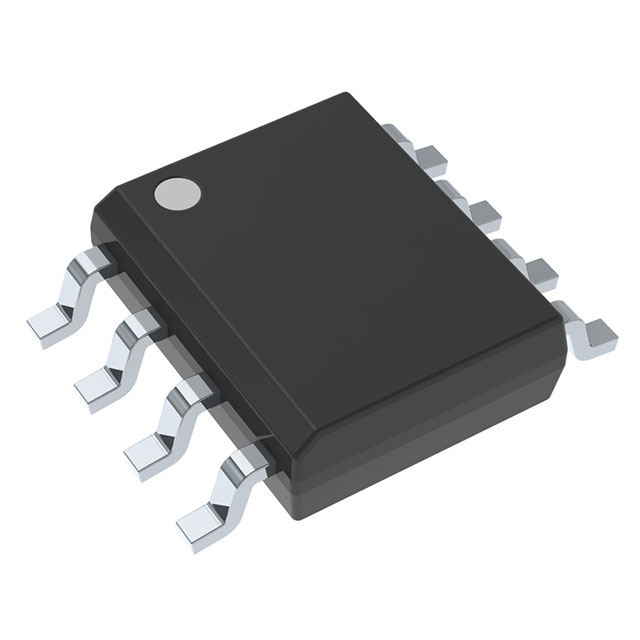
The OP279GS is a buffer amplifier integrated circuit manufactured by Analog Devices Inc., designed for rail-to-rail signal conditioning applications. This device contains two independent buffer circuits in an 8-SOIC surface mount package and operates across a 4.5V to 12V supply range with an operating temperature span of -40°C to 85°C. The OP279GS is classified as obsolete, making identification of functionally equivalent alternatives necessary for ongoing design support and production continuity. Substitute parts must maintain compatibility with the dual-circuit buffer architecture, rail-to-rail output capability, and specified electrical performance parameters.
Substiute Parts
Key Parameters
| Parameter | OP279GS Value | Unit |
|---|---|---|
| Amplifier Type | Buffer | — |
| Number of Circuits | 2 | — |
| Output Type | Rail-to-Rail | — |
| Slew Rate | 3 | V/µs |
| Gain Bandwidth Product | 5 | MHz |
| Current - Input Bias | 300 | nA |
| Voltage - Input Offset | 4 | mV |
| Current - Output / Channel | 50 | mA |
| Voltage - Supply Span (Min) | 4.5 | V |
| Voltage - Supply Span (Max) | 12 | V |
| Operating Temperature | -40 to 85 | °C |
| Package / Case | 8-SOIC (0.154", 3.90mm Width) | — |
| Mounting Type | Surface Mount | — |
| Product Status | Obsolete | — |
Substitute Part Grouping Explanation
Substitution of the OP279GS is determined by the following critical parameters: dual-circuit configuration, rail-to-rail output capability, 8-SOIC package format, surface mount technology, and electrical performance within specified tolerances. The substitute parts are grouped into two categories based on functional alignment:
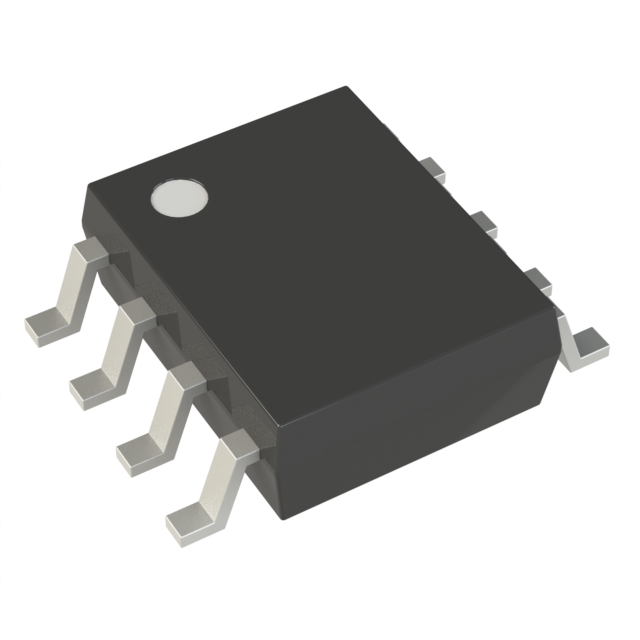
Direct Packaging Equivalent: OP279GSZ maintains identical electrical specifications and buffer amplifier architecture with active product status and improved packaging (Tube format).
Functional Equivalents with Performance Trade-offs: Parts including OPA2743UA/2K5, TS922IDT, ALD2732SAL, ALD2732ASAL, and LM224D provide dual-circuit amplification in 8-SOIC packages with rail-to-rail or compatible output characteristics. These parts differ in amplifier type classification (general purpose or CMOS), slew rate, gain bandwidth product, and supply voltage ranges. LM224D operates in a 14-SO package with four circuits, requiring design layout modification.
Substitution logic prioritizes: (1) matching package format and circuit count, (2) maintaining or exceeding output current capability, (3) ensuring supply voltage compatibility, and (4) confirming operating temperature range adequacy for the application.
Parameter Comparison
| Parameter | OP279GS | OP279GSZ | OPA2743UA/2K5 | TS922IDT | ALD2732SAL | LM224D |
|---|---|---|---|---|---|---|
| Amplifier Type | Buffer | Buffer | CMOS | General Purpose | General Purpose | General Purpose |
| Number of Circuits | 2 | 2 | 2 | 2 | 2 | 4 |
| Output Type | Rail-to-Rail | Rail-to-Rail | Rail-to-Rail | Rail-to-Rail | Rail-to-Rail | — |
| Slew Rate (V/µs) | 3 | 3 | 10 | 1.3 | 1.9 | 0.4 |
| Gain Bandwidth Product (MHz) | 5 | 5 | 7 | 4 | 1.5 | 1.2 |
| Current - Input Bias (nA) | 300 | 300 | 0.001 | 15 | 0.01 | 20 |
| Voltage - Input Offset (mV) | 4 | 4 | 1.5 | 3 | 2 | 2 |
| Current - Output / Channel (mA) | 50 | 50 | 20 | 80 | — | 40 |
| Voltage - Supply Span Min (V) | 4.5 | 4.5 | 3.5 | 2.7 | 4 | 3 |
| Voltage - Supply Span Max (V) | 12 | 12 | 12 | 12 | 10 | 30 |
| Operating Temperature (°C) | -40 to 85 | -40 to 85 | -40 to 85 | -40 to 125 | 0 to 70 | -40 to 105 |
| Package / Case | 8-SOIC | 8-SOIC | 8-SOIC | 8-SOIC | 8-SOIC | 14-SOIC |
| Product Status | Obsolete | Active | Active | Active | Active | Active |
| RoHS Status | — | ROHS3 Compliant | ROHS3 Compliant | ROHS3 Compliant | ROHS3 Compliant | ROHS3 Compliant |
Engineering Selection Recommendations
OP279GSZ is the primary direct substitute. This part maintains identical electrical specifications and buffer amplifier classification while offering active product status and ROHS3 compliance. The Tube packaging format provides equivalent functionality to the original OP279GS. This selection eliminates design modification and ensures pin-for-pin compatibility.
OPA2743UA/2K5 serves as a high-performance alternative for applications requiring enhanced slew rate (10V/µs versus 3V/µs) and gain bandwidth product (7MHz versus 5MHz). This CMOS amplifier operates within the same temperature range and supply voltage window as the OP279GS. The lower input bias current (1pA) and reduced input offset voltage (1.5mV) provide improved precision. Output current per channel is reduced to 20mA, requiring verification against load requirements. ROHS3 compliance and active product status support long-term availability.
TS922IDT provides a general-purpose amplifier alternative with higher output current capability (80mA per channel) and extended operating temperature range (-40°C to 125°C). Supply voltage compatibility spans 2.7V to 12V, accommodating lower supply applications. Slew rate (1.3V/µs) and gain bandwidth product (4MHz) are lower than the OP279GS, suitable for lower-frequency signal conditioning. AEC-Q100 automotive qualification and ROHS3 compliance are provided.
ALD2732SAL and ALD2732ASAL are general-purpose amplifier alternatives from Advanced Linear Devices Inc. Both maintain dual-circuit configuration and 8-SOIC packaging. Supply voltage range is restricted to 4V to 10V, limiting compatibility with 12V supply applications. Operating temperature range is limited to 0°C to 70°C, unsuitable for extended temperature environments. Lower slew rate (1.9V/µs) and gain bandwidth product (1.5MHz) restrict high-frequency applications.
LM224D is a four-circuit general-purpose amplifier in 14-SO package. Circuit count mismatch (4 versus 2) and package format change require PCB layout redesign. Lower slew rate (0.4V/µs) and gain bandwidth product (1.2MHz) are significantly reduced. Extended supply voltage range (3V to 30V) and operating temperature range (-40°C to 105°C) provide flexibility for diverse applications. ROHS3 compliance is confirmed.
Frequently Asked Questions (FAQ)
Q: Can OP279GSZ be used as a direct replacement for OP279GS?
A: Yes. OP279GSZ maintains identical electrical specifications, dual-circuit buffer architecture, 8-SOIC package format, and operating temperature range. The primary difference is packaging format (Tube versus original specification) and active product status. No design modification is required.
Q: What are the key differences between buffer and general-purpose amplifier classifications?
A: Buffer amplifiers are optimized for impedance transformation and signal isolation with unity-gain stable operation. General-purpose amplifiers provide configurable gain and are suitable for broader signal conditioning applications. Substituting a general-purpose amplifier for a buffer application requires verification of stability and frequency response characteristics in the intended circuit configuration.
Q: Why does LM224D have four circuits instead of two?
A: LM224D is a quad-channel general-purpose amplifier designed for applications requiring multiple independent amplification stages. The OP279GS contains two buffer circuits. Using LM224D requires PCB layout modification to accommodate the 14-SO package and selective utilization of available circuits. Unused circuits must be properly biased or disabled per manufacturer guidelines.
Q: Is the ALD2732SAL suitable for 12V supply applications?
A: No. ALD2732SAL maximum supply voltage is 10V, limiting compatibility with 12V supply systems. Applications requiring 12V operation must select alternatives such as OP279GSZ, OPA2743UA/2K5, or TS922IDT.
Q: What is the significance of the operating temperature range difference between OP279GS and ALD2732SAL?
A: OP279GS operates from -40°C to 85°C, while ALD2732SAL operates from 0°C to 70°C. Applications requiring operation below 0°C or above 70°C cannot use ALD2732SAL. Temperature range compatibility must be verified against application requirements before substitution.
Q: Does OPA2743UA/2K5 provide sufficient output current for 50mA loads?
A: No. OPA2743UA/2K5 provides 20mA per channel output current, compared to 50mA for OP279GS. Applications requiring 50mA output current must select alternatives such as TS922IDT (80mA) or verify that load current requirements do not exceed 20mA per channel.
Q: Are all substitute parts ROHS3 compliant?
A: Yes. All active substitute parts listed (OP279GSZ, OPA2743UA/2K5, TS922IDT, ALD2732SAL, ALD2732ASAL, and LM224D) are ROHS3 compliant, supporting environmental and regulatory requirements for modern electronics manufacturing.
Q: What is the impact of slew rate differences on circuit performance?
A: Slew rate determines the maximum rate of output voltage change. OP279GS provides 3V/µs. OPA2743UA/2K5 offers 10V/µs (higher speed), while TS922IDT provides 1.3V/µs (lower speed). Applications with fast transient signals require higher slew rates. Lower slew rates may introduce signal distortion in high-frequency applications. Verification against signal bandwidth requirements is necessary.
Q: Can TS922IDT be used in automotive applications?
A: Yes. TS922IDT carries AEC-Q100 automotive qualification, supporting use in automotive-grade applications. This qualification is not present in other substitute options.
Alternative Parts

SJ6012L2TP
Littelfuse Inc.
6 Alternative Parts

JMK107BBJ476MA-RE
Taiyo Yuden
10 Alternative Parts

GMK107BBJ475MA-T
Taiyo Yuden
5 Alternative Parts
SJ6020N2ARP
Littelfuse Inc.
3 Alternative Parts
SJ6025R2ATP
Littelfuse Inc.
4 Alternative Parts

2474-05L
API Delevan Inc.
1 Alternative Parts

4590R-684K
API Delevan Inc.
1 Alternative Parts

CM6560R-334
API Delevan Inc.
1 Alternative Parts

CM6460-104
API Delevan Inc.
1 Alternative Parts

5526-12
API Delevan Inc.
1 Alternative Parts