


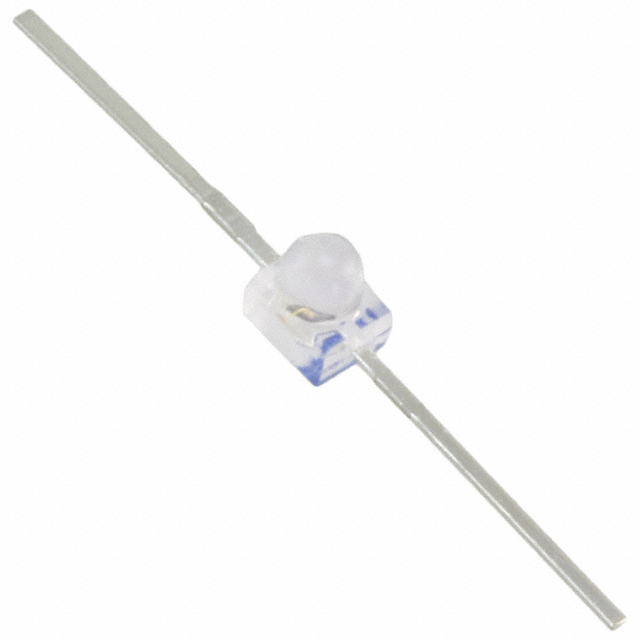
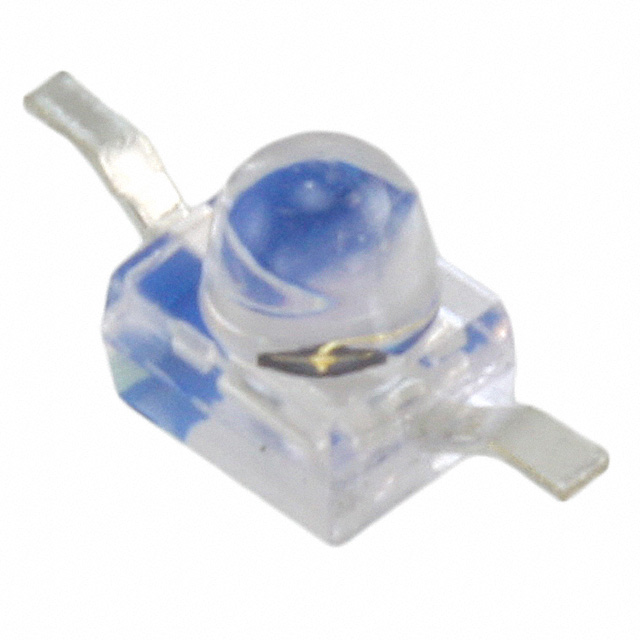
Request Quote
(Ships tomorrow)
OP272 Infrared Emitter 890nm Equivalent & Substitute Parts
Part Overview
The OP272 is an infrared (IR) emitter manufactured by TT Electronics/Optek Technology, designed for 890nm wavelength applications requiring 50mA forward current at 1.5V. This component is classified as obsolete, necessitating identification of active substitute parts that maintain functional compatibility within the allowed electrical and mechanical parameters of the application.
Substiute Parts
Key Parameters
| Parameter | OP272 Specification |
|---|---|
| Manufacturer Part Number | OP272 |
| Manufacturer | TT Electronics/Optek Technology |
| Type | Infrared (IR) Emitter |
| Wavelength | 890nm |
| Current - DC Forward (If) Max | 50mA |
| Voltage - Forward (Vf) Typical | 1.5V |
| Viewing Angle | 25° |
| Operating Temperature Range | -40°C to 85°C |
| Mounting Type | Surface Mount |
| Package / Case | 2-SMD, Yoke Bend |
| Product Status | Obsolete |
| RoHS Status | ROHS3 Compliant |
Substitute Part Grouping Explanation
Substitute parts for the OP272 are selected based on the following allowed parameters:
- Current Rating: Maximum DC forward current of 50mA (all substitutes maintain this specification)
- Mounting Type: Surface mount technology compatibility
- Wavelength Range: 875nm to 940nm (near-infrared spectrum suitable for IR applications)
- Voltage Forward: 1.5V to 1.7V (acceptable operating voltage range)
- Viewing Angle: 24° to 25° (comparable optical characteristics)
- Operating Temperature: Minimum -40°C to 85°C support
- Compliance: ROHS3 compliance and active product status
The substitute parts are grouped into two categories based on package configuration: Surface Mount Device (SMD) variants with different lead bends (Gull Wing and Z-Bend) and one Through Hole axial configuration.
Parameter Comparison
| Parameter | OP272 | QEB363GR | QEB363ZR | QEB373 | QEB373ZR |
|---|---|---|---|---|---|
| Manufacturer | TT Electronics/Optek | onsemi | onsemi | onsemi | onsemi |
| Wavelength | 890nm | 940nm | 940nm | 875nm | 875nm |
| Current - DC Forward (If) Max | 50mA | 50mA | 50mA | 50mA | 50mA |
| Voltage - Forward (Vf) Typical | 1.5V | 1.6V | 1.6V | 1.7V | 1.7V |
| Viewing Angle | 25° | 24° | 24° | 24° | 24° |
| Operating Temperature Range | -40°C to 85°C | -40°C to 100°C | -40°C to 100°C | -40°C to 100°C | -40°C to 100°C |
| Mounting Type | Surface Mount | Surface Mount | Surface Mount | Through Hole | Surface Mount |
| Package / Case | 2-SMD, Yoke Bend | 2-SMD, Gull Wing | 2-SMD, Z-Bend | Axial | 2-SMD, Z-Bend |
| Product Status | Obsolete | Active | Active | Active | Active |
| RoHS Status | ROHS3 Compliant | ROHS3 Compliant | ROHS3 Compliant | ROHS3 Compliant | ROHS3 Compliant |
Engineering Selection Recommendations
QEB363GR and QEB363ZR (940nm SMD Variants)
These onsemi parts operate at 940nm wavelength with identical 50mA current ratings and comparable 1.6V forward voltage. Both maintain ROHS3 compliance and active product status. QEB363GR features a Gull Wing lead configuration, while QEB363ZR uses Z-Bend leads. Selection between these variants depends on PCB layout requirements and soldering process compatibility. Both support the extended -40°C to 100°C operating temperature range.
QEB373ZR (875nm SMD)
This onsemi part operates at 875nm with 50mA current rating and 1.7V forward voltage. It maintains ROHS3 compliance and active product status with SMD Z-Bend package configuration. The extended operating temperature range to 100°C provides additional thermal margin compared to the OP272.
QEB373 (875nm Through Hole)
This onsemi part operates at 875nm in an axial through-hole configuration. While it maintains electrical compatibility (50mA, 1.7V), the through-hole mounting type differs from the OP272 surface mount design. This variant is suitable only for applications where through-hole mounting is acceptable or preferred.
All substitute parts are manufactured by onsemi, carry active product status, and maintain ROHS3 compliance, ensuring long-term availability and regulatory alignment.
Frequently Asked Questions (FAQ)
Q: Can QEB363GR or QEB363ZR directly replace OP272 in existing designs?
A: Both QEB363GR and QEB363ZR maintain the same 50mA current rating, comparable viewing angle (24° vs. 25°), and surface mount configuration as the OP272. The primary differences are wavelength (940nm vs. 890nm) and forward voltage (1.6V vs. 1.5V). Direct substitution is possible if the application tolerates the wavelength shift and slightly higher forward voltage. PCB layout compatibility depends on the specific lead bend configuration (Gull Wing vs. Yoke Bend).
Q: What is the wavelength difference between OP272 (890nm) and the substitute parts?
A: The substitute parts operate at 875nm (QEB373 and QEB373ZR) or 940nm (QEB363GR and QEB363ZR). These wavelengths fall within the near-infrared spectrum. The 890nm OP272 sits between these options. Wavelength selection depends on the specific application requirements, such as sensor compatibility or optical filtering characteristics.
Q: Are there package configuration differences I should consider?
A: Yes. The OP272 uses a 2-SMD Yoke Bend configuration. QEB363GR uses Gull Wing leads, QEB363ZR uses Z-Bend leads, and QEB373ZR uses Z-Bend leads. QEB373 is a through-hole axial component. Lead configuration affects PCB footprint design and soldering process parameters. Verify PCB layout compatibility before selection.
Q: What is the forward voltage difference, and does it affect circuit design?
A: The OP272 operates at 1.5V typical forward voltage, while QEB363 variants operate at 1.6V and QEB373 variants at 1.7V. This 0.1V to 0.2V difference may require adjustment to current-limiting resistor values in series drive circuits to maintain the desired 50mA forward current. Recalculate resistor values based on the selected substitute part's forward voltage specification.
Q: Do all substitute parts support the same operating temperature range?
A: No. The OP272 supports -40°C to 85°C, while all onsemi substitutes support -40°C to 100°C. The extended upper temperature limit of the substitute parts provides additional thermal margin for high-temperature applications.
Q: Are all substitute parts ROHS3 compliant?
A: Yes. All listed substitute parts (QEB363GR, QEB363ZR, QEB373, and QEB373ZR) are ROHS3 compliant, matching the OP272 compliance status.
Alternative Parts

SJ6012L2TP
Littelfuse Inc.
6 Alternative Parts

JMK107BBJ476MA-RE
Taiyo Yuden
10 Alternative Parts

GMK107BBJ475MA-T
Taiyo Yuden
5 Alternative Parts
SJ6020N2ARP
Littelfuse Inc.
3 Alternative Parts
SJ6025R2ATP
Littelfuse Inc.
4 Alternative Parts

2474-05L
API Delevan Inc.
1 Alternative Parts

4590R-684K
API Delevan Inc.
1 Alternative Parts

CM6560R-334
API Delevan Inc.
1 Alternative Parts

CM6460-104
API Delevan Inc.
1 Alternative Parts

5526-12
API Delevan Inc.
1 Alternative Parts