


Request Quote
(Ships tomorrow)
NM93CS56M8 EEPROM Memory IC Equivalent & Substitute Parts
Part Overview
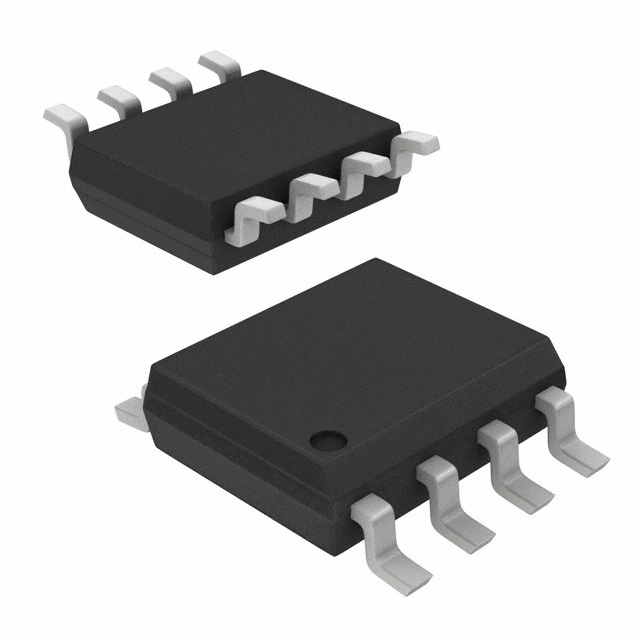
The NM93CS56M8 is a 2Kbit non-volatile EEPROM memory IC manufactured by onsemi, featuring Microwire serial interface protocol and 1 MHz clock frequency. This device is packaged in 8-SOIC surface mount configuration with 128 x 16 memory organization. The part is currently classified as obsolete, making equivalent substitute components necessary for ongoing system support and new design implementations. The primary challenge in substitution involves interface protocol compatibility, as the original Microwire interface differs from modern SPI-based alternatives.
Substiute Parts
Key Parameters
| Parameter | Value |
|---|---|
| Memory Size | 2Kbit |
| Memory Organization | 128 x 16 |
| Memory Interface | Microwire |
| Clock Frequency | 1 MHz |
| Supply Voltage Range | 4.5V ~ 5.5V |
| Write Cycle Time | 10ms |
| Operating Temperature | 0°C ~ 70°C |
| Package / Case | 8-SOIC (0.154", 3.90mm Width) |
| Product Status | Obsolete |
| RoHS Status | RoHS non-compliant |
Substitute Part Grouping Explanation
Substitution for the NM93CS56M8 is determined by the following critical parameters:
Mandatory Compatibility Parameters:
- Memory Size: 2Kbit (exact match required)
- Memory Organization: 128 x 16 (exact match required)
- Package / Case: 8-SOIC surface mount (exact match required)
- Mounting Type: Surface Mount (exact match required)
Interface Protocol Consideration: The NM93CS56M8 uses Microwire serial interface. Substitute parts identified use SPI (Serial Peripheral Interface) protocol. While both are serial communication protocols, they differ in signal timing and control sequences. Substitution requires interface protocol conversion at the system level or firmware adaptation.
Electrical Parameter Ranges: Substitute parts operate within broader voltage ranges (2.5V ~ 5.5V versus 4.5V ~ 5.5V) and extended temperature ranges (-40°C ~ 85°C versus 0°C ~ 70°C), providing enhanced operational flexibility. Write cycle times are improved (5ms versus 10ms).
Compliance Status: Substitute parts are RoHS3 compliant and active products, addressing obsolescence and regulatory requirements of the original part.
Parameter Comparison
| Parameter | NM93CS56M8 | M93S56-WMN6P | M93S56-WMN6TP |
|---|---|---|---|
| Manufacturer | onsemi | STMicroelectronics | STMicroelectronics |
| Memory Size | 2Kbit | 2Kbit | 2Kbit |
| Memory Organization | 128 x 16 | 128 x 16 | 128 x 16 |
| Memory Interface | Microwire | SPI | SPI |
| Clock Frequency | 1 MHz | 2 MHz | 2 MHz |
| Supply Voltage Range | 4.5V ~ 5.5V | 2.5V ~ 5.5V | 2.5V ~ 5.5V |
| Write Cycle Time | 10ms | 5ms | 5ms |
| Operating Temperature | 0°C ~ 70°C | -40°C ~ 85°C | -40°C ~ 85°C |
| Package / Case | 8-SOIC | 8-SOIC | 8-SOIC |
| Product Status | Obsolete | Active | Active |
| RoHS Status | RoHS non-compliant | ROHS3 Compliant | ROHS3 Compliant |
| Packaging Option | - | Tube | Cut Tape (CT) & Digi-Reel® |
Engineering Selection Recommendations
For Direct Replacement Scenarios: M93S56-WMN6P and M93S56-WMN6TP are functionally equivalent 2Kbit EEPROM devices in 8-SOIC packaging. Both parts are manufactured by STMicroelectronics and maintain active product status with ROHS3 compliance. Selection between these two variants depends on packaging requirements: M93S56-WMN6P is supplied in Tube packaging, while M93S56-WMN6TP is available in Cut Tape and Digi-Reel formats.
Interface Protocol Adaptation: The transition from Microwire to SPI interface requires firmware or hardware interface layer modification. Both substitute parts operate at 2 MHz clock frequency, providing improved performance over the original 1 MHz specification. The extended voltage range (2.5V ~ 5.5V) and temperature range (-40°C ~ 85°C) of substitute parts exceed the original specifications.
Compliance and Availability: The NM93CS56M8 obsolete status and RoHS non-compliance status are resolved through substitution with active, RoHS3-compliant alternatives. Inventory availability for substitute parts is significantly higher (20,200 and 56,680 units respectively) compared to the original part (933 units).
Frequently Asked Questions (FAQ)
Q: Can M93S56-WMN6P or M93S56-WMN6TP be used as direct pin-for-pin replacements? A: Both substitute parts share identical 8-SOIC packaging and pinout compatibility. However, the interface protocol differs: the original NM93CS56M8 uses Microwire protocol while substitutes use SPI protocol. Pin-for-pin physical replacement is possible, but firmware or interface circuitry must be adapted to accommodate the protocol difference.
Q: What are the key differences between M93S56-WMN6P and M93S56-WMN6TP? A: Both parts are electrically and functionally identical. The difference is packaging format: M93S56-WMN6P is supplied in Tube packaging, while M93S56-WMN6TP is supplied in Cut Tape and Digi-Reel formats. Selection depends on assembly line requirements and inventory management preferences.
Q: Are the substitute parts compatible with the original operating voltage range? A: The original NM93CS56M8 operates at 4.5V ~ 5.5V. Substitute parts operate at 2.5V ~ 5.5V, which encompasses the original range. Systems designed for the original voltage specification will operate correctly with substitute parts.
Q: What is the impact of the extended temperature range on system design? A: Substitute parts operate from -40°C ~ 85°C compared to the original 0°C ~ 70°C range. This extended range provides greater flexibility for applications requiring operation in wider environmental conditions. Existing designs operating within 0°C ~ 70°C will function without modification.
Q: How does the improved write cycle time affect system performance? A: Substitute parts feature 5ms write cycle time compared to the original 10ms specification. This represents a 50% improvement in write performance. Existing firmware designed for 10ms write cycles will function correctly with the faster substitute parts without modification.
Q: What is the significance of the higher clock frequency in substitute parts? A: Substitute parts operate at 2 MHz compared to the original 1 MHz. The higher clock frequency enables faster data transfer rates. Systems designed for 1 MHz operation will function correctly at the higher frequency, though firmware may be optimized to take advantage of improved performance.
Alternative Parts

SJ6012L2TP
Littelfuse Inc.
6 Alternative Parts

JMK107BBJ476MA-RE
Taiyo Yuden
10 Alternative Parts

GMK107BBJ475MA-T
Taiyo Yuden
5 Alternative Parts
SJ6020N2ARP
Littelfuse Inc.
3 Alternative Parts
SJ6025R2ATP
Littelfuse Inc.
4 Alternative Parts

2474-05L
API Delevan Inc.
1 Alternative Parts

4590R-684K
API Delevan Inc.
1 Alternative Parts

CM6560R-334
API Delevan Inc.
1 Alternative Parts

CM6460-104
API Delevan Inc.
1 Alternative Parts

5526-12
API Delevan Inc.
1 Alternative Parts