


Request Quote
(Ships tomorrow)
NJU7102AM Equivalent & Substitute Parts
Part Overview
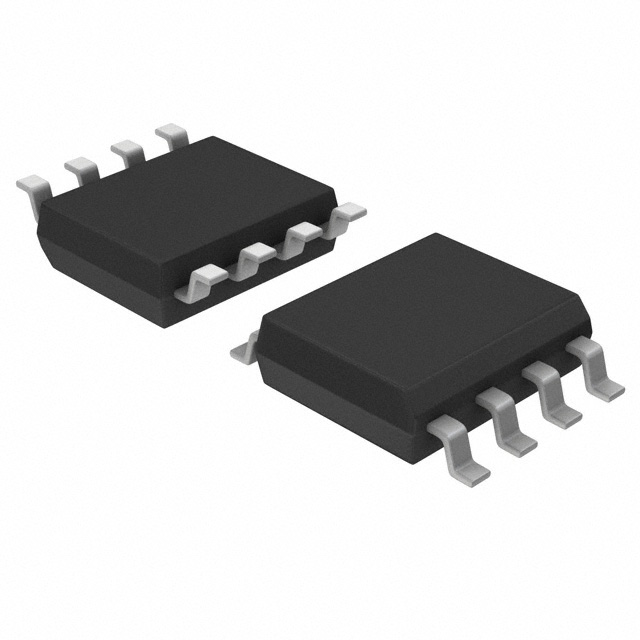
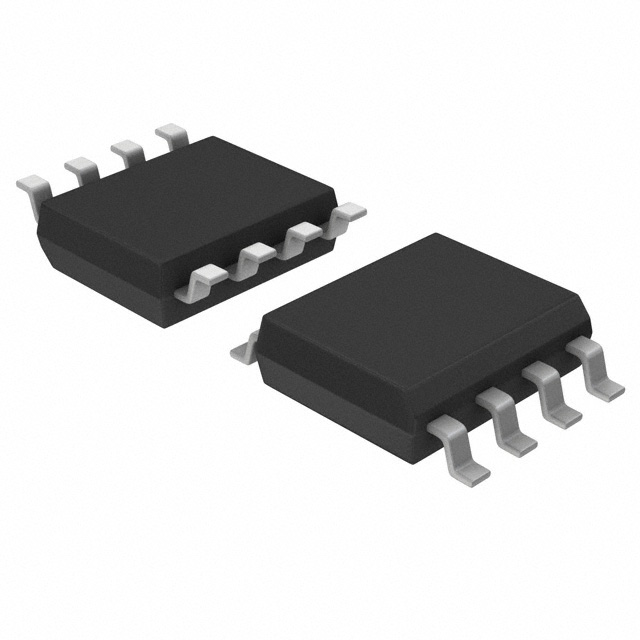
The NJU7102AM is a dual-channel general-purpose comparator manufactured by Nisshinbo Micro Devices Inc., featuring CMOS push-pull TTL output architecture in an 8-DMP surface-mount package. This device is classified as obsolete, necessitating identification of functionally equivalent alternatives for ongoing design support and procurement continuity. The NJU7102AM operates across a 3V to 14V supply range with typical output current of 20mA and input offset voltage specification of 12mV at 5V.
Substiute Parts
Key Parameters
| Parameter | Value | Specification Condition |
|---|---|---|
| Number of Elements | 2 | Dual-channel configuration |
| Output Type | CMOS, Push-Pull, TTL | Output stage architecture |
| Voltage - Supply, Single/Dual (±) | 3V ~ 14V | Operating supply range |
| Voltage - Input Offset (Max) | 12mV | @ 5V |
| Current - Input Bias (Max) | 1pA | @ 5.5V |
| Current - Output (Typ) | 20mA | Typical output drive |
| CMRR (Typ) | 82dB | Common-mode rejection ratio |
| Propagation Delay (Max) | 3µs | Maximum switching delay |
| Operating Temperature | 0°C ~ 70°C | Commercial grade |
| Package / Case | 8-SOIC (0.209", 5.30mm Width) | Surface mount |
| RoHS Status | RoHS non-compliant | Lead-containing device |
| Moisture Sensitivity Level (MSL) | 2 (1 Year) | Storage and handling requirement |
Substitute Part Grouping Explanation
Substitution of the NJU7102AM is determined by strict alignment of the following critical parameters:
Mandatory Matching Criteria:
- Dual-channel comparator architecture (2 elements)
- 8-pin SOIC package footprint compatibility (0.209", 5.30mm width)
- Surface-mount technology (SMD)
- Operating temperature range: 0°C ~ 70°C minimum
- Output current capability: 20mA minimum
- Supply voltage overlap within 3V ~ 14V range
Functional Equivalence Parameters:
- Input offset voltage performance (12mV maximum at 5V)
- Input bias current specification (1pA maximum at 5.5V)
- CMRR performance (82dB minimum)
- Propagation delay (3µs maximum)
The LM393APSR qualifies as a substitute based on package compatibility, dual-channel configuration, and overlapping electrical specifications. However, critical differences in output architecture, supply voltage range, and compliance status must be evaluated for specific application requirements.
Parameter Comparison
| Parameter | NJU7102AM | LM393APSR | Compatibility Notes |
|---|---|---|---|
| Manufacturer | Nisshinbo Micro Devices Inc. | Texas Instruments | Different manufacturers |
| Number of Elements | 2 | 2 | Matched |
| Output Type | CMOS, Push-Pull, TTL | Open-Collector, Rail-to-Rail | Different output architecture |
| Voltage - Supply, Single/Dual (±) | 3V ~ 14V | 2V ~ 36V, ±1V ~ 18V | LM393APSR has wider range |
| Voltage - Input Offset (Max) | 12mV @ 5V | 2mV @ 30V | LM393APSR superior performance |
| Current - Input Bias (Max) | 1pA @ 5.5V | 0.25µA @ 5V | NJU7102AM superior performance |
| Current - Output (Typ) | 20mA | 20mA | Matched |
| Current - Quiescent (Max) | Not specified | 2.5mA | LM393APSR specified |
| Operating Temperature | 0°C ~ 70°C | 0°C ~ 70°C | Matched |
| Package / Case | 8-SOIC (0.209", 5.30mm Width) | 8-SOIC (0.209", 5.30mm Width) | Footprint compatible |
| Mounting Type | Surface Mount | Surface Mount | Matched |
| Product Status | Obsolete | Last Time Buy | Both end-of-life |
| RoHS Status | RoHS non-compliant | ROHS3 Compliant | Different compliance |
| Moisture Sensitivity Level (MSL) | 2 (1 Year) | 1 (Unlimited) | LM393APSR less sensitive |
Engineering Selection Recommendations
Product Status Considerations: Both the NJU7102AM (Obsolete) and LM393APSR (Last Time Buy) are end-of-life devices. The LM393APSR represents a transitional option with extended availability window compared to the fully obsolete NJU7102AM.
Compliance and Certification: The LM393APSR holds ROHS3 compliance and REACH unaffected status, providing regulatory advantage over the RoHS non-compliant NJU7102AM. Organizations subject to RoHS or REACH requirements must prioritize the LM393APSR or identify alternative active-production comparators.
Output Architecture Differences: The NJU7102AM employs CMOS push-pull TTL output, while the LM393APSR uses open-collector rail-to-rail output. This fundamental difference affects circuit design requirements. Push-pull outputs provide active high and low drive, whereas open-collector outputs require external pull-up resistors. Applications designed for push-pull operation require circuit modification for open-collector substitution.
Electrical Performance Trade-offs: The LM393APSR demonstrates superior input offset voltage (2mV vs. 12mV) and wider supply voltage range (2V ~ 36V vs. 3V ~ 14V). Conversely, the NJU7102AM exhibits superior input bias current performance (1pA vs. 0.25µA). Supply voltage range expansion in the LM393APSR enables operation in extended voltage applications beyond the NJU7102AM capability.
Packaging and Thermal Management: Both devices share identical 8-SOIC footprint dimensions, enabling direct PCB layout compatibility without redesign. Moisture sensitivity differences (MSL 2 vs. MSL 1) affect storage and handling protocols, with the LM393APSR requiring less stringent environmental control.
Frequently Asked Questions (FAQ)
Q: Can the LM393APSR directly replace the NJU7102AM without circuit modification?
A: Footprint compatibility exists, but output architecture differences require circuit evaluation. The NJU7102AM push-pull output differs fundamentally from the LM393APSR open-collector output. Applications relying on active high-level drive from the NJU7102AM require external pull-up resistor addition for the LM393APSR. Pin-to-pin compatibility exists, but functional equivalence depends on circuit design.
Q: What are the supply voltage implications of substitution?
A: The NJU7102AM operates within 3V ~ 14V, while the LM393APSR supports 2V ~ 36V or ±1V ~ 18V dual supply. Applications operating at the NJU7102AM's lower voltage boundary (3V) remain compatible with the LM393APSR. Applications exceeding 14V single supply require the LM393APSR's extended range. Conversely, applications below 2V cannot use the LM393APSR.
Q: Are there input offset voltage performance implications?
A: The LM393APSR specifies 2mV input offset at 30V versus the NJU7102AM's 12mV at 5V. The LM393APSR demonstrates superior offset performance, benefiting precision comparator applications. Applications tolerating 12mV offset accept the LM393APSR without performance degradation. Precision applications requiring sub-2mV offset may find the LM393APSR advantageous.
Q: How do input bias current specifications affect circuit design?
A: The NJU7102AM specifies 1pA maximum input bias current, while the LM393APSR specifies 0.25µA. The NJU7102AM's lower bias current reduces input impedance loading effects. High-impedance source applications benefit from the NJU7102AM's superior performance. The LM393APSR's 0.25µA bias current remains acceptable for most general-purpose comparator applications but may introduce measurable offset in extremely high-impedance circuits.
Q: What packaging considerations apply to substitution?
A: Both devices use 8-SOIC (0.209", 5.30mm width) surface-mount packages with identical footprints. PCB layout modification is not required. Moisture sensitivity differs: NJU7102AM MSL 2 (1-year storage limit) versus LM393APSR MSL 1 (unlimited storage). The LM393APSR permits extended shelf storage without baking requirements, reducing inventory management complexity.
Q: Are there RoHS compliance implications?
A: The NJU7102AM is RoHS non-compliant (lead-containing), while the LM393APSR is ROHS3 compliant. Organizations operating under RoHS directives cannot use the NJU7102AM for new designs or restricted applications. The LM393APSR satisfies RoHS requirements for EU and equivalent markets.
Q: What is the propagation delay difference impact?
A: The NJU7102AM specifies 3µs maximum propagation delay. The LM393APSR does not specify propagation delay in the provided parameters. Applications with strict timing requirements must verify LM393APSR propagation delay specifications against the 3µs baseline before substitution.
Q: Can the LM393APSR be used in applications designed for the NJU7102AM's CMRR performance?
A: The NJU7102AM specifies 82dB CMRR. The LM393APSR CMRR specification is not provided in the available parameters. Applications dependent on 82dB common-mode rejection require verification of LM393APSR CMRR performance before substitution confirmation.
Alternative Parts

SJ6012L2TP
Littelfuse Inc.
6 Alternative Parts

JMK107BBJ476MA-RE
Taiyo Yuden
10 Alternative Parts

GMK107BBJ475MA-T
Taiyo Yuden
5 Alternative Parts
SJ6020N2ARP
Littelfuse Inc.
3 Alternative Parts
SJ6025R2ATP
Littelfuse Inc.
4 Alternative Parts

2474-05L
API Delevan Inc.
1 Alternative Parts

4590R-684K
API Delevan Inc.
1 Alternative Parts

CM6560R-334
API Delevan Inc.
1 Alternative Parts

CM6460-104
API Delevan Inc.
1 Alternative Parts

5526-12
API Delevan Inc.
1 Alternative Parts