



Request Quote
(Ships tomorrow)
NJM4565D Equivalent & Substitute Parts
Part Overview
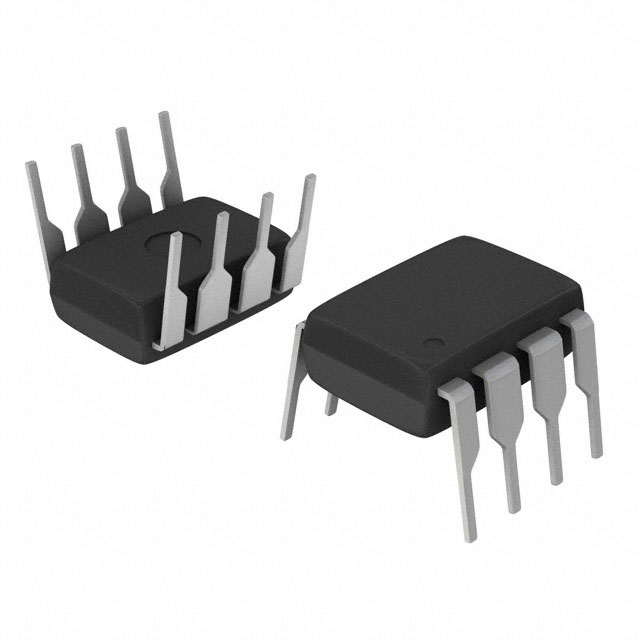
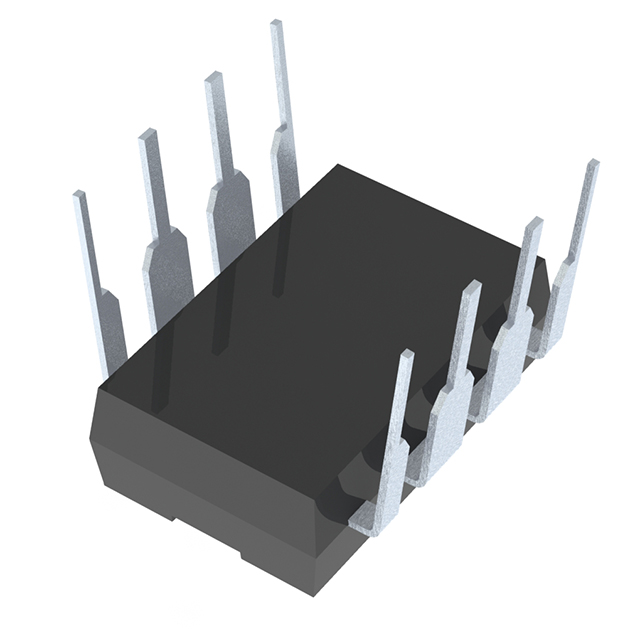
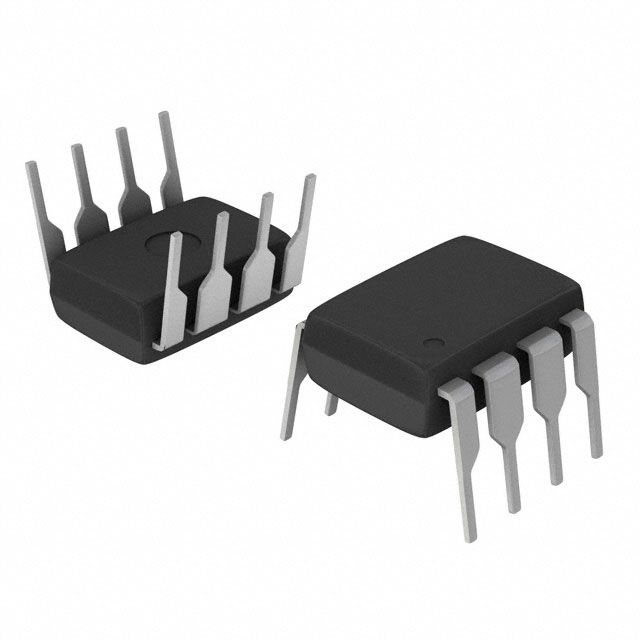
The NJM4565D is a general-purpose operational amplifier manufactured by Nisshinbo Micro Devices Inc., configured as a dual-circuit (2-channel) device in an 8-DIP through-hole package. This linear amplifier is classified as Active product status and is RoHS Compliant. The NJM4565D serves applications requiring general-purpose amplification with moderate bandwidth and slew rate characteristics. Equivalent and substitute parts are identified based on matching package configuration, circuit count, mounting type, and electrical parameter compatibility within defined tolerance ranges.
Substiute Parts
Key Parameters
| Parameter | Value | Unit |
|---|---|---|
| Manufacturer Part Number | NJM4565D | — |
| Manufacturer | Nisshinbo Micro Devices Inc. | — |
| Category | Linear, Amplifiers | — |
| Amplifier Type | General Purpose | — |
| Number of Circuits | 2 | — |
| Package / Case | 8-DIP (0.300", 7.62mm) | — |
| Mounting Type | Through Hole | — |
| Slew Rate | 4 | V/µs |
| Gain Bandwidth Product | 10 | MHz |
| Current - Input Bias | 50 | nA |
| Voltage - Input Offset | 500 | µV |
| Current - Supply | 4.5 | mA |
| Voltage - Supply Span (Min) | 8 | V |
| Voltage - Supply Span (Max) | 36 | V |
| Operating Temperature | -40 to 85 | °C |
| Product Status | Active | — |
| RoHS Status | RoHS Compliant | — |
Substitute Part Grouping Explanation
Substitution eligibility for the NJM4565D is determined by the following mandatory criteria:
Package and Mechanical Compatibility:
- Package type: 8-DIP (0.300", 7.62mm)
- Mounting type: Through Hole
- Number of circuits: 2
Electrical Parameter Ranges:
- Slew Rate: 2.4 V/µs to 45 V/µs (substitute must support the application's transient response requirements)
- Gain Bandwidth Product: 5 MHz to 12 MHz (substitute must meet or exceed frequency response needs)
- Current - Input Bias: 1 pA to 100 nA (substitute must be compatible with input impedance requirements)
- Voltage - Input Offset: 50 µV to 700 µV (substitute must meet DC accuracy specifications)
- Current - Supply: 3.1 mA to 6 mA (substitute must fit within power budget constraints)
- Voltage - Supply Span: Minimum 4 V to 9 V; Maximum 32 V to 38 V (substitute supply range must encompass application voltage requirements)
- Operating Temperature: -40°C to 85°C (all substitutes match this range)
Compliance and Status:
- Product Status: Active
- RoHS Compliance: Required
- REACH Status: Unaffected (all candidates meet this requirement)
Substitutes are grouped by amplifier type (General Purpose, Audio, J-FET) to indicate functional characteristics, though all candidates share the same package, circuit count, and mounting configuration.
Parameter Comparison
| Parameter | NJM4565D | OP270GPZ | RC4580IP | TLE2072IP | TLE2082AIP |
|---|---|---|---|---|---|
| Manufacturer | Nisshinbo Micro Devices Inc. | Analog Devices Inc. | Texas Instruments | Texas Instruments | Texas Instruments |
| Amplifier Type | General Purpose | General Purpose | Audio | J-FET | J-FET |
| Number of Circuits | 2 | 2 | 2 | 2 | 2 |
| Package / Case | 8-DIP (0.300", 7.62mm) | 8-DIP (0.300", 7.62mm) | 8-DIP (0.300", 7.62mm) | 8-DIP (0.300", 7.62mm) | 8-DIP (0.300", 7.62mm) |
| Mounting Type | Through Hole | Through Hole | Through Hole | Through Hole | Through Hole |
| Slew Rate (V/µs) | 4 | 2.4 | 5 | 45 | 40 |
| Gain Bandwidth Product (MHz) | 10 | 5 | 12 | 10 | 10 |
| Current - Input Bias (nA) | 50 | 15 | 100 | 0.001 | 0.02 |
| Voltage - Input Offset (µV) | 500 | 50 | 500 | 300 | 700 |
| Current - Supply (mA) | 4.5 | 4 | 6 | 3.1 | 3.1 |
| Voltage - Supply Span Min (V) | 8 | 9 | 4 | 4.5 | 4.5 |
| Voltage - Supply Span Max (V) | 36 | 36 | 32 | 38 | 38 |
| Operating Temperature (°C) | -40 to 85 | -40 to 85 | -40 to 85 | -40 to 85 | -40 to 85 |
| Product Status | Active | Active | Active | Active | Active |
| RoHS Status | RoHS Compliant | ROHS3 Compliant | ROHS3 Compliant | ROHS3 Compliant | ROHS3 Compliant |
Engineering Selection Recommendations
All substitute parts listed are Active product status and maintain RoHS compliance, ensuring regulatory and supply chain continuity. Selection among substitutes depends on specific application requirements:
OP270GPZ (Analog Devices Inc.): This general-purpose amplifier matches the NJM4565D functional classification. It provides lower input bias current (15 nA versus 50 nA) and superior input offset voltage (50 µV versus 500 µV), resulting in improved DC accuracy. However, the slew rate is reduced to 2.4 V/µs and gain bandwidth product is 5 MHz, making it suitable only for applications with lower bandwidth requirements. The minimum supply voltage is 9 V, which may restrict use in lower-voltage systems compared to the NJM4565D's 8 V minimum.
RC4580IP (Texas Instruments): This audio amplifier provides higher slew rate (5 V/µs) and gain bandwidth product (12 MHz) than the NJM4565D, supporting faster transient response and higher-frequency operation. Input bias current is higher at 100 nA. The minimum supply voltage is 4 V, enabling operation in lower-voltage applications. This substitute is suitable for audio and signal-processing applications requiring enhanced bandwidth.
TLE2072IP (Texas Instruments): This J-FET amplifier offers exceptional input bias current (1 pA) and high slew rate (45 V/µs), making it suitable for precision, high-speed applications. The gain bandwidth product matches the NJM4565D at 10 MHz. The minimum supply voltage is 4.5 V. This substitute is appropriate for applications requiring ultra-low input bias current and high-speed transient response.
TLE2082AIP (Texas Instruments): This J-FET amplifier provides similar performance to the TLE2072IP with slew rate of 40 V/µs and gain bandwidth product of 10 MHz. Input bias current is 20 pA, higher than the TLE2072IP but still significantly lower than the NJM4565D. The minimum supply voltage is 4.5 V. This substitute is suitable for precision applications with slightly relaxed input bias current requirements compared to the TLE2072IP.
Frequently Asked Questions (FAQ)
Q: Can the OP270GPZ replace the NJM4565D in all applications?
A: The OP270GPZ is mechanically and electrically compatible in terms of package, circuit count, and supply voltage range. However, the reduced slew rate (2.4 V/µs versus 4 V/µs) and lower gain bandwidth product (5 MHz versus 10 MHz) limit its use to applications with lower bandwidth requirements. The higher minimum supply voltage (9 V versus 8 V) may also restrict operation in lower-voltage systems. Verify that your application's frequency response and transient requirements are compatible with these reduced specifications.
Q: What is the primary advantage of the RC4580IP substitute?
A: The RC4580IP provides higher slew rate (5 V/µs) and gain bandwidth product (12 MHz) than the NJM4565D, enabling faster signal processing and higher-frequency operation. Additionally, its minimum supply voltage of 4 V allows operation in lower-voltage applications. The trade-off is higher input bias current (100 nA). This substitute is optimized for audio and signal-processing applications.
Q: When should I select a J-FET amplifier substitute like TLE2072IP or TLE2082AIP?
A: J-FET amplifiers are selected when applications require ultra-low input bias current and high-speed transient response. The TLE2072IP and TLE2082AIP both provide input bias currents in the picoampere range (1 pA and 20 pA respectively) compared to the NJM4565D's 50 nA, making them suitable for precision instrumentation, high-impedance signal sources, and applications sensitive to input leakage current. Both also provide significantly higher slew rates (40–45 V/µs) for fast transient handling.
Q: Are all substitute parts available in the same 8-DIP package?
A: Yes. All substitute parts (OP270GPZ, RC4580IP, TLE2072IP, and TLE2082AIP) are packaged in 8-DIP (0.300", 7.62mm) through-hole configuration, ensuring direct mechanical compatibility with the NJM4565D. No PCB layout modifications are required for package substitution.
Q: What is the difference between the TLE2072IP and TLE2082AIP?
A: Both are J-FET amplifiers with identical package, circuit count, and gain bandwidth product (10 MHz). The primary differences are slew rate (45 V/µs for TLE2072IP versus 40 V/µs for TLE2082AIP) and input bias current (1 pA for TLE2072IP versus 20 pA for TLE2082AIP). The TLE2072IP offers superior high-speed performance, while the TLE2082AIP provides a balance between precision and cost. Select based on your application's specific slew rate and input bias current requirements.
Q: Can I use a substitute with a lower minimum supply voltage in a system designed for the NJM4565D?
A: Yes, substitutes with lower minimum supply voltages (such as RC4580IP at 4 V or TLE2072IP/TLE2082AIP at 4.5 V) are compatible with systems designed for the NJM4565D's 8 V minimum. The substitute will operate across the full voltage range of your application. However, ensure that the maximum supply voltage of the substitute (32–38 V) meets or exceeds your system's maximum voltage requirement.
Q: How do I determine which substitute is best for my application?
A: Identify the critical electrical parameters for your application: required slew rate, gain bandwidth product, input bias current, and input offset voltage. Cross-reference these requirements against the parameter comparison table. If your application requires moderate bandwidth and general-purpose amplification, the OP270GPZ is suitable. For audio and higher-bandwidth applications, select the RC4580IP. For precision, high-speed applications with ultra-low input bias current, select the TLE2072IP or TLE2082AIP based on your specific slew rate and input bias current tolerance.
Alternative Parts

SJ6012L2TP
Littelfuse Inc.
6 Alternative Parts

JMK107BBJ476MA-RE
Taiyo Yuden
10 Alternative Parts

GMK107BBJ475MA-T
Taiyo Yuden
5 Alternative Parts
SJ6020N2ARP
Littelfuse Inc.
3 Alternative Parts
SJ6025R2ATP
Littelfuse Inc.
4 Alternative Parts

2474-05L
API Delevan Inc.
1 Alternative Parts

4590R-684K
API Delevan Inc.
1 Alternative Parts

CM6560R-334
API Delevan Inc.
1 Alternative Parts

CM6460-104
API Delevan Inc.
1 Alternative Parts

5526-12
API Delevan Inc.
1 Alternative Parts